
Opposition and Ruling Party Clash, Breach Mutual Boundaries
Mr Timothy Omo-bare, then Deputy Inspector General of Police, attended the Aburi Peace meeting in Ghana on January 4-5, 1967, which aimed to bring peace to Nigeria and prevent a potential Civil war.
nThe meeting was attended by other senior officers, including Lt-Colonel Yakubu Gowon, Colonel Adeyinka Adebayo, Lt-Colonel Odumegwu Ojukwu, Lt-Colonel David Ejoor, Lt-Colonel Hassan Katsina, Commodore J.E.A. Wey, Major Mobolaji Johnson, Alhaji Kam Salem, and Mr T. Omo-Bare.
nThe secretaries who attended the meeting included Mr S.I.A. Akenzua, Mr P.T. Odumosu, Mr N.U. Akpan, Mr D.P. Lawani, and Alhaji Ali Akilu.
nNotably, senior military officers with extremist views, such as Major Murtala Mohammed and Captain T.Y. Danjuma, were excluded from the Aburi meeting, which was convened by the Ghanaian Head of State, General Joseph Arthur Ankrah, who was born on August 18, 1915, and passed away on November 25, 1992.
nOn the second day of the meeting, a serious deadlock occurred, with Omo-bare playing a crucial role as a peacemaker.
nMr Timothy Omo-bare was born on January 26, 1913, in Uzebba, Edo State, and received his education at St. Peter’s School, Benin City, Government School, Kwale, and St. Peter’s Training College, Benin.
nHe joined the police force in 1933 and held various positions, including Commissioner of Police from 1964 to 1966, Deputy Inspector General of Police from 1966 to 1968, and Federal Commissioner for Rehabilitation from 1968 to 1970.
nDuring the Aburi meeting, Omo-bare urged the attendees, saying, "We cannot sit here and divide up Nigeria, because the way things are now moving is towards regionalisation of everything, and I do not think it is safe or that we are right to divide up Nigeria at this table."
nHowever, his appeal seemed to fall on deaf ears, as the country eventually plunged into a senseless civil war, leaving scars that still linger today.
nThe concept of a "red line" is crucial in understanding the boundaries and limits that, once crossed, signal unacceptable behavior or actions.
nIn diplomatic discussions, leaders often establish these lines to signify non-negotiable terms, drawing a firm boundary around what they deem acceptable.
nThe presidential election in Nigeria is always highly anticipated, but the upcoming one appears to be particularly tense.
nThe 1959 general election, held on December 12, 1959, is still remembered, and it was preceded by a declaration issued by the Governor General, Sir James Wilson Robertson, on October 8, 1959.
nSir James Wilson Robertson was born on October 27, 1899, and passed away on September 23, 1983.
nThe election was contested in 312 single-member constituencies throughout the country, with 174 seats in Northern Nigeria, 62 in Western Nigeria, 73 in Eastern Nigeria, and three in Lagos.
nThe dissolved House was elected in 1954 and consisted of 184 elected members and six special members representing special interests.
nOn August 29, 1957, Alhaji Abubakar Tafawa Balewa was appointed as the first Prime Minister of the Federation, and a coalition government was formed.
nAlhaji Abubakar Tafawa Balewa was born in December 1912 and passed away on January 15, 1966.
nNo less than 26 parties were registered to contest the elections, but the main contests lay between the Northern People’s Congress, the Action Group, and the National Council of Nigeria and the Cameroons.
nVoting was by secret ballot throughout the country, and all registered adults in Western and Eastern Nigeria were eligible to vote, while all registered adult males were eligible in Northern Nigeria.
nAn amendment to the Constitution Orders in Council provided for the establishment of a Senate consisting of not less than 56 appointed members.
nBy January 1959, Dr Nnamdi Azikiwe, Premier of Eastern Nigeria, and Chief Obafemi Awolowo, Premier of Western Nigeria, had decided to stand as candidates in the federal elections.
nDr Nnamdi Azikiwe was born on November 16, 1904, and passed away on May 11, 1996, while Chief Obafemi Awolowo was born on March 6, 1909, and passed away on May 9, 1987.
nIn October 1959, Professor Eyo Ita, a member of the Eastern House of Assembly, resigned from the United National Independence Party and joined the NCNC.
nBy October 25, 1959, the political leaders were fully engaged in the election campaign, with accusations of intimidation, bribery, and hypocrisy.
nOn October 28, 1959, the Governor-General of Nigeria, Sir James Robertson, dissolved the Federal Parliament and called for an end to hooliganism in political campaigning.
nSir James Robertson warned that if the wave of hooliganism was not checked by party leaders, he would instruct police to use sterner measures.
nFrom December 7, 1959, Chief Obafemi Awolowo began touring the Middle Belt, using his helicopter to attract attention and promote his campaign.
nExcluding the eight seats allocated to Southern Cameroons, 312 seats were contested in the federal elections.
nBy December 5, 1959, nomination lists had closed, and Mr R. Okafor, the administration secretary of the NCNC, was returned unopposed as a candidate for Owerri West.
nOn Saturday, December 12, 1959, the Federal elections took place in an orderly atmosphere, with a heavy turnout and few incidents reported.
nThe numbers who voted were 7,185,555, with 3,258,520 votes cast in the Northern Region, 1,929,754 in the Eastern Region, and 1,887,209 in the Western Region.
Related Stories
 Breaking News
JAMB NO LONGER MANDATORY FOR ADMISSION – FG EMPOWERS INSTITUTIONS TO ADMIT STUDENTS USING SSCE RESULTS
The Federal Government, through the Ministry of Education, has announced a new policy granting Nigerian tertiary institutions greater autonomy in thei
 Breaking News
How We Kidnapped Bayelsa Judge - Suspects
Suspects in the abduction of Justice Ebiyerin Omukoro have narrated how they committed the crime. rnrnEight of the suspects, which included six males
 Breaking News
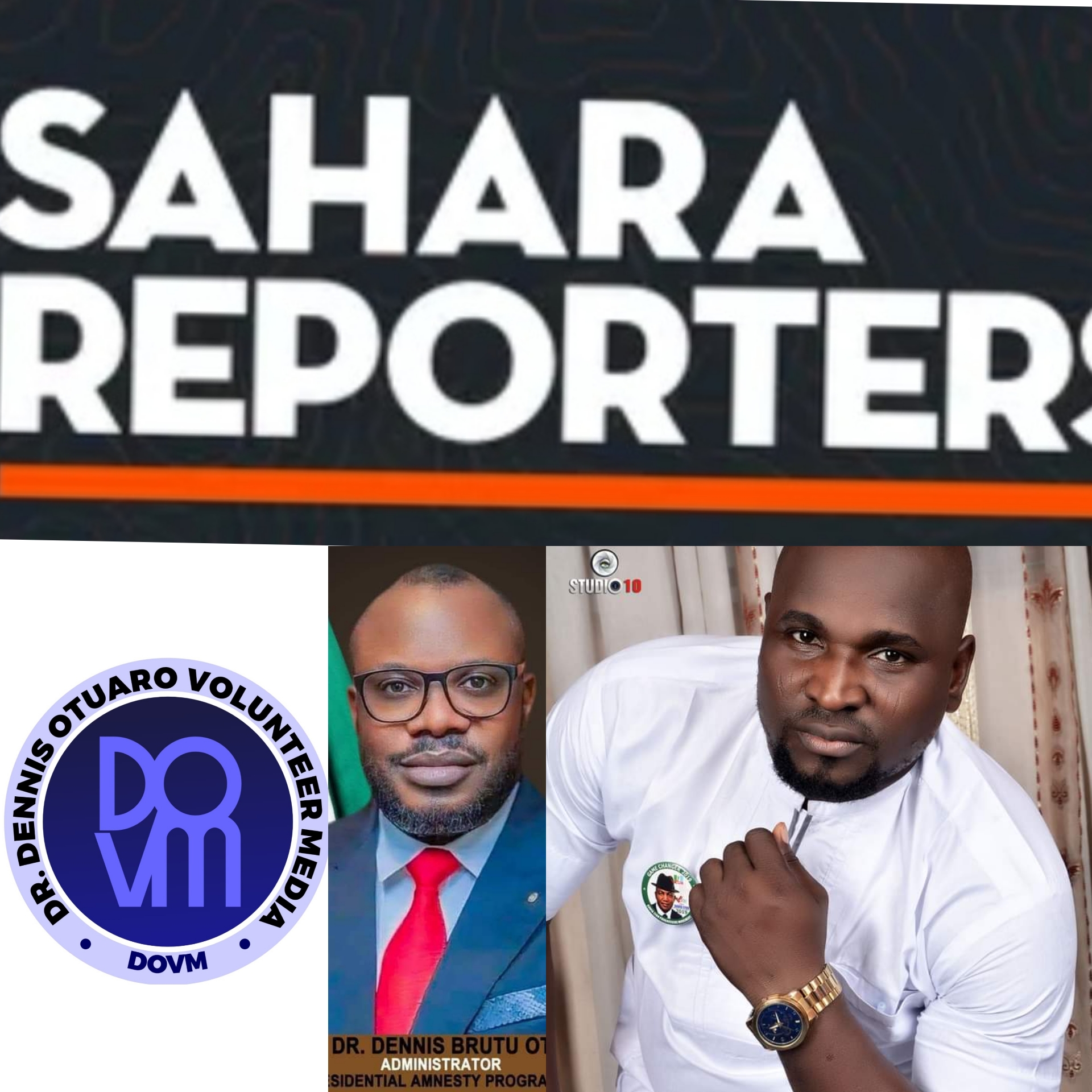
Dr. Dennis Otuaro Volunteer Media Team Berates SaharaReporters Over Unfounded Allegations Against PAP Administrator
The attention of the Dr. Dennis Otuaro Volunteer Media Team has been drawn to a recent misleading and malicious publication by SaharaReporters, accusi