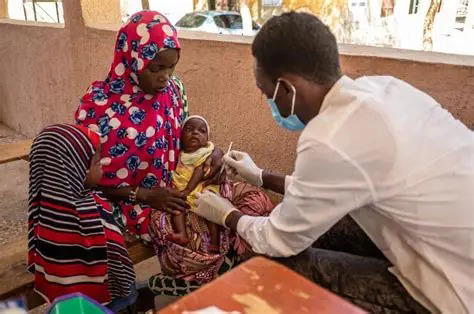
As the global community observes World Immunisation Week 2026, concerns are mounting over the rising number of unimmunised children in Nigeria, prompting calls for swift and coordinated efforts to bridge the gap, with the theme "For every generation, vaccines work" at the forefront of the discussion.
Save the Children Nigeria is urging renewed commitment and collective action to reach zero-dose and under-immunised children, particularly in underserved urban and peri-urban areas of Lagos and Kano States, where the need is most pressing.
Nigeria currently ranks among the countries with the highest burden of children missed by routine immunisation services, with an estimated 2.1 million children having never received a single vaccine, while another 2.3 million are only partially immunised, highlighting both systemic gaps and persistent barriers to access.
These figures place Nigeria as the country with the second-highest number of zero-dose children globally, emphasizing the need for urgent action to address this critical issue.
Save the Children is calling on the government, partners, communities, and stakeholders to strengthen routine immunisation systems, improve outreach in hard-to-reach communities, and ensure that no child is left behind, with a focus on underserved settlements.
The organisation is also advocating for investments in quality data use, defaulter tracking, and multiple contact points for vaccination within the health system, as well as support for skilled health workers to provide respectful, high-quality immunisation services.
Additionally, Save the Children is pushing for efforts to address misinformation and harmful social norms through trusted community leaders, inclusive engagement approaches, and increased domestic and partner financing for immunisation and primary health care to ensure sustainable coverage for all.
Experts stress that closing the immunisation gap is crucial not only for protecting children but also for achieving equitable health outcomes nationwide, with immunisation remaining one of the most cost-effective public health interventions, saving millions of lives globally each year.
In Nigeria, however, many children continue to miss routine vaccinations due to limited access to services, weak follow-up and data systems, misinformation, harmful social and gender norms, and gaps in community engagement.
Through the Better Opportunities for Optimal Services and Targeted Immunisation (BOOST) Project, Save the Children Nigeria is working with government and community partners in Lagos and Kano States to improve equitable access to vaccination services, strengthen demand among caregivers, and create an enabling policy and social environment that prioritises zero-dose and under-immunised children.
Ultimately, reaching zero-dose and under-immunised children requires strong health systems, trusted community engagement, and sustained investment, with vaccines having protected families for generations, yet millions of Nigerian children still missing out on this basic right.
Comments
Please login to leave a comment.
No comments yet. Be the first to share your thoughts!