
Lagos public hospitals now seeing ‘thousands of patients’ daily — Commissioner

Lagos State’s public hospitals have recorded a sharp increase in patient patronage, with outpatient attendance doubling in the last six months amid a shortage of healthcare workers caused partly by brain drain.
nThe Commissioner for Health, Prof. Akin Abayomi, disclosed this while speaking in an interview with ARISE NEWS on Friday, saying the pressure had left doctors and other healthcare professionals working under significant strain.
n“In the last six months, our outpatient patronage has doubled in our public health facilities, Lasuthi, Korodu, Lagos Island.”
n“I’ve seen thousands of patients a day. Now, you can’t imagine that kind of patronage in a private hospital.”
nAbayomi attributed the growing pressure on public hospitals partly to the rising cost of healthcare, which he said was pushing more residents away from private facilities.
n“While the cost of care is going up, the ability to buy that care is relatively stagnant.”
nHe said residents were consequently moving from private hospitals to public facilities and, in some cases, to informal healthcare providers.
n“So the public are shifting from the private sector to the public sector and from the public sector to the informal sector, where they can walk into a pharmacist or stop the hawker on the road and tell them, I have a headache or I have a fever, and they get access to medication without going through the orthodox system.”
nThe commissioner said the increase in patient numbers was putting additional pressure on healthcare workers already affected by the migration of professionals from the sector.
n“Our doctors and our healthcare professionals are under a lot of stress. You can imagine with the brain drain, with this influx of patients.
n“You know, if you work from 8 till 12, I don’t know what your time on stage is, but in the medical facility, can you imagine if they asked you to work from 6 in the morning to tomorrow 6 in the morning? It would be crazy,” he added.
nAgainst this backdrop, Abayomi said the state would soon begin enforcing compulsory health insurance as part of efforts to improve healthcare financing and reduce pressure on government-funded facilities.
n“Now we’re moving into enforcement. So very soon, it’s just like if you have a car. You need three things. You need a licence, you need an MOT, and you need insurance. If you don’t have it, somewhere along the line, someone will enforce it,” he noted.
nHe said Lagos had domesticated the National Health Insurance Authority Act through an executive order in July 2024, making health insurance compulsory for people living and working in the state.
n“Lagos was quick because of what you just described. Within a year or two, we had domesticated that law in July of 2024. That’s two years ago, in Mr. Governor’s executive order, essentially enforcing compulsory insurance on negotiations,” he said.
nAbayomi said the government was restructuring the state’s health insurance system while increasing public awareness about the scheme.
n“We’re restructuring. We’re doing a lot of enforcement. We’re doing a lot of public health awareness. We’re doing a lot of educating the public around the need for insurance,” he added.
nHe said the government wanted every resident to have access to a basic social health insurance package, while private insurance would be incorporated into the system.
n“So everybody should have at least a social health insurance basic minimum service of package cover. And then in the private sector, we’re incorporating them into that narrative so that if you have private insurance, you at least have the basic minimum package,” he stated.
nHe added, “And that we’ve now restructured the tiers so that there is a cleaner operation of insurance in the state.”
nThe commissioner linked healthcare financing to the problem of brain drain, arguing that stronger demand-side financing would increase the flow of funds into the sector and improve the capacity of providers to retain and attract health workers.
n“It all boils down to healthcare financing. It boils down to demand financing, the ability to finance the purchase of your care,” he added.
nAccording to him, insurance could spread the cost of healthcare among residents and reduce the financial burden on government.
n“Health insurance does many things. It reduces the risk. It causes a cross-subsidy and social solidarity. It takes a lot of the burden away from government so that the private sector can flourish in a health system,” he noted.
nHe said improved purchasing power for healthcare could also help slow the migration of health professionals.
n“Now when that happens, it will start to slow down brain drain because brain drain is an economic narrative.
n“If we fix the demand-side financing, then funds will flow. If the public, if the business people in Lagos suddenly see that Lagotians have purchasing power for health care, they will fix the supply-side,” he said.
nAbayomi also defended government spending on public healthcare, saying the state heavily subsidised the services provided at its hospitals.
n“The public health service is extremely subsidised. We build the hospitals. We pay 20,000 staff. We’re the biggest ministry in Lagos state government. We repair facilities. We buy equipment. We’re constantly paying for training. We’re paying for administration, overheads, power,” he added
nHe said the subsidy meant that charges at public hospitals were generally less than half those of private facilities.
n“So they generally charge a range of something less than 50% of what private sector charges. Health is doing actually quite well,” he noted.
nOn budget implementation, Abayomi said, “We’re above 90 percent.”
nThe commissioner also addressed complaints over payment systems and allegations that patients were sometimes asked to provide cash before receiving treatment.
n“We’ve now outsourced the payment gateways to the private sector so that it doesn’t mess up with clinical activities. So we engage payment collectors, and they are in all our facilities, and they collect the due charges that the patients have experienced within the facilities,” he added.
nHe said several companies were operating the payment gateways.
n“They’re different, yeah, and they’re different pay gateways,” he said.
n nRelated Stories
 Breaking News
JAMB NO LONGER MANDATORY FOR ADMISSION – FG EMPOWERS INSTITUTIONS TO ADMIT STUDENTS USING SSCE RESULTS
The Federal Government, through the Ministry of Education, has announced a new policy granting Nigerian tertiary institutions greater autonomy in thei
 Breaking News
How We Kidnapped Bayelsa Judge - Suspects
Suspects in the abduction of Justice Ebiyerin Omukoro have narrated how they committed the crime. rnrnEight of the suspects, which included six males
 Breaking News
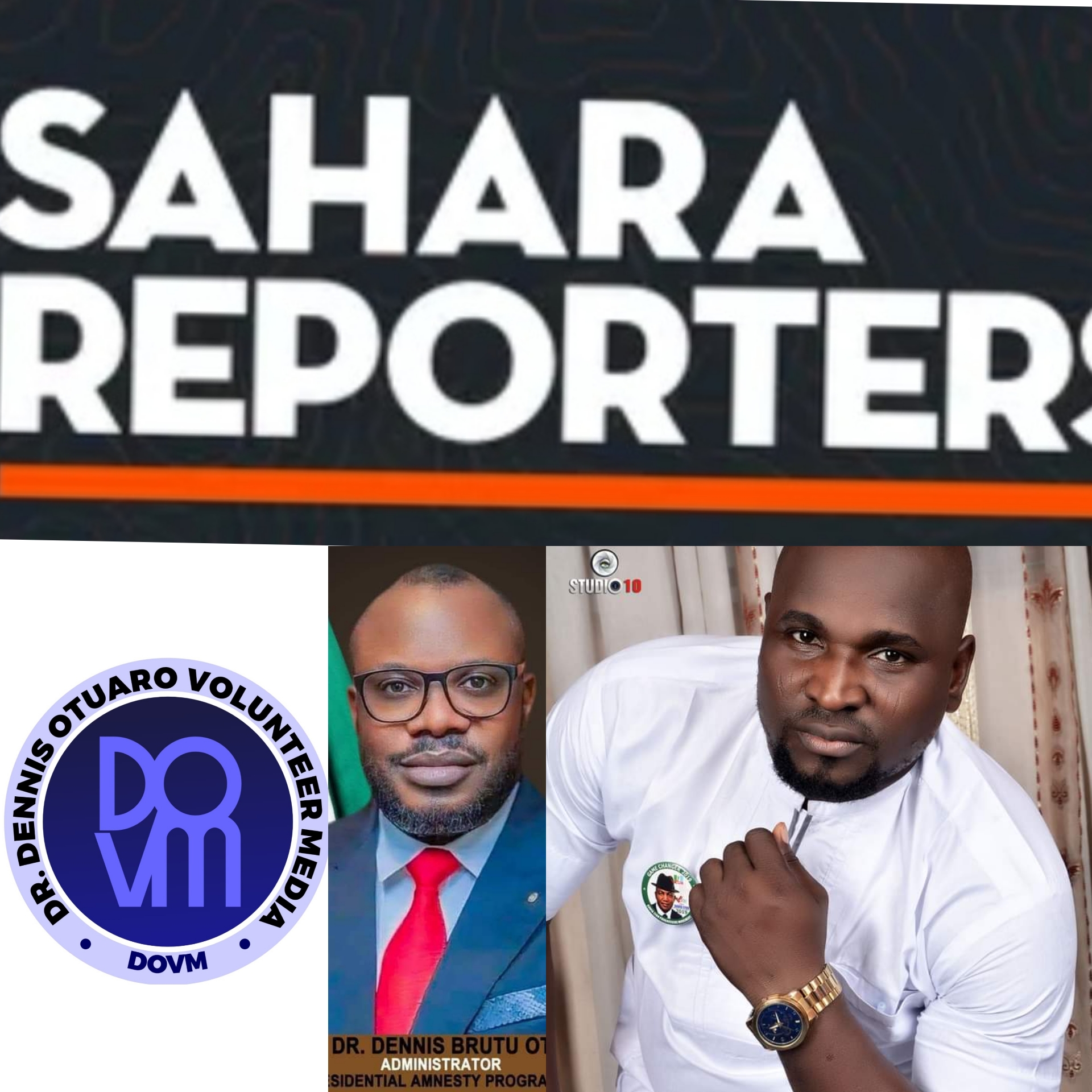
Dr. Dennis Otuaro Volunteer Media Team Berates SaharaReporters Over Unfounded Allegations Against PAP Administrator
The attention of the Dr. Dennis Otuaro Volunteer Media Team has been drawn to a recent misleading and malicious publication by SaharaReporters, accusi