
FG issues claims forms to Nigerians affected by South Africa attacks

The Federal Government on Tuesday said it is in the process of issuing forms to Nigerians who lost property during the recent wave of attacks in South Africa to formally document their losses.
nIt said this is part of preparations to table compensation claims in ongoing diplomatic negotiations with the South African Government.
nMinister of State for Foreign Affairs, Sola Enikanolaiye, disclosed this after briefing President Bola Tinubu on Monday’s meeting with South Africa’s Foreign Minister Roland Lamola, who visited Abuja as a special envoy of President Cyril Ramaphosa in response to the diplomatic crisis triggered by the attacks on Nigerian nationals.
nEnikanolaiye said, “In preparation for us lodging our claims, we have designed a form to be filled by all Nigerians who may have lost property in South Africa.
n“We want to be able to proceed on the basis of data, on the basis of the quantum of losses they have suffered, and then we go back, because our engagement with South Africa is ongoing. It is not a one-off event.”
n“Yesterday was a continuation. We intend to meet going forward. Then we will be able to table those claims and see how we can explore options for compensation,” he added.
nThe minister revealed that the President affirmed his framing of the violence as Afrophobic rather than xenophobic.
nXenophobia, as used in South African political discourse, has been associated with attacks on all foreign nationals.
nAfrophobia, by contrast, specifically indicts the pattern of violence as being directed at Black Africans, exempting white immigrants and expatriates from the targeting profile.
n“The President agreed with me that it is Afrophobic, and that Africa must unite in ensuring that we put an end to this spiral of violence targeted at Africans in South Africa,” Enikanolaiye said.
nHe noted that Tinubu recalled his close personal relationship with Ramaphosa and indicated a willingness to leverage that relationship to arrest the pattern of violence.
n“I told him that is something we would like to leverage on to ensure that we put a stop to this ogre of violence, death and destruction of our nationals in South Africa,” the minister said.
nEnikanolaiye confirmed that approximately 1,490 Nigerians had been evacuated from South Africa, and that two of the evacuation batches were funded not by the Federal Government but by private Nigerian individuals who stepped in.
nHe acknowledged that a significant number of Nigerians still wished to return and that alternative funding sources were being explored.
nOn specific commitments extracted from the South African side during Monday’s meeting with Lamola, the minister said Pretoria had agreed to quickly activate the early warning mechanism between the two countries and to reinvigorate the Bi-National Commission.
nThe minister argued that even undocumented Nigerians in South Africa had a right to life and could not be targeted with violence on the grounds of irregular immigration status.
nHe stated, “Whether they are regular or irregular, they are human beings, and we made that very clear. Criminals have a right to life.
n“You cannot say because they are criminals and you begin to hound and kill them. We made that very clear, and South Africa agreed with that position.”
nHe also hinted that Nigeria’s diplomatic patience had its limita as all options remain on the table.
n“Nigeria has options, and the president agreed with me. There are options. We are not helpless in this situation.
n“All options are still on the table. We would prefer diplomacy and negotiations to continue until we can arrive at a mutually acceptable outcome that will protect Nigerian citizens, their lives and property in South Africa,” he said.
nThe current crisis is the fourth major outbreak of attacks against Nigerians and other African nationals in South Africa since 2008, when widespread xenophobic attacks killed more than 60 people across the country.
nSubsequent waves in 2015 and 2019 also targeted Nigerian-owned businesses and resulted in diplomatic protests, the temporary recall of the Nigerian High Commissioner, and retaliatory attacks on South African businesses in Nigeria.
nIn 2019, the Federal Government summoned the South African High Commissioner.
nNigeria and South Africa are bound by a Bi-National Commission framework established in the early 2000s to manage the depth and complexity of their bilateral relationship, which spans trade, investment, diaspora, labour and cultural exchanges.
nNigerian nationals are the third-largest African immigrant community in South Africa, with estimates ranging from 1.5 to 2 million people.
nSouth African companies, including MTN, Shoprite, Standard Bank and MultiChoice, have invested billions of dollars in Nigeria.
n nRelated Stories
 Breaking News
JAMB NO LONGER MANDATORY FOR ADMISSION – FG EMPOWERS INSTITUTIONS TO ADMIT STUDENTS USING SSCE RESULTS
The Federal Government, through the Ministry of Education, has announced a new policy granting Nigerian tertiary institutions greater autonomy in thei
 Breaking News
How We Kidnapped Bayelsa Judge - Suspects
Suspects in the abduction of Justice Ebiyerin Omukoro have narrated how they committed the crime. rnrnEight of the suspects, which included six males
 Breaking News
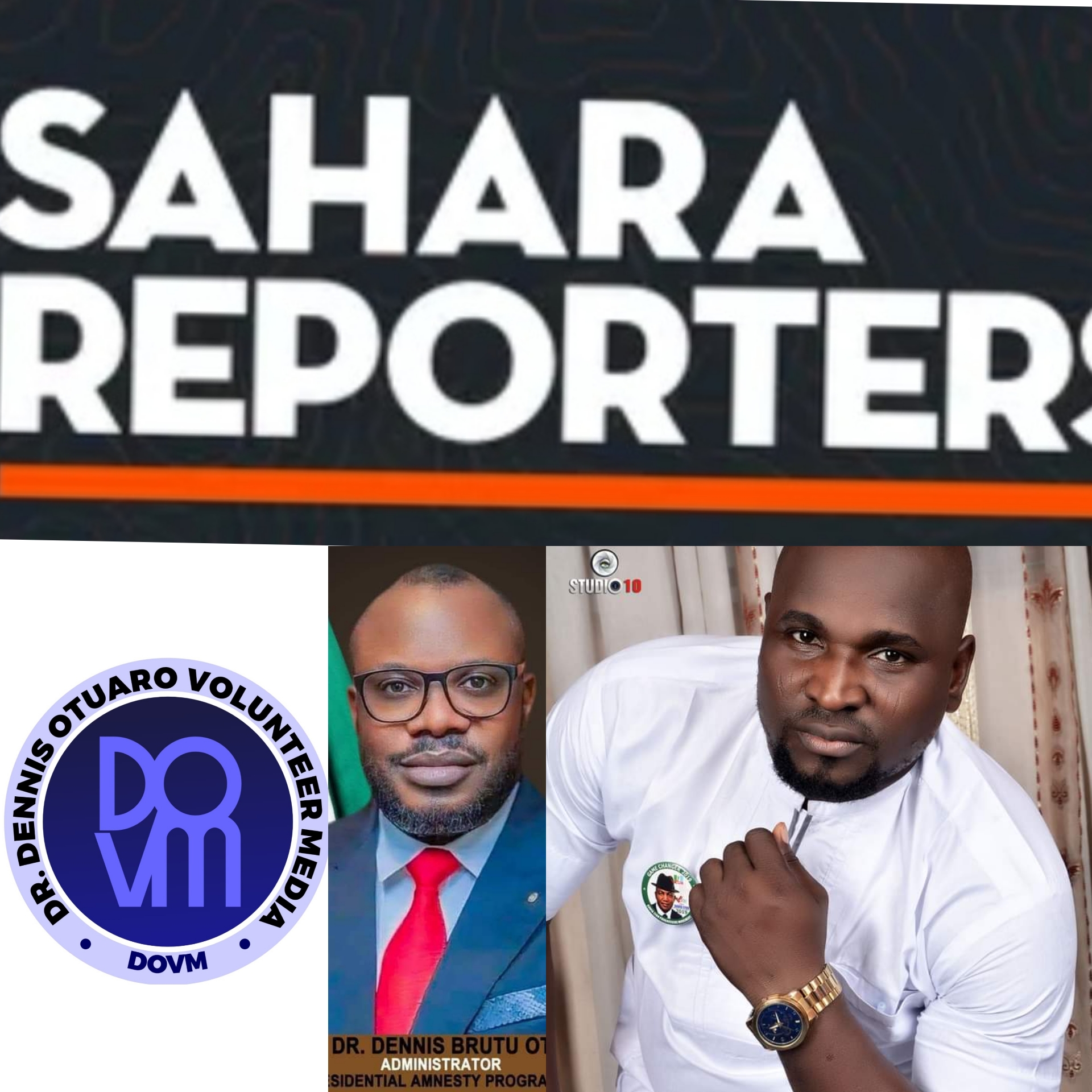
Dr. Dennis Otuaro Volunteer Media Team Berates SaharaReporters Over Unfounded Allegations Against PAP Administrator
The attention of the Dr. Dennis Otuaro Volunteer Media Team has been drawn to a recent misleading and malicious publication by SaharaReporters, accusi