
Before Stardom With… Benneth Nwankwo

Could you tell us about your educational background?
nI hold a degree in Surveying and Geoinformatics. Although my academic training was in a completely different field, it taught me discipline, analytical thinking, attention to detail, and problem-solving. Those skills have proven valuable in my journey as a filmmaker and entrepreneur. While I have not yet built a long-term career in surveying, I hope to practise the profession someday. However, my passion for storytelling eventually led me to pursue filmmaking.
nHow did you become a filmmaker and producer?
nMy journey into visual storytelling began as a writer. I wrote for blogs and participated in several short story competitions, which helped me develop my storytelling skills. From there, I ventured into documentary photography. Some of my works were published across various journals, including Brittle Papers.
nMy photography journey led me to organise Akaraka: Anambra Through A Lens, the first indigenous photo exhibition in Anambra State, my home state. It was a three-day exhibition that celebrated visual storytelling and local narratives. We had hoped to make it a recurring event, but the COVID-19 pandemic and the prolonged sit-at-home period disrupted those plans.
nEven while I was writing and taking photographs, filmmaking was always the bigger dream. As a writer, I naturally visualised my stories on screen. In 2020, I teamed up with my friend, Michael Chinemeke Ike, and we began producing short films. By 2021, our films had started gaining recognition at film festivals, which encouraged us to keep pushing forward. One of our films, I Killed Chief Adeleke, was a Finalist in the StarTimes African Short Film Competition 2022.
nThat journey eventually led me to found BN MEDIA FILMS, where we have produced projects such as Class of Secrets, Breakout, Like Filtered Water, My Story, Not Perfect Date, and several other productions. I have also worked as a director for hire and producer for hire on various projects.
nWhat were the initial challenges you encountered in the industry?
nLike many independent filmmakers, one of my biggest challenges was limited access to funding, equipment, and distribution opportunities. Building credibility was also difficult because the industry can be highly relationship-driven, especially for someone starting without established connections. There were many moments of uncertainty. The obstacles were discouraging, but I remained motivated. We financed our early productions through personal savings, support from family, and contributions from a few friends who believed in the vision.
nOne of the most disappointing moments came when we ventured into YouTube. Our first YouTube film, My Story, focused on police brutality in Nigeria. Because it addressed an important social issue, I expected it to reach a wide audience. Unfortunately, it did not perform the way we had hoped. That experience taught me that not every good project succeeds immediately. Instead of giving up, we analysed what went wrong, improved our storytelling and distribution strategy, and kept creating. That persistence eventually paid off and laid the foundation for the growth we are experiencing today.
nWhat experiences gave rise to the digital platform you recently unveiled?
nI observed that while the Nigerian film industry has grown into having global visibility and economic significance, there were questions around professional structure, access, and industry documentation which were becoming increasingly urgent. Much of the infrastructure that supports Nollywood’s workforce has remained largely informal, built on personal networks and word-of-mouth arrangements, which I observed left a significant portion of its talent pool undiscovered and undocumented. That was why I founded NollywoodCV, a professional talent discovery platform. It is a site built for the Nigerian film industry to allow actors, directors, crew members, and other professionals to build structured, searchable online profiles.
nWhere did your motivation for this initiative come from?
nIt came directly from years of working within the Nollywood ecosystem and observing a pattern that troubled me. I met a lot of filmmakers, some of them with over 30 years in the industry, and they had nothing online. Nobody knew anything about them. They were doing amazing work, but they were just unknown. I noticed that practitioners working outside Lagos, where the bulk of the industry’s production activity is concentrated, have historically faced the steepest barriers to visibility, with no centralised platform through which a producer in one state could discover qualified talent in another.
nSo, I thought of a way to dismantle that barrier by creating NollywoodCV as an open directory, where any producer, casting director, or production company can search for and verify the credentials of industry professionals without relying on existing personal networks.
nHow do you manage stardom?
nRecognition is encouraging, but I believe it should never become the focus. I stay grounded by remembering where I started, continuing to learn, and allowing my work to speak louder than my name. The moment you become more concerned about fame than impact, you risk losing sight of your purpose.
nWhat advice would you give to up-and-coming actors?
nFirst, invest in your craft. Talent is important, but discipline, preparation, and continuous learning will sustain your career. Attend auditions, take acting classes where possible, and always be willing to improve. Secondly, build a professional reputation. Be reliable, punctual, and respectful because your character often creates opportunities that talent alone cannot. Finally, embrace technology. In today’s industry, your digital presence matters. Maintain a professional portfolio, showcase your work, and make it easy for producers and casting directors to find you. Opportunities increasingly come to those who are both talented and visible.
n nRelated Stories
 Breaking News
JAMB NO LONGER MANDATORY FOR ADMISSION – FG EMPOWERS INSTITUTIONS TO ADMIT STUDENTS USING SSCE RESULTS
The Federal Government, through the Ministry of Education, has announced a new policy granting Nigerian tertiary institutions greater autonomy in thei
 Breaking News
How We Kidnapped Bayelsa Judge - Suspects
Suspects in the abduction of Justice Ebiyerin Omukoro have narrated how they committed the crime. rnrnEight of the suspects, which included six males
 Breaking News
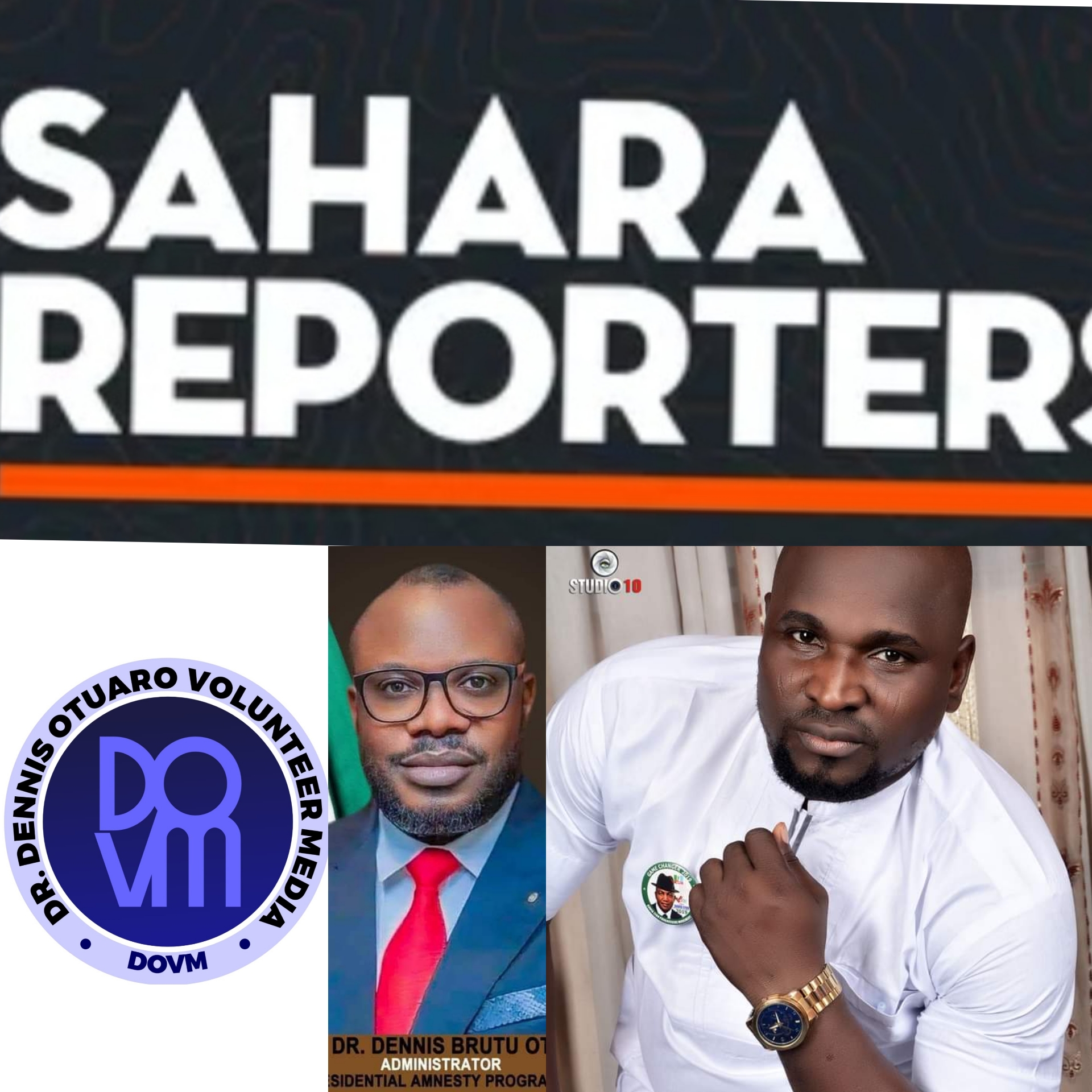
Dr. Dennis Otuaro Volunteer Media Team Berates SaharaReporters Over Unfounded Allegations Against PAP Administrator
The attention of the Dr. Dennis Otuaro Volunteer Media Team has been drawn to a recent misleading and malicious publication by SaharaReporters, accusi