
Windfall for counterfeit document creators
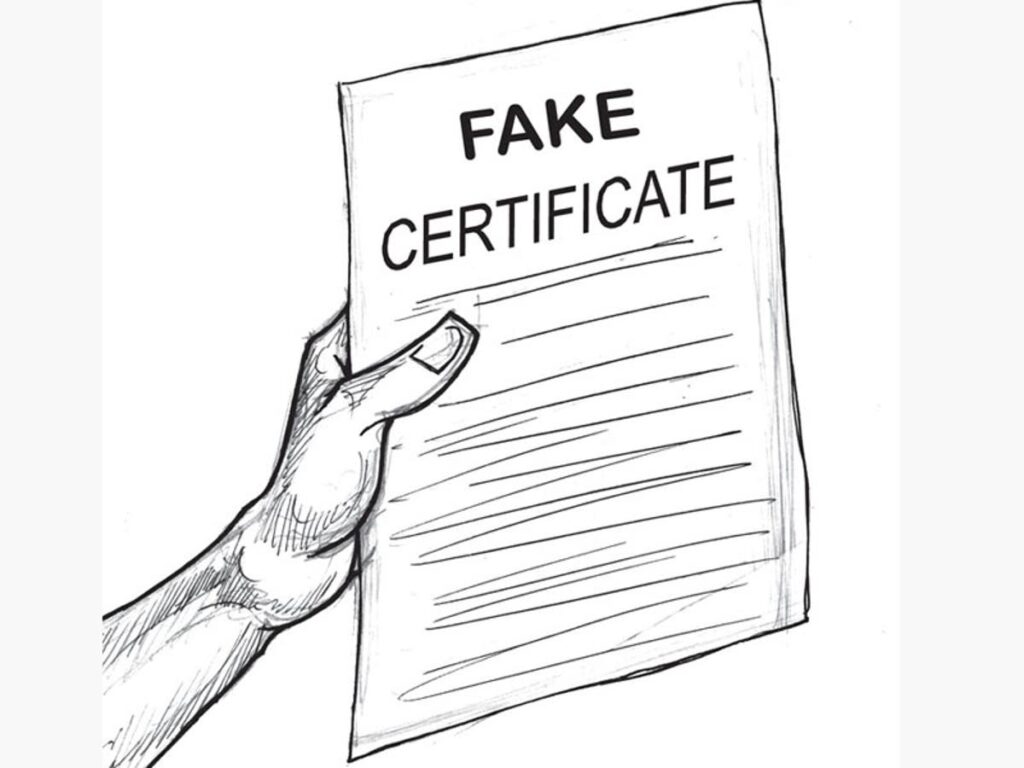
Nigeria's democratic foundation is rooted in the fundamental principle that individuals seeking public office must adhere to basic legal and moral standards, a requirement that is essential for effective leadership.
nThe National Assembly's recent removal of certificate forgery as a punishable offense from the Electoral Act 2026 is a move that warrants strong condemnation, as it undermines the integrity of the electoral process.
nPreviously, Nigeria's electoral framework allowed for candidates' eligibility to be challenged in court if it was discovered that they had submitted forged academic or professional certificates, serving as a vital safeguard to protect the integrity of the electoral process.
nThis provision ensured that individuals who deceived the public about their qualifications could not hold public office, and its removal would effectively shield candidates who falsify their credentials from facing legal consequences.
nAllowing this amendment to stand would be grossly unacceptable, as laws should be designed to expose and punish crime, rather than protect criminals, and it raises concerns that certificate forgers may have infiltrated the National Legislature.
nThis development is seriously troubling, as it erodes the principle of honesty in public service, which is essential for inspiring confidence among citizens and maintaining the integrity of democratic institutions.
nThe removal of this provision sends a dangerous message that dishonesty is tolerable in the pursuit of power, and it undermines the principle of honesty in public service, which is essential for maintaining public trust in government.
nElections in Nigeria are already contentious, and citizens often question the legitimacy of the process, and removing a key legal avenue for challenging fraudulent qualifications will only deepen cynicism and reinforce the perception that political elites manipulate rules to protect themselves.
nThis amendment will damage Nigeria's international reputation, as democratic credibility matters in the global arena, and a country that appears willing to tolerate falsified credentials among its leaders risks undermining confidence among investors, partners, and observers.
nThe fact that Nigerians were not aware of this amendment until after the president had signed it into law is shocking, and it raises questions about the Office of the Attorney General of the Federation's failure to spot and correct this absurdity before it was signed into law.
nThis incident highlights the importance of taking public hearings during the third readings of legislative bills more seriously, to ensure that such criminal conspiracies are identified and addressed in a timely manner, and to prevent a situation where certificate forgers are able to exploit the system.
nUnless extraordinary emergency steps are taken to address this issue, Nigeria may be headed for a situation where certificate forgers are able to operate with impunity, which would have severe consequences for the country's democratic institutions and international reputation.
Related Stories
 General News
CELEBRATING TWO YEARS OF TRANSFORMATIONAL LEADERSHIP IN THE PRESIDENTIAL AMNESTY PROGRAMME
Tomorrow, 14TH March 2026, as we look forward to the second anniversary, we reflect on the remarkable two years since the Administrator of the Preside
 General News
PRESIDENTIAL AMNESTY PROGRAMME PHASE 3: DISREGARD PURPORTED STATEMENT ON DELAYED ITA PAYMENTS — OFFICE OF NATIONAL CHAIRMAN
The Office of the National Chairman of the Presidential Amnesty Programme Phase 3, General Elaye ThankGod Dollar Slaboh, has called on beneficiaries a
 General News
RE: CLARIFICATION ON MY PERSONAL RELATIONSHIPS
PUBLIC NOTICErnrnRE: CLARIFICATION ON MY PERSONAL RELATIONSHIPSrnrnIt has become necessary to make this public clarification following the increasing