
Why Tinubu must lead football governance reforms – Experts/Stakeholders
…John Terry, Segun Odegbami, Obi-Mikel, Efe Sodje, Tana Ayejina, Odion Ighalo lament
nBy Tony Ubani
nEvery year, Nigerians watch with admiration as countries across Africa, Europe, Asia and the Americas implement policies that improve the lives of their citizens. Efficient public transportation, quality education, reliable healthcare, stable electricity, disciplined sports administration, transparent governance and thriving economies, among others. These are not accidents; they are the products of deliberate policies and consistent implementation.
nIronically, many of these successful models are well known in Nigeria. Government officials regularly embark on study tours to countries where these systems work, while international organisations continually provide technical assistance and recommendations. Yet, back home, very few of those lessons are translated into practical reforms.
nWhy does Nigeria struggle to emulate good policies?
nThe obvious question is: Why does Nigeria struggle to emulate policies that have already proven successful elsewhere?
nAs the World Cup hurtles to the final, the actions and reactions of different Governments towards their teams that qualified, played and got eliminated will provide answers on why the Nigerian Government struggles to emulate successful policies.
nThere must be consequences
nWithin 48 hours of elimination, heads rolled, coaches were sacked on airport tarmacs while Federations folded to give room for fresh, innovative ideas.
nCôte d’Ivoire, our West African neighbours went out in the Round of 16. Their FA president resigned on live TV. Another West African country, Senegal, also sacked manager Pape Thiaw in the aftermath of the country’s exit at the last-32 stage of the 2026 World Cup. The Senegal Football Federation (FSF) said that after a thorough evaluation of the sporting results and prospects of the national team, it had dismissed Thiaw in the best interests of Senegalese football.
nAlgeria also sacked Vladimir Petković after World Cup heartbreak. The Algerian national team is officially looking for a new leader after crashing out of the World Cup Round of 32 to Switzerland.
nTunisia, too, sacked head coach Sabri Lamouchi, the day after their opening match at the FIFA World Cup. The decision was made following a humiliating 5-1 defeat to Sweden in Group F. The Tunisian Football Federation swiftly brought in experienced manager Hervé Renard to take over the squad. Tunisian fans reacted to their national team’s disastrous World Cup campaign with a mix of heartbreak, anger, and demanded an overhaul of the football federation, which they blamed for systemic dysfunction and long-standing administrative failures, labeling the leadership a “football mafia”.
nUruguay crashed out in the Round of 32 after Cabo Verde held them goalless. The board got dissolved and fresh elections were called. Austria drew 3-3 with Algeria and both progressed, but when Austria lost the next round, their coach was gone before the team bus left the stadium. Even Paraguay’s senator threatened legal action over a loss.
nPortugal head coach Roberto Martínez resigned from his position following the team’s elimination from the World Cup. The coach said; “there’s no point in continuing” without winning the tournament.
nJust days after Martínez’s exit, the Portuguese Federation appointed 71-year-old veteran manager Jorge Jesus on a four-year contract. As they say, ‘’there’s no time to waste time.’’
nThe messages were brutal and clear: Fail at the World Cup, pay the price at home. Governments of these countries treated football like a corporate KPI(Key Performance Indicator). Miss it, and you’re fired.
nIn Nigeria, there are no consequences for bad behaviour
nNigeria didn’t even qualify for the World Cup. The Super Eagles missed 2022 to Ghana on away goals, then missed 2026 after losing to DR Congo on penalties in the CAF playoff final. Two straight World Cups, gone. First time it happened since we started going to the World Cup in 1994.
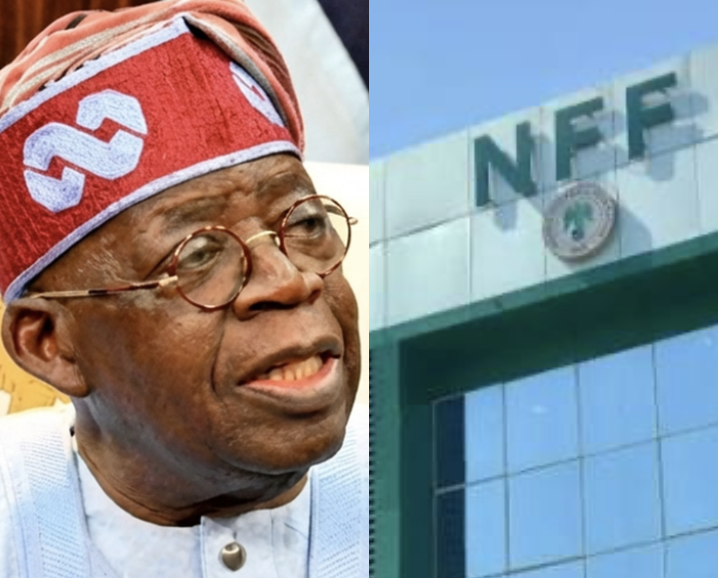
nSo what happened to the Nigeria Football Federation (NFF)? Nothing! No resignations. No dissolution. Instead, the officials who oversaw the embarrassment of missing out in the World Cup, and who have remained in the NFF, are setting up for another four-year term. The elective congress is fixed for September 26, 2026, in Lafia, Nasarawa State. They’ve already amended NFF Statutes, set up a 12-member Electoral Committee, and got a vote of confidence passed on Ibrahim Musa Gusau’s Executive Committee, suggesting a confederacy of mediocrity. Instead, the officials who oversaw the embarrassment of missing out on the World Cup, and who have remained in the NFF, are setting up for another four-year term. The elective congress is fixed for September 26, 2026 in Lafia, Nasarawa State. They’ve already amended NFF Statutes, set up a 12-member Electoral Committee, and got a vote of confidence passed on Ibrahim Musa Gusau’s Executive Committee, suggesting a confedracy of mediocrity. Or, how does one describe a vote of confidence on a federation that oversaw Nigeria’s absence from the World Cup?
nJohn Terry, Segun Odegbami, Obi-Mikel, Efe Sodje, Tana Ayejina, Odion Ighalo lament
nHere is the same board John Obi Mikel called to resign, descrbing Nigeria’s back-to-back World Cup non-qualification a ‘disaster’. The same board Segun Odegbami says is a ‘cabal’ that has held Nigerian football to ransom. The same board Tana Ayejina asked: “After destroying Nigerian football for over a decade, what else do they have to offer? To cause more damage?”
nThe same board ex-international, Efe Sodje slammed for their administrative failures and lack of structure that prevent the country from capitalizing on its immense talent.
nFor another ex-international, Odion Ighalo, ‘’It’s not just the players. We have to also look at the people upstairs because decisions and structure play a big role in why we didn’t qualify.’’
nJohn Terry is not a Nigerian. The former England and Chelsea star who played with John Mikel Obi stated that Nigeria’s absence was a massive loss to the global tournament due to their rich football heritage.
nThe Irony
nIt’s hard to miss. Countries that made the World Cup tore their houses down for underperforming. Nigeria didn’t even get to the party, twice, and the landlords are renewing their lease.
nReactions from governments whose teams even qualified for the World Cup but didn’t shine in the first round, have shown that the silence of Nigerian government over our back-to-back non-qualification is suspicious. The anger now is that elections without benchmarks are just ceremonies.
nBut the people at the Glass house do not care about our anger and pain. They’re fixated on the forthcoming election. In defiance to the voice of the people, posters have been printed and the same lies of qualifying for 2030 World Cup are propagated. The gullible FA chairmen who benefit from the bizarre happenings are dry-cleaning their jackets with pockets for yet another [s]election.
nThese are mere promises that have been made in the past. Promises without fulfillment remind us that words are cheap, and that trust is built on actions, not intentions. They highlight the disappointment, deceit, and loss of credibility that come with empty words. Truly, there is no greater fraud than a promise not kept.
nAre they untouchable?
nOdegbami is threatening court action to halt the September elections because the current constitution “unlawfully restricts voting power to state FA chairmen (who are mostly politicians) instead of actual football stakeholders”.
nFor now, the federation that oversaw U17, U20, U23, and Super Eagles’ failures is still standing. Planning, campaigning.
nWhile Cape Verde — population 525,000 to 550,000 people.(Not up to mass of people in Mafoluku-Oshodi, pushed Argentina to extra time at the World Cup, Nigeria, 250 million people, is watching and grumbling. Government have far more important issues to treat than a football federation’s election. There’s a BIGGER election that comes up next year to think about and plan for than to worry over an election that would oversee eleven men chasing a round ball.
nIn football, the ball is round. In Nigeria, the table seems to be too. It just never turns over.
nThe bad news for President Tinubu is that while other nations are harvesting the goodwill, unity and good vibes from participating at the World Cup, Nigerians continue to grumble in anger, tearing at each other because the singular, most unifying thing that brings Nigerians of all creed together (football) is not getting the necessary attention.
n nRelated Stories
 General News
CELEBRATING TWO YEARS OF TRANSFORMATIONAL LEADERSHIP IN THE PRESIDENTIAL AMNESTY PROGRAMME
Tomorrow, 14TH March 2026, as we look forward to the second anniversary, we reflect on the remarkable two years since the Administrator of the Preside
 General News
PRESIDENTIAL AMNESTY PROGRAMME PHASE 3: DISREGARD PURPORTED STATEMENT ON DELAYED ITA PAYMENTS — OFFICE OF NATIONAL CHAIRMAN
The Office of the National Chairman of the Presidential Amnesty Programme Phase 3, General Elaye ThankGod Dollar Slaboh, has called on beneficiaries a
 General News
RE: CLARIFICATION ON MY PERSONAL RELATIONSHIPS
PUBLIC NOTICErnrnRE: CLARIFICATION ON MY PERSONAL RELATIONSHIPSrnrnIt has become necessary to make this public clarification following the increasing