
Why Nigeria prioritises non-formal education – FG
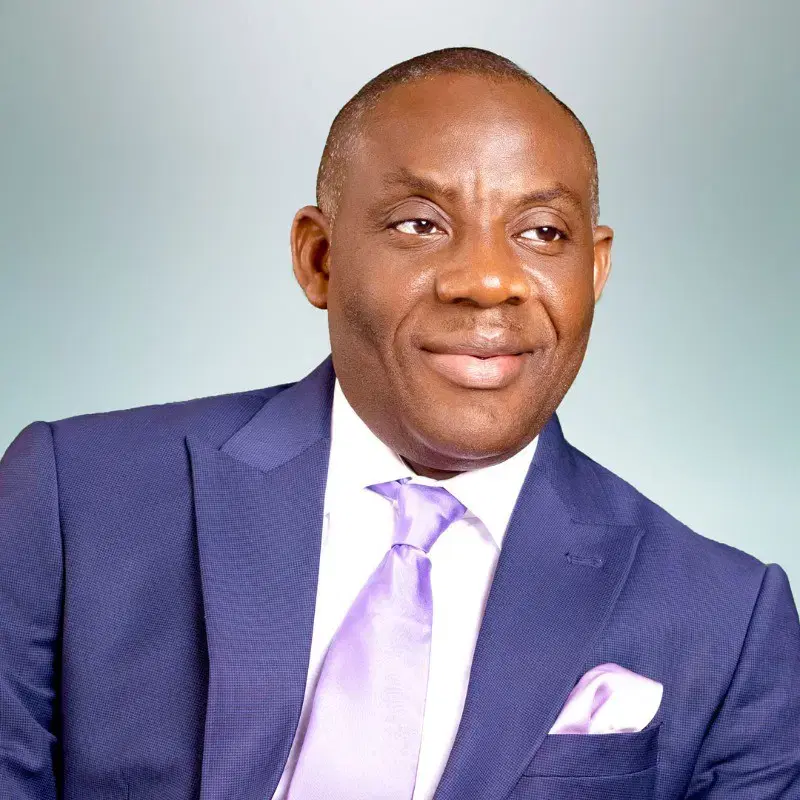
•Dr Tunji Alausa, Minister of Education
nThe federal government has reaffirmed its commitment to strengthening non-formal education as a pathway to job creation, youth empowerment and economic inclusion.
nThe minister of education, Dr Tunji Alausa, stated this during a plenary at the ongoing Education World Forum in London.
nThe special plenary on the “role of non-formal education and soft skills in improving wellbeing, employability and industry participation in education systems” was moderated by His Royal Highness Prince Edward, the Duke of Edinburgh.
nA statement on the minister’s presentation at the session was made available to newsmen on Wednesday in Abuja by Mr Ikharo Attah, the Special Adviser to the minister on Media and Communications.
nIn the statement, the minister highlighted ongoing efforts by the administration of President Bola Tinubu to expand vocational training and digital skills development aimed at reducing the number of out-of-school children and equipping young people with employable skills.
nHe stressed that Tinubu’s administration remained committed to strengthening non-formal education as a strategic tool for job creation and youth empowerment.
nAccording to him, the government is pursuing flexible learning pathways that combine literacy education, technical training and entrepreneurship development to enhance employability and economic inclusion.
nAlausa said Nigeria had introduced several informal education programmes targeting out-of-school youths, adults and vulnerable populations, aimed at bridging literacy gaps and integrating marginalised groups into the economy.
nHe explained that the government developed an Accelerated Basic Education Programme to enable out-of-school children to acquire foundational learning within a shorter period and transition into productive livelihoods.
nThe minister added that the government had intensified Technical and Vocational Education and Training (TVET) initiatives, providing tuition-free vocational training, stipends and start-up support to close skills gaps and promote entrepreneurship.
nHe said the National Policy on Skills Development also promotes flexible learning through hands-on training, digital literacy and vocational education for youths and adults outside the formal school system.
nAccording to him, mass literacy, adult and non-formal education programmes are being implemented nationwide to support functional literacy, post-literacy and continuing education.
nAlausa further highlighted initiatives integrating the Almajiri education system with basic education and vocational skills training to improve social inclusion.
n“We have infused entrepreneurial training across learning levels to equip learners with innovation and business skills needed for self-reliance.
n“What we are doing in Nigeria is because we have a lot of out-of-school children; we have to find a way that we can quickly get them a kind of non-formal education.
n“We’ve created a separate curriculum for them called the accelerated basic education programme, which ties them to what they should be learning in school,” he said.
nThe minister added that the government was also expanding digital technology training to prepare young people with future-ready skills.
nAlausa commended the Duke of Edinburgh for his visit to Nigeria in Nov. 2025 and noted that Nigeria remained an active participant in the Duke of Edinburgh’s International Award Foundation.
nOther panellists at the session included Ontario’s Minister of Education, Paul Calandra; Secretary of State for Education of Rio Grande do Sul, Brazil, Raquel Teixeira; and International Youth Representative of the Duke of Edinburgh International Award Foundation, Andrea Chakma. (NAN)
n nRelated Stories
 General News
CELEBRATING TWO YEARS OF TRANSFORMATIONAL LEADERSHIP IN THE PRESIDENTIAL AMNESTY PROGRAMME
Tomorrow, 14TH March 2026, as we look forward to the second anniversary, we reflect on the remarkable two years since the Administrator of the Preside
 General News
PRESIDENTIAL AMNESTY PROGRAMME PHASE 3: DISREGARD PURPORTED STATEMENT ON DELAYED ITA PAYMENTS — OFFICE OF NATIONAL CHAIRMAN
The Office of the National Chairman of the Presidential Amnesty Programme Phase 3, General Elaye ThankGod Dollar Slaboh, has called on beneficiaries a
 General News
RE: CLARIFICATION ON MY PERSONAL RELATIONSHIPS
PUBLIC NOTICErnrnRE: CLARIFICATION ON MY PERSONAL RELATIONSHIPSrnrnIt has become necessary to make this public clarification following the increasing