
Why Nigeria Port charges must drop — Usman
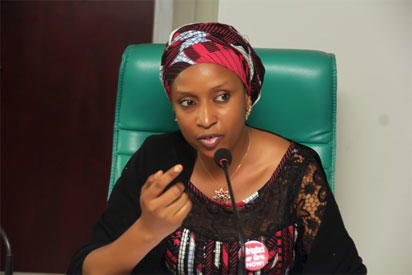
Hadiza Bala Usman
nBy Providence Ayanfeoluwa
nLAGOS: Former Managing Director of the Nigerian Ports Authority, NPA, Hadiza Bala Usman, has called for a comprehensive review of Nigeria’s port tariff structure, warning that high and unpredictable charges are undermining the competitiveness of the nation’s seaports.
nUsman, who is Special Adviser to President Bola Ahmed Tinubu on Policy Coordination and Head of the Central Delivery Coordination Unit, said port modernisation should not be measured by the amount invested in infrastructure alone, but by its impact on cargo movement, turnaround time, logistics costs and the country’s export capacity.
nShe spoke at the 2026 Annual Maritime Lecture of the Maritime Reporters Association of Nigeria, MARAN, where stakeholders examined the challenges confronting Nigeria’s ambition to become a leading maritime and trade gateway in West and Central Africa.
nUsman said Nigerian seaports handle more than four-fifths of the country’s physical imports and exports, making port efficiency critical to the performance of the wider economy.
nAccording to her, high port costs ultimately affect consumers, manufacturers and importers, as expenses incurred in moving cargo through the ports are reflected in the prices of goods and raw materials.
nShe expressed concern over reports that clearing a standard 20-foot container through Apapa could cost between N14 million and N15 million, compared with lower costs at some competing West African ports.
nUsman explained that the figure comprises several charges, including statutory port tariffs, terminal handling, shipping-line charges, detention, demurrage, haulage, documentation and clearing costs.
nShe argued that the government should eliminate duplicated and obsolete charges and reduce unnecessary regulatory interventions while ensuring that tariffs are linked directly to the quality and value of services provided.
n“Charges cannot remain frozen indefinitely while infrastructure deteriorates, but neither can users be required to pay any amount demanded. Tariffs must be linked to value and performance,” she said.
nUsman also called for a predictable and transparent tariff regime, with any adjustment based on published methodologies, international benchmarks and measurable improvements in service delivery.
nBeyond tariffs, she identified six areas that should form the foundation of port modernisation: infrastructure and operational models, modern equipment, digitalisation, institutional reform, human capital development and commercial modernisation covering tariffs, concessions, investment and service quality.
nShe noted that recent improvements in the performance of Nigerian ports should be consolidated, citing the World Bank and S&P Global Market Intelligence’s Container Port Performance Index, which placed Tin Can Island Port 10th globally and Lagos Port Complex, Apapa, 12th among the world’s most improved container ports between 2020 and 2025.
nUsman also advocated the publication of an annual Port Economic Performance Report containing measurable indicators such as vessel and truck turnaround times, cargo-handling productivity, equipment availability, Customs clearance, total logistics costs, digital transactions, export connectivity, customer satisfaction and dispute-resolution timelines.
nShe stressed that infrastructure development at Apapa, Tin Can Island, the eastern ports and Lekki Deep Sea Port would only yield their full economic value if supported by efficient road, rail, barge, inland logistics and dry-port connections.
n“A port cannot be globally competitive if its hinterland is not competitive,” she said.
nUsman urged maritime journalists to intensify their accountability role by tracking port performance, investigating the actual cost of cargo movement and benchmarking Nigerian ports against competing African gateways.
n nRelated Stories
 General News
CELEBRATING TWO YEARS OF TRANSFORMATIONAL LEADERSHIP IN THE PRESIDENTIAL AMNESTY PROGRAMME
Tomorrow, 14TH March 2026, as we look forward to the second anniversary, we reflect on the remarkable two years since the Administrator of the Preside
 General News
PRESIDENTIAL AMNESTY PROGRAMME PHASE 3: DISREGARD PURPORTED STATEMENT ON DELAYED ITA PAYMENTS — OFFICE OF NATIONAL CHAIRMAN
The Office of the National Chairman of the Presidential Amnesty Programme Phase 3, General Elaye ThankGod Dollar Slaboh, has called on beneficiaries a
 General News
RE: CLARIFICATION ON MY PERSONAL RELATIONSHIPS
PUBLIC NOTICErnrnRE: CLARIFICATION ON MY PERSONAL RELATIONSHIPSrnrnIt has become necessary to make this public clarification following the increasing