
Why is the dollar profiting from Middle East war? – Report
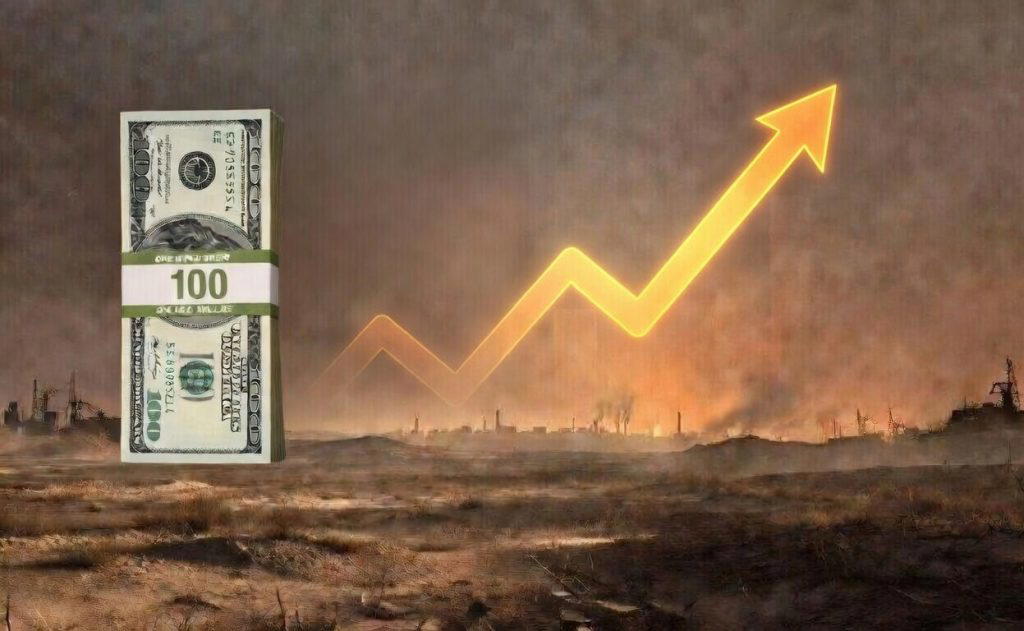
The surge in energy prices triggered by the conflict in the Middle East has significantly strengthened the dollar, paradoxically undermining US President Donald Trump’s economic objectives.
nAFP looks at the reasons behind the greenback’s rise against rivals.
n– King of oil –
nAt the start of the conflict almost two weeks ago, investors began massively selling assets, turning to energy investments in anticipation of a supply crisis — and to the dollar — the currency used to price oil and gas.
nAttacks on Gulf infrastructure and the blockade of the strategic Strait of Hormuz has propelled the price of Brent North Sea crude, the global benchmark, by more than one third to around $100 per barrel.
nWith more dollars needed to purchase oil, the greenback has appreciated by around 2.5 percent since the start of hostilities, according to the Dollar Index, which compares the US unit to a basket of major currencies.
nThe dollar, seen as a highly liquid asset owing to it being readily available and exchangeable, is seen also as a leading safe haven investment.
nIt is favoured for international trades as well as foreign exchange reserves held by central banks.
n– The US spared –
nThe United States has so far been spared from the oil supply crisis thanks to the country being the world’s leading producer of crude.
nAlthough it still imports the commodity, the US purchases only eight percent of its requirement from the Gulf, compared with nearly two-thirds from Canada, according to the most recent official data from the US Energy Information Administration.
nRising oil prices tend to support the dollar also thanks to the US being a net exporter of refined petroleum products and gas, in turn boosting the nation’s trade balance.
nBy comparison, European and Asian economies which are more reliant on Gulf imports are being hit harder, making their currencies and bonds less attractive.
n– Risks to inflation –
nThe dollar is additionally profiting from the possibility of a fresh inflation hike caused by soaring energy costs.
nThis is because it increases the likelihood of the US Federal Reserve slowing the pace of its planned cuts to interest rates, while even forcing it to possibly raise borrowing costs in the short term.
nThe prospect of higher interest rates for longer strengthens the appeal of the dollar, to the detriment of dollar-denominated gold and another traditional safe haven.
nDespite recent strengthening, the dollar has not yet recovered to the levels it reached ahead of Trump’s return to the White House.
nOffsetting the currency’s recent gains are concerns about the impact of Trump’s tariffs on the world’s biggest economy.
nFears surrounding high US debt levels and the president’s pressure over the independence of American institutions, notably the Fed, have also weighed upon its value.
n“The dollar remains in demand and well supported,” Kathleen Brooks, analyst at traders XTB, told AFP.
n“However, as the conflict drags on the attractiveness of the dollar could diminish… The US still has a massive budget deficit, which could get worse due to the war, as military spending may need to rise sharply in the coming months.”
n– Trump’s paradox –
nMarket developments since the start of the conflict run counter to the objectives initially stated by Trump, who has pledged to lower gas prices, fight for lower interest rates, as well as advocating for a weak dollar to support exports.
nCountering this, US Treasury Secretary Scott Bessent asserted at the end of January that the “US always has a strong dollar policy”.
nMark Sobel, a former senior Treasury official, told AFP that “the administration’s views on the dollar are confused, muddled and inconsistent”.
nMarc Chandler, analyst at Bannockburn Capital Markets, meanwhile concluded that for the US government, “denying Iran nuclear weapons or missiles seems to have a higher priority than the short-run impact of the foreign exchange market”.
n nRelated Stories
 General News
CELEBRATING TWO YEARS OF TRANSFORMATIONAL LEADERSHIP IN THE PRESIDENTIAL AMNESTY PROGRAMME
Tomorrow, 14TH March 2026, as we look forward to the second anniversary, we reflect on the remarkable two years since the Administrator of the Preside
 General News
PRESIDENTIAL AMNESTY PROGRAMME PHASE 3: DISREGARD PURPORTED STATEMENT ON DELAYED ITA PAYMENTS — OFFICE OF NATIONAL CHAIRMAN
The Office of the National Chairman of the Presidential Amnesty Programme Phase 3, General Elaye ThankGod Dollar Slaboh, has called on beneficiaries a
 General News
RE: CLARIFICATION ON MY PERSONAL RELATIONSHIPS
PUBLIC NOTICErnrnRE: CLARIFICATION ON MY PERSONAL RELATIONSHIPSrnrnIt has become necessary to make this public clarification following the increasing