
Why insecurity escalated during Buhari’s time – Ex-DSS Director, Amachree
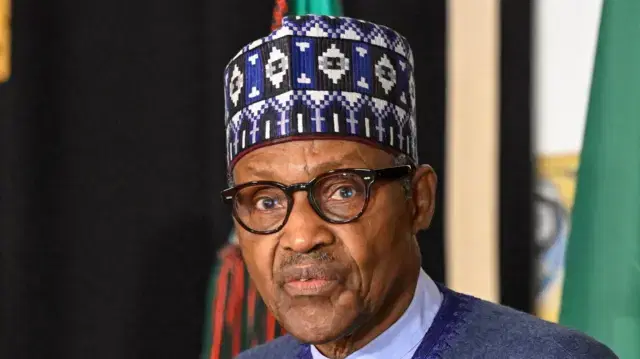
Buhari
nBy Soni Daniel, Editor, Northern Region
nThe former director of the Department of State Security Services, Mr. Dennis Amachree, has given reasons why insecurity blossomed during the regime of former President Muhammadu Buhari in Nigeria.
nIn his current book: “DSS@ 40: My Journey behind the shield”, Amachree blamed the administration for paying little or no attention to the escalating threats posed by insurgency, banditry and kidnapping.
nAmachree also blamed the high level of corruption among top government officials and the payment of ransom by senior functionaries to kidnappers, a development he said, formally subsidised terrorism and kidnapping in Nigeria.
nThe author said, “The period of the Muhammadu Buhari administration is viewed as a critical time when security threats metastasized, and government indifference became palpable.
n“Despite being a former military general, the administration was perceived as doing “little or nothing” about the escalating threats of insurgency, banditry and kidnapping. This lack of effective response fueled the perception of a clueless leadership that did not understand or care about democratic governance.
n“The president’s comments, such as labelling Nigerian youths “lazy” during international trips, were seen as adding insult to the injury of widespread unemployment. This not only damaged the nation’s reputation but further alienated a massive segment of the population who felt abandoned by the government.
nBeyond the high level of corruption involving top government functionaries, Amachree painted a grim picture of governments secretly paying billions of Naira to bandits in ransoms.
nAmachree said: The subsequent official denials, debunked by bandits such as Bello Turji, destroyed public faith and proved that the state was directly financing the threats it claimed it was fighting.
nHe also painted politicians under the administration as the antagonists of the people, pointing out that the core security issue is not often framed as a conflict between ethnic groups, but between the ruling class and the ordinary, hard-working citizen.
n“The true impediment to peace and stability is the political class, which refuses to allow citizens to pursue their daily lives in a stable environment,” Amachree said in the book recently released to the public.
n“While economic warnings intensified and the security situation deteriorated, politicians displayed a state of “reckless abandon”, prioritizing personal interests over national stability, thus confirming their role as the ultimate threat to social cohesion and security,” the security expert wrote.
n nRelated Stories
 General News
CELEBRATING TWO YEARS OF TRANSFORMATIONAL LEADERSHIP IN THE PRESIDENTIAL AMNESTY PROGRAMME
Tomorrow, 14TH March 2026, as we look forward to the second anniversary, we reflect on the remarkable two years since the Administrator of the Preside
 General News
PRESIDENTIAL AMNESTY PROGRAMME PHASE 3: DISREGARD PURPORTED STATEMENT ON DELAYED ITA PAYMENTS — OFFICE OF NATIONAL CHAIRMAN
The Office of the National Chairman of the Presidential Amnesty Programme Phase 3, General Elaye ThankGod Dollar Slaboh, has called on beneficiaries a
 General News
RE: CLARIFICATION ON MY PERSONAL RELATIONSHIPS
PUBLIC NOTICErnrnRE: CLARIFICATION ON MY PERSONAL RELATIONSHIPSrnrnIt has become necessary to make this public clarification following the increasing