
What is the true cause of Nigeria's power outage problem?
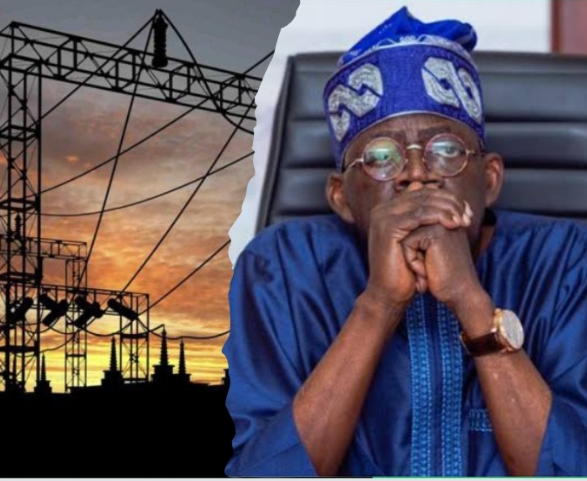
Nigeria's frequent power outages often prompt consumers to point fingers at their local distribution companies, such as EEDC or IKEDC, as the primary culprits, given their role as the final link in the electricity supply chain and the entity responsible for billing.
nHowever, a closer examination of the data reveals a different narrative, one in which the distribution companies, or DisCos, are meeting their financial obligations, while the government is falling short, with the real issue lying in a government office rather than a DisCo boardroom.
nIn the third quarter of 2025, Nigeria's DisCos collectively paid 93.04 per cent of their financial obligations to the Nigerian Bulk Electricity Trading Company (NBET), while in the second quarter, the rate was 95.77 per cent, and for the full year 2025, DisCos accounted for 93.80 per cent of all remittances collected in the sector.
nThese figures indicate that the DisCos are operating at near-full compliance, despite being hindered by an unfavorable environment, and are not the primary cause of the system's problems, as they are often made out to be.
nMeanwhile, the Federal Government accrued N1.93 trillion in electricity subsidy obligations in 2025 alone, but only paid N76.95 billion, which is less than 4 kobo for every naira owed, highlighting a significant shortfall in government payments.
nOut of the N1.92 trillion that generation companies (GenCos) were owed beyond DisCo payments, 96 per cent, or N1.85 trillion, stemmed from the government's failure to honour its subsidy commitments, rather than any shortcomings on the part of the DisCos or private investors.
nBy December 2025, the sector's total accumulated debt had surpassed N6 trillion, with experts predicting it could reach N8.8 trillion by the end of 2026, which is more indicative of a budget integrity issue than a power sector problem.
nNigerian electricity consumers have been paying artificially low tariffs for decades, with the difference being made up by the Federal Government in the form of subsidies, but the government has consistently failed to pay these subsidies, creating a growing hole in the system.
nApart from a brief period in 2023, Nigeria has not had a cost-reflective electricity tariff since 2012, despite significant increases in the cost of living, gas prices, diesel costs, and infrastructure maintenance, resulting in a sector that is unable to pay its bills and generation companies that cannot afford gas.
nThe April 2024 tariff adjustment, which raised Band A tariffs to N225 per kilowatt-hour, demonstrated the positive impact of moving towards cost-reflective tariffs, as revenue collection improved and some DisCos recorded their highest remittance rates ever.
nHowever, this adjustment only applied to Band A customers, and the subsidy system remains in place for other consumers, with the government continuing to accumulate unpaid subsidy obligations.
nThe crisis in the power sector is not being driven by incompetent or rogue investors, but rather by a lack of coherent government policy, with reputable private sector names having invested in the sector after the 2013 privatisation, only to have their expectations repeatedly disappointed by the government's failure to maintain a consistent tariff policy and pay its subsidy commitments.
nEight new core investors with track records in other sectors of the economy have entered the market since the 2013 privatisation, but they have been hindered by shifting government policies, delayed or reversed tariff orders, and withheld subsidy payments, making it impossible to build a sustainable infrastructure business.
nThe consequences of this situation extend beyond existing investors, as international development finance institutions, pension funds, and infrastructure investors are being deterred from investing in Nigeria's power sector due to the government's lack of credibility.
nNigeria passed the Electricity Act 2023, which, if properly implemented, could bring about significant changes by removing electricity from the Federal Government's exclusive control and empowering states to regulate their own electricity markets.
nStates can now issue their own licences to private investors, develop independent power infrastructure, and build electricity markets that are insulated from the chaos of federal policy cycles, following a model that has been successful in larger democracies and federations, such as the United States and India.
nAbia State has already demonstrated the potential of this approach through its partnership with Geometric Power, which has provided factories in the state with over 23 hours of uninterrupted power daily, attracting investment and creating jobs.
nMulti-state partnerships can also facilitate co-investment in generation projects that serve multiple markets, attracting large-scale investment and building credible investment environments from the ground up.
nNigerians who have suffered from power outages deserve to understand the root causes of the problem and demand that the government take action to fix it, starting with the publication of a clear, time-bound plan to phase in cost-reflective tariffs across all customer bands.
nThis plan should include targeted, properly funded relief for low-income households, rather than a blanket subsidy that disproportionately benefits the wealthy, as noted by the World Bank.
nSubsidy obligations must be paid on schedule, rather than being accumulated into a multi-trillion-naira debt that will be inherited by future generations, and state governments must urgently enact electricity market laws under the 2023 Act to address the crisis.
nUltimately, the power sector's problems are not inevitable, but rather a choice made by the government every time a tariff decision is postponed, a subsidy goes unpaid, or a state government chooses inaction over reform, and Nigeria has the legal tools to build a better power sector, but it needs the political will to use them.
Related Stories
 General News
CELEBRATING TWO YEARS OF TRANSFORMATIONAL LEADERSHIP IN THE PRESIDENTIAL AMNESTY PROGRAMME
Tomorrow, 14TH March 2026, as we look forward to the second anniversary, we reflect on the remarkable two years since the Administrator of the Preside
 General News
PRESIDENTIAL AMNESTY PROGRAMME PHASE 3: DISREGARD PURPORTED STATEMENT ON DELAYED ITA PAYMENTS — OFFICE OF NATIONAL CHAIRMAN
The Office of the National Chairman of the Presidential Amnesty Programme Phase 3, General Elaye ThankGod Dollar Slaboh, has called on beneficiaries a
 General News
RE: CLARIFICATION ON MY PERSONAL RELATIONSHIPS
PUBLIC NOTICErnrnRE: CLARIFICATION ON MY PERSONAL RELATIONSHIPSrnrnIt has become necessary to make this public clarification following the increasing