
What cargo ships are passing Strait of Hormuz?
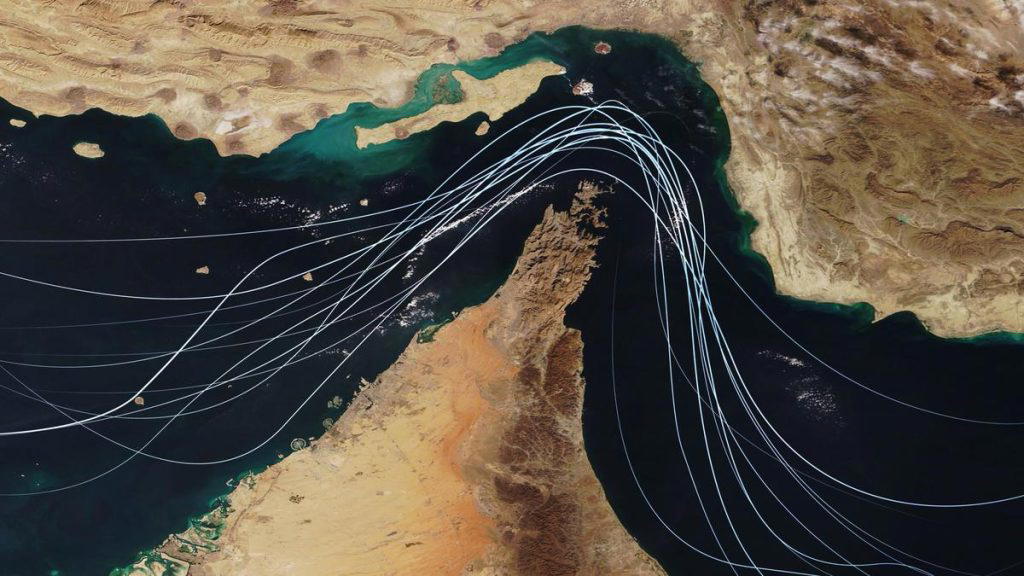
Just a trickle of cargo ships and tankers — most of them Iranian — have made it through the Strait of Hormuz since Iranian forces effectively blocked the crucial trade route in the Middle East war.
nHere are facts and figures about vessels that have passed through the 167-kilometre (104-mile) long strait since the war broke out with US-Israeli strikes on Iran on February 28.
n– 95% shipping drop –
nFrom March 1 to 0400 GMT on March 24, commodities carriers made just 149 crossings, according to analytics firm Kpler — a 95 percent decrease from peacetime.
nOf these, 94 crossings were by oil and gas tankers, with 61 percent of them loaded and more than two-thirds travelling east out of the strait, Kpler data showed.
nOn Monday, two Iran-flagged carriers — the Artman and the Kiazand — and a US-sanctioned oil tanker, the Lenore, all navigated the chokepoint.
nThe Jasmin tanker was among the smaller number crossing in the other direction, bound for an Iranian port after sailing from Karachi, according to maritime trackers.
nA Chinese-owned containership — the Newvoyager — also transited the waterway after making a payment to Iranian authorities, Lloyd’s List reported.
nThe exact amount and method of payment could not be confirmed, it said.
n“Political pragmatism has encouraged a small uptick in state-negotiated transits… over the past few days, but do not mistake this for a step change in the security situation,” Lloyd’s List editor Richard Meade wrote Tuesday.
n“Iran remains highly capable of damaging shipping transiting the Strait of Hormuz.”
n– ‘Tehran Toll Booth’ –
nRecent crossings appeared to have mainly used a purported Tehran-approved northern route around Larak Island just off the Iranian coast.
nLloyd’s List updated Monday that it has tracked more than 20 ships using the so-called corridor, with the majority Greek-owned but others Indian-, Pakistan- and Syrian-owned.
n“Traffic through the Strait of Hormuz is increasingly being diverted into Iranian territorial waters in what has been dubbed the ‘Tehran Toll Booth’,” the shipping journal said late Monday.
nIt added Iran’s Revolutionary Guard Corps “is understood to be verifying vessel details and, in some cases, extolling a passage fee”.
n– Iranian, Greek, Chinese ships –
nThe biggest proportion of ships to have passed through the strait are owned or flagged in Iran, followed by Greek and Chinese carriers, Bridget Diakun, an analyst at Lloyd’s List Intelligence, said last week.
n“Although Iran is continuing to control the Strait and exit its own oil, everything else is largely still at a standstill,” Meade previously noted.
n– 51 sanctioned ships –
nSince the war started, more than 40 percent of the ships transiting the strait have been under US, EU or UK sanctions, according to an AFP analysis of passage data.
nOf the oil and gas tankers, 57 percent were under sanctions.
nSince mid-March “anything heading westbound has been shadow fleet, gas carriers or tankers… they absolutely dominate the traffic going through,” Diakun told the Lloyds briefing.
n– Oil, LNG to Asia –
nCommodities analysts at JPMorgan bank have noted that most of the oil passing through the strait was headed for Asia, principally China.
nCichen Shen, Asia Pacific editor at Lloyd’s List, said there were indications online that Chinese authorities were working on “some sort of exit plan” for their big tankers stuck in the region.
nMeanwhile, Europe-bound LNG cargoes have been diverted to Asia, according to MarineTraffic.
nIt noted that around 11 LNG tankers originally bound for Europe have been diverted to Asia since March 3, according to its analysis of market data, amid restricted supply and rising spot prices.
n– 1.3 mn barrels of Iran oil –
nThe JPMorgan analysts said overall 98 percent of the observable oil traffic through the strait was Iranian, averaging 1.3 million barrels a day “in early March”.
nA fifth of the world’s oil and liquefied natural gas passes through the strait in peacetime.
nrlp-jj/jwp/gv
n nRelated Stories
 General News
CELEBRATING TWO YEARS OF TRANSFORMATIONAL LEADERSHIP IN THE PRESIDENTIAL AMNESTY PROGRAMME
Tomorrow, 14TH March 2026, as we look forward to the second anniversary, we reflect on the remarkable two years since the Administrator of the Preside
 General News
PRESIDENTIAL AMNESTY PROGRAMME PHASE 3: DISREGARD PURPORTED STATEMENT ON DELAYED ITA PAYMENTS — OFFICE OF NATIONAL CHAIRMAN
The Office of the National Chairman of the Presidential Amnesty Programme Phase 3, General Elaye ThankGod Dollar Slaboh, has called on beneficiaries a
 General News
RE: CLARIFICATION ON MY PERSONAL RELATIONSHIPS
PUBLIC NOTICErnrnRE: CLARIFICATION ON MY PERSONAL RELATIONSHIPSrnrnIt has become necessary to make this public clarification following the increasing