
Wealth Discrepancy in Igbo Community Contrasts with South-East Growth
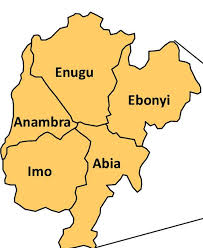
The Igbo people are a driving force behind Nigeria's wealth creation, with a notable presence among the country's entrepreneurs, industrialists, and billionaires, accounting for a remarkable number of these individuals.
nDespite this, the South-East region, which is the homeland of the Igbo nation, remains one of the least endowed areas in terms of infrastructure, federal institutions, and public investment, with structural deficits in roads, healthcare facilities, educational establishments, and employment opportunities.
nThe region's economy is relatively weak, with studies indicating that it contributes less than eight per cent of Nigeria's Gross Domestic Product (GDP), making it one of the country's least productive geographical regions, which in turn affects its share of national benefits.
nThe irony of the situation is that while Igbo sons and daughters own thriving businesses across Nigeria and beyond, most of these investments are not based in their region, resulting in taxes being paid, jobs being created, and economic dividends being enjoyed elsewhere.
nThis has led to the enduring paradox of the Igbo economy, where a wealthy people have a relatively poor homeland, prompting governments, development experts, and visionary leaders to seek ways to reverse this trend, with the philosophy of Aku Ruo Uno, or bringing wealth back home, being a recurring theme.
nSuccess stories in communities such as Nnewi and Abriba, which have embraced this idea, provide evidence of its potential, but the scale of investment has not matched the region's developmental needs, making the urgency to address this issue even greater.
nDuring the inauguration and retreat of the South East Development Commission (SEDC) in Abuja earlier this year, Governor Chukwuma Charles Soludo of Anambra State highlighted the region's economic insignificance, stating that the South-East's wealth is largely outside the region, emphasizing that individual prosperity does not automatically translate into regional prosperity.
nAs a respected economist and former Governor of the Central Bank of Nigeria, Soludo's point was straightforward: a homeland cannot flourish if its industries, investments, and taxable economic activities are concentrated elsewhere, prompting him to advocate for a coordinated economic reconstruction strategy to address the region's years of insecurity, infrastructure deficits, and capital flight.
nSoludo's remarks generated debate, including an article published in Law and Society Magazine on June 4, which argued that the South-East's importance cannot be measured solely by regional GDP, and that Igbo entrepreneurs drive enormous economic activity across Nigeria, with their influence extending far beyond the five South-East states.
nHowever, these arguments do not invalidate Soludo's central thesis, which is that the South-East remains economically fragile because much of the wealth created by its people is located elsewhere, with the taxes paid by Igbo-owned businesses enriching host states, while the homeland derives comparatively little benefit.
nSoludo was diagnosing a problem, not disparaging a people, and his concern is that the South-East's domestic economy is underdeveloped, making it essential to address this issue to ensure the region's prosperity.
nHistory offers examples of societies transformed by deliberate diaspora investment, such as Israel, China, India, Ireland, Armenia, and South Korea, which all benefited from citizens abroad who returned with capital, knowledge, technology, and global networks.
nThe Jewish diaspora helped finance Israel's infrastructure and technological development, while overseas Chinese investors played a critical role in China's industrial take-off, and Indian professionals abroad contributed to the country's emergence as a global technology hub.
nNdi Igbo possess many of the strengths that contributed to these successes, including entrepreneurship, global networks, and communal self-help, with communities such as Nnewi and Abriba demonstrating what is possible when local investment is encouraged.
nHowever, sustainable development in the region requires improved security, transparent governance, and strategic investments in transportation, healthcare, education, and other critical sectors, as well as credible frameworks to attract and retain diaspora capital.
nLike the Jews and the overseas Chinese, Ndi Igbo can leverage their global presence to build a stronger and more prosperous homeland, which is the message Governor Soludo has been conveying through his Solution Government's vision of building a "liveable and prosperous homeland" in Anambra State.
nUltimately, the South-East faces a choice: remain trapped in partisan distractions or embark on a development path that history has shown to work, and the region's future may well depend on which path it chooses.
Related Stories
 General News
CELEBRATING TWO YEARS OF TRANSFORMATIONAL LEADERSHIP IN THE PRESIDENTIAL AMNESTY PROGRAMME
Tomorrow, 14TH March 2026, as we look forward to the second anniversary, we reflect on the remarkable two years since the Administrator of the Preside
 General News
PRESIDENTIAL AMNESTY PROGRAMME PHASE 3: DISREGARD PURPORTED STATEMENT ON DELAYED ITA PAYMENTS — OFFICE OF NATIONAL CHAIRMAN
The Office of the National Chairman of the Presidential Amnesty Programme Phase 3, General Elaye ThankGod Dollar Slaboh, has called on beneficiaries a
 General News
RE: CLARIFICATION ON MY PERSONAL RELATIONSHIPS
PUBLIC NOTICErnrnRE: CLARIFICATION ON MY PERSONAL RELATIONSHIPSrnrnIt has become necessary to make this public clarification following the increasing