
Waste management assumes control of highways, waterways in Ondo, Oyo, Ekiti, Ogun
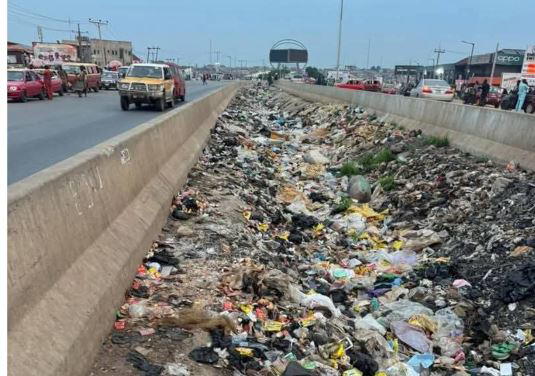
Across the South-West, major roads have been overrun with refuse heaps, with the dumps of waste becoming a common sight in many areas, prompting a closer look at the situation.
nIn Ondo, the state capital, Akure, is battling with mountains of refuse, with residents having to endure unbearable stench, blocked drainage, and rising fears of disease outbreaks, particularly in areas like Arakale, Ijoka, Oke Aro, Aule, Orita Obele, and Odopetu Market.
nThe crisis is fueled by weak enforcement of environmental regulations, inadequate waste infrastructure, insufficient evacuation trucks, and a growing reliance on informal disposal methods, with many households resorting to open dumping, roadside disposal, burning, or burying waste within residential compounds.
nIn markets like Odopetu, traders have blocked canals with waste and set up stalls directly in front of refuse heaps, exacerbating the problem, with stagnant wastewater and foul odours becoming a part of daily life for traders, commuters, and households.
nThe state government enforces a monthly environmental sanitation exercise on the last Saturday of every month, between 7 a.m. and 10 a.m., with officials from the Ministry of Environment and the Ondo State Waste Management Authority monitoring compliance and sanctioning offenders.
nHowever, investigations show that the monthly exercise has not addressed the waste generated daily by thousands of households, markets, and businesses, with drains cleared during the exercise often becoming re-clogged because evacuated refuse sometimes remains on roadsides for days before collection trucks arrive.
nPrivate waste operators now complement government efforts in estates, Government Reservation Areas, and high-income neighbourhoods where residents can afford regular charges, but densely populated communities continue to grapple with irregular collection and indiscriminate dumping.
nCommissioner for Environment, Dr. Tob Loko, said the government runs a zero-tolerance policy for unwholesome practices, urging residents to key into Governor Lucky Aiyedatiwa’s OUR EASE Agenda, which promotes a clean, healthy, and disease-free environment.
nUnder the “Polluter Pays” principle, households and businesses are expected to pay for waste services, with revenue meant to fund evacuation, truck maintenance, and service delivery, according to OSWMA Chairman, Mrs. Olayinka Alabi.
nTrader Deji Adeyemi said the last government truck that came to his area was months ago, and he now pays wheelbarrow pushers to carry the waste away, but honestly, he does not know where they dump it.
nEnvironmental expert Bukola Ojo urged the government to prioritise evacuation of accumulated refuse, strengthen supervision of private operators, increase OSWMA funding, repair trucks, expand coverage, and improve disposal infrastructure.
nIn Ekiti State, there are three major dump sites located at Ilokun, Shasha, and Iyin-Ekiti, with each occupying no less than 23 hectares of land, and residents like Musa Sule have lamented the offensive odour from the dump site, which often makes younger ones fall ill.
nAnother resident, Amina Abubakar, said the smell has become the normal air they breathe, and it has become difficult to differentiate between odour and attractive scent.
nFormer Director-General of the Ekiti State Waste Management Agency, Olasunkanmi Onipede, said authorities have put in place adequate measures to safeguard public health and the environment despite the increasing number of residential developments around the dump sites.
nOnipede disclosed that the government has continued to invest in infrastructure and equipment to ensure effective waste management and prevent environmental hazards, with the dumpsite having been there for long, even before other developments around the area.
nIn Oyo State, despite repeated government campaigns against indiscriminate waste disposal and open defecation, several parts of Ibadan, the state capital, continue to grapple with overflowing refuse dumps and poor sanitation practices.
nThe situation has raised growing concerns among residents, environmental experts, and health practitioners over the implications for public health and the environment, with refuse heaps remaining a common sight across major roads, markets, and residential communities.
nReasons for the persistence of refuse dumps and open defecation include rapid population growth, inadequate waste collection infrastructure, economic hardship, and poor public attitude towards environmental sanitation.
nAn environmental advocate, Dr. Kola Animashaun, noted that the challenge would continue unless both government and residents changed their approach, stressing the need for stronger waste sorting, recycling initiatives, public education, and consistent enforcement of environmental laws.
nThe Oyo State Government acknowledged the existence of refuse accumulation in parts of Ibadan but maintained that the challenge could not be solved through government intervention alone, according to the Ministry of Environment and Natural Resources Commissioner, Mr. Ademola Aderinto.
nThe commissioner said the current administration has introduced reforms aimed at improving waste collection, including the accreditation of private waste collectors, rehabilitation of landfill facilities, and restructuring of waste management across the state.
nGovernment officials argued that decades of poor waste management practices, increasing waste generation, and limited disposal infrastructure had contributed to the backlog, with residents who failed to register with approved waste collectors or dumped refuse indiscriminately undermining ongoing clean-up efforts.
nThe Chairman of the Oyo State Waste Management Authority, Abdul-lateef Idowu Oyelere, explained that they evacuate thousands of tonnes of waste from different parts of Ibadan, but illegal dumping continues to undermine their efforts.
nHe appealed to residents, saying they should register with accredited waste collectors because sustainable waste management depends on the cooperation of government and residents alike.
nHealth experts warned that indiscriminate refuse disposal and open defecation presented serious environmental and public health risks, with overflowing refuse dumps creating ideal breeding grounds for mosquitoes, flies, and rodents, increasing the risk of diseases.
nA public health physician, Mr. Fisayo Ayodele, also warned that open defecation contaminates soil and water sources with harmful microorganisms, and children are particularly vulnerable because contaminated water and food can easily transmit diarrheal diseases and other preventable illnesses.
nThe Oyo State Government has intensified enforcement against environmental offenders by prosecuting individuals caught dumping refuse illegally or engaging in open defecation, with plans to expand public toilet facilities, strengthen community-based waste management systems, and improve landfill operations.
nA resident of Ibadan, Alhaji Adio, acknowledged the government’s efforts but said refuse often stays for days before evacuation in some areas, and more collection points and regular evacuation schedules would greatly improve sanitation in their communities.
nEnvironmental sanitation is a shared responsibility between government and citizens, with residents encouraged to understand that open defecation is not only unhygienic but also contributes significantly to the transmission of diseases.
nHouseholds are encouraged to register with approved waste collection providers, separate recyclable materials where possible, and avoid disposing of refuse in drainage channels, road medians, or open spaces, according to environmental advocates.
nIn Ogun State, despite sustained efforts by the government to eradicate open defecation and improve environmental sanitation, the practice remains in some communities, raising concerns over public health and environmental sustainability.
Related Stories
 General News
CELEBRATING TWO YEARS OF TRANSFORMATIONAL LEADERSHIP IN THE PRESIDENTIAL AMNESTY PROGRAMME
Tomorrow, 14TH March 2026, as we look forward to the second anniversary, we reflect on the remarkable two years since the Administrator of the Preside
 General News
PRESIDENTIAL AMNESTY PROGRAMME PHASE 3: DISREGARD PURPORTED STATEMENT ON DELAYED ITA PAYMENTS — OFFICE OF NATIONAL CHAIRMAN
The Office of the National Chairman of the Presidential Amnesty Programme Phase 3, General Elaye ThankGod Dollar Slaboh, has called on beneficiaries a
 General News
RE: CLARIFICATION ON MY PERSONAL RELATIONSHIPS
PUBLIC NOTICErnrnRE: CLARIFICATION ON MY PERSONAL RELATIONSHIPSrnrnIt has become necessary to make this public clarification following the increasing