
Warning to President Tinubu: Inadequate Soccer Administration Poses Significant Threat to National Stability
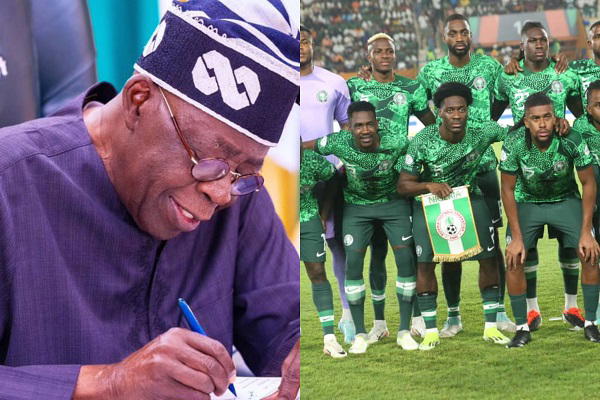
The 2026 FIFA World Cup, which commenced on June 11, is nearing its conclusion, with new stars emerging and some established players justifying their ratings, while others have seen their dreams dashed.
nDespite the absence of the Nigerian national team, the Super Eagles, from the tournament, enthusiastic football fans in the country have continued to watch the matches, often staying up late to do so, highlighting the power of football to unite and captivate people.
nThe question of what could have been if the Super Eagles had participated in the World Cup is a pertinent one, with the team's absence serving as a reminder of the country's failed attempts to qualify for the tournament.
nNigerian football legend Segun Odegbami has described football as a potent, unifying force that can create hope, break down racial barriers, and heal divided nations, citing the example of the Enugu Rangers, which helped to reconcile Nigerians after the civil war.
nThe Nigeria Football Federation, founded in 1945, has overseen the country's football development, with the Super Eagles winning the Africa Cup of Nations three times, but poor administration has hindered the team's progress in recent years.
nFormer Nigeria captain Mikel Obi has called for a change in the leadership of the Nigeria Football Federation, stating that the entire board needs to go, following the team's back-to-back failure to qualify for the World Cup.
nFootball has the power to bring people together, as seen during the Nigerian Civil War, when hostilities temporarily ceased to allow soldiers to listen to radio commentaries of Pele and his Santos FC team playing in Nigeria.
nAdebayo Abubakar has written about the unifying power of football, stating that it can make Nigerians forget their differences and come together, even if only for 90 minutes, and that it has the ability to suspend reality and bring people together across ethnic and religious lines.
nThe introduction of football in Nigeria predates the country's independence, and the sport has been a source of national pride, with the Super Eagles winning numerous titles, but the team's recent failures have raised questions about the country's ability to maximize its football potential.
nCountries like Cape Verde and Haiti have used their participation in the World Cup to promote their nations and attract international attention, highlighting the potential benefits of football as a tool for international diplomacy.
nThe economic losses resulting from Nigeria's failure to qualify for the World Cup have been significant, with businesses that thrive in healthy sporting environments, such as sports practitioners, journalists, and advertisers, counting their losses.
nThe inability of Nigeria to qualify for the World Cup has also resulted in lost revenue, with Morocco set to receive $31.5 million from FIFA for reaching the Round of 16, a sum that Nigeria could have potentially earned if they had qualified.
nFootball has the potential to provide mass employment and empowerment for young people, with the age bracket of 18-25 being the most energetic and restive demographic, and sports creating direct, indirect, and induced job opportunities.
nAspiring sportsmen and women look up to stars as role models, and it is a shame if Nigeria cannot sustain its own heroes by ensuring their participation in global tournaments, highlighting the need for stakeholders to effect change and ensure the country's football development.
nThe election into the board of the Nigeria Football Federation is set to take place in September, and it is imperative that the current board is replaced if the country's football is to move forward, with preparation for the 2030 World Cup, to be co-hosted by Spain, Portugal, and Morocco, needing to begin now.
nGovernment must show more than a passing interest in the affairs of agencies running Nigeria football, and for President Tinubu, it will be to his advantage to pay more than a passing interest in the systemic maladministration of football in Nigeria, as failure to do so could have far-reaching consequences.
Related Stories
 General News
CELEBRATING TWO YEARS OF TRANSFORMATIONAL LEADERSHIP IN THE PRESIDENTIAL AMNESTY PROGRAMME
Tomorrow, 14TH March 2026, as we look forward to the second anniversary, we reflect on the remarkable two years since the Administrator of the Preside
 General News
PRESIDENTIAL AMNESTY PROGRAMME PHASE 3: DISREGARD PURPORTED STATEMENT ON DELAYED ITA PAYMENTS — OFFICE OF NATIONAL CHAIRMAN
The Office of the National Chairman of the Presidential Amnesty Programme Phase 3, General Elaye ThankGod Dollar Slaboh, has called on beneficiaries a
 General News
RE: CLARIFICATION ON MY PERSONAL RELATIONSHIPS
PUBLIC NOTICErnrnRE: CLARIFICATION ON MY PERSONAL RELATIONSHIPSrnrnIt has become necessary to make this public clarification following the increasing