
VANGUARD ECONOMIC DISCOURSE: Business and Government Chiefs Voice Worries About Nation's Food Supplies
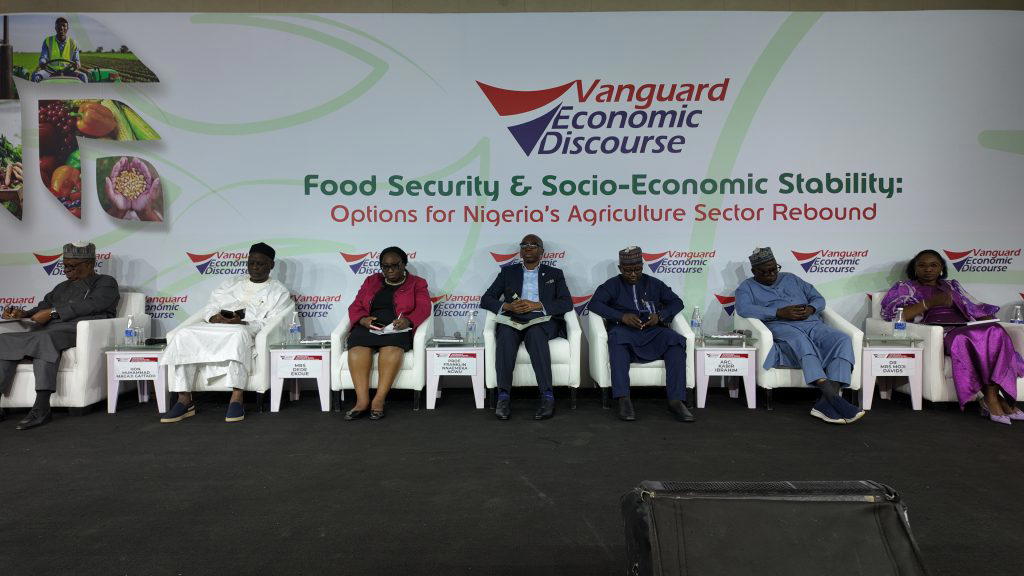
The United Nations' Food and Agriculture Organisation, UN-FAO, has warned that approximately 35.7 million Nigerians may face hunger by August 2026, emphasizing the need for urgent action to address the nation's food security challenges.
nAccording to the International Fund for Agricultural Development, IFAD, the youth and private sector are crucial to ending Nigeria's food crisis, which requires an immediate and coordinated transformation of the nation's agri-food system.
nA new policy introduced by the Federal Government is expected to grow the livestock sector from its current value of $32 billion to $74 billion within the next 10 years, with the entire agric value chain projected to reach about $1 trillion in the next decade.
nThe Minister of Agriculture and Food Security, Senator Abubakar Kyari, has urged Nigerian youths and women to take advantage of the emerging $1 trillion agribusiness boom in Africa by 2030, calling on them to position themselves for future wealth creation.
nSpeaking at the 2026 Vanguard Economic Discourse, the FAO Representative in Nigeria and to ECOWAS, Dr. Hussein Gadain, stated that food security is a pillar of national security, macroeconomic stability, social cohesion, and peace, and that Nigeria's fragile food systems are affected by conflict, climate shocks, and economic pressures.
nGadain warned that between 27.2 and 35.7 million people in Nigeria are experiencing acute food insecurity, concentrated in the North East, North West, and North Central zones, where insurgency, banditry, and farmer-herder conflicts continue to undermine crop and livestock production.
nThe FAO chief noted that Nigeria's cumulative agricultural imports were estimated at about N3.35 trillion between 2016 and 2019, roughly four times higher than agricultural exports of about N803 billion during the same period, highlighting a massive structural trade imbalance.
nGadain emphasized that any meaningful rebound in the agricultural sector must be designed to work for smallholders, including women and men, through improved productivity, risk management, inclusive markets, and strong rural services.
nHe advocated for a "New Deal" for farmers, stressing that access to finance is essential for smallholder farmers, pastoralists, and agri-preneurs to invest, grow, and manage risk.
nGadain outlined priority actions to achieve global competitiveness, including upgrading market infrastructure, improving logistics and cold chains, enforcing quality and sanitary standards, and expanding agro-processing to shift from raw commodity exports to value-added products.
nThe Country Director of the International Fund for Agricultural Development, IFAD, in Nigeria, Mrs Dede Ahoefa Ekoue, identified youth engagement and stronger private sector participation as critical to ending Nigeria's deepening food crisis.
nEkoue stressed that IFAD has invested approximately $1.8 billion in Nigeria, supporting over four million households and enabling smallholder farmers to transition from subsistence agriculture to more profitable participation in structured value chains.
nShe emphasized the role of demographics, describing Nigeria's large youth population as a major asset in transforming agriculture, noting that young people possess the innovation, energy, and technological capacity needed to drive change across the sector.
nEkoue explained that agriculture should no longer be viewed narrowly as farming but as a broad value chain that includes processing, storage, transportation, marketing, and waste management, opening multiple entry points for youth employment and enterprise development.
nThe Minister of Livestock Development, Alhaji Idi Muktar Maiha, stated that new policies introduced by the Federal Government will grow Nigeria's livestock sector from its current value of $32 billion to $74 billion within the next 10 years.
nMaiha emphasized that livestock development is central to addressing food insecurity and stabilizing the economy, noting that the sector contributes about 5 to 8 percent of Nigeria's GDP and accounts for nearly one-third of agricultural GDP.
nHe warned that over 25 million Nigerians are at risk of acute food insecurity, while food inflation has remained above 30 percent, eroding purchasing power and deepening poverty.
nMaiha stated that the government has instituted the Nigerian Livestock Growth Acceleration Strategy with 10 pillars designed to transform the sector, emphasizing key priorities such as feed and fodder development, strengthening value chains, and improving access to finance.
nHe called for investment in digital solutions such as precision farming, livestock identification systems, disease surveillance tools, and digital extension services to transform agriculture.
nMaiha urged immediate action, stating that the scale of transformation required cannot be driven by government alone and needs strong private sector participation and large-scale investment in agriculture.
nSenator Abubakar Kyari, the Minister of Agriculture and Food Security, maintained that the government is taking decisive steps to reposition agriculture as a major driver of economic growth, despite the sector's weak financing structure.
nKyari disclosed that the Federal Ministry of Agriculture and Food Security is implementing flagship projects, including a $538 million Special Agro-Industrial Processing Zone initiative, the largest in Africa, to create hubs where investors can establish processing plants and connect to markets.
nHe noted that the ministry is also investing in rural infrastructure, including road construction to link farms with markets, and providing catalytic funding to invite private sector participation and build an investment platform that transforms agriculture into a driver of industrial growth.
Related Stories
 General News
CELEBRATING TWO YEARS OF TRANSFORMATIONAL LEADERSHIP IN THE PRESIDENTIAL AMNESTY PROGRAMME
Tomorrow, 14TH March 2026, as we look forward to the second anniversary, we reflect on the remarkable two years since the Administrator of the Preside
 General News
PRESIDENTIAL AMNESTY PROGRAMME PHASE 3: DISREGARD PURPORTED STATEMENT ON DELAYED ITA PAYMENTS — OFFICE OF NATIONAL CHAIRMAN
The Office of the National Chairman of the Presidential Amnesty Programme Phase 3, General Elaye ThankGod Dollar Slaboh, has called on beneficiaries a
 General News
RE: CLARIFICATION ON MY PERSONAL RELATIONSHIPS
PUBLIC NOTICErnrnRE: CLARIFICATION ON MY PERSONAL RELATIONSHIPSrnrnIt has become necessary to make this public clarification following the increasing