
US Secretary of State Rubio Rejects Claims of Plot to Topple Cuban Leader
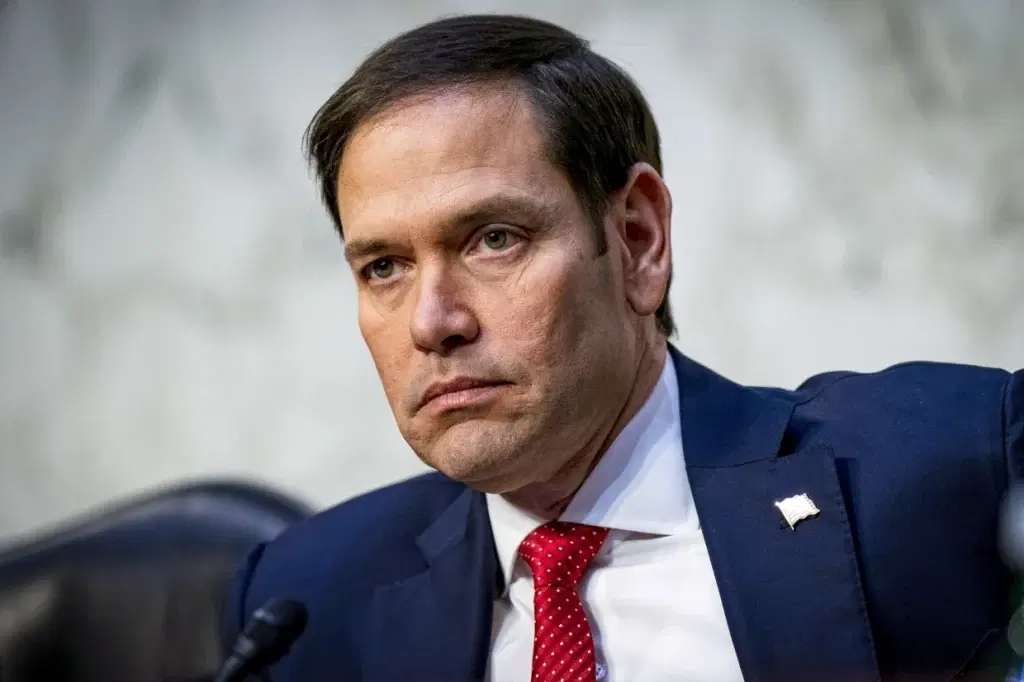
US Secretary of State Marco Rubio issued a denial on Tuesday regarding a report that claimed US officials had encouraged Cuba to remove its president, Miguel Diaz-Canel, from power.
nThis denial came in the form of a late-night post on X, where Rubio labeled the article by The New York Times as “fake” and asserted that it relied on untrustworthy sources, specifically “charlatans and liars claiming to be in the know”.
nThe New York Times had reported on Monday that officials under President Donald Trump had requested Cuba to replace President Diaz-Canel, but had not pushed for a complete overthrow of the communist government.
nRubio's denial did not specify whether he was refuting the entire article or just certain parts of it, leaving the scope of his denial unclear.
nAccording to The New York Times, US officials viewed Diaz-Canel as a hardliner who was unlikely to implement changes, but had not issued an ultimatum for his removal, demonstrating a nuanced approach to the situation.
nAs a Cuban-American former senator from Miami, Rubio has long advocated for an end to the communist system in Cuba, which was established by Fidel Castro in a 1959 revolution.
nEarlier on Tuesday, Rubio had expressed his opinion that Cuba needed to take more “dramatic” action, beyond the new measures allowing overseas Cubans to invest and own businesses on the island, which had suffered a nationwide blackout just a day earlier.
nPresident Trump has been applying pressure on Cuba, which is currently facing an economic crisis, and has taken actions such as forcing Venezuela to stop sending oil to Cuba, which previously accounted for half of Cuba's oil needs.
nThis move came after US forces raided Caracas in January and deposed the leftist president, Nicolas Maduro, marking a significant escalation of tensions in the region.
nTrump has expressed interest in reaching an unspecified “deal” with Cuba, while also boasting about his ability to take control of the country, citing its weakness as a justification for his stance.
nIn his dealings with Venezuela and Iran, Trump has pursued a strategy of forcing compliance rather than seeking to overthrow governments, as evidenced by his actions on February 28, when he launched an attack on Iran in collaboration with Israel.
nTrump has expressed satisfaction with Venezuela's interim president, Delcy Rodriguez, who previously served as Maduro's vice president, after threatening her with violence if she failed to meet his demands, including preferential treatment for US oil companies.
nUnlike Venezuela and Iran, Cuba lacks significant oil wealth, but it holds considerable importance in domestic US politics, particularly among Cuban-American lawmakers who are predominantly part of Trump's Republican Party and have long advocated for increased pressure on Havana.
Related Stories
 General News
CELEBRATING TWO YEARS OF TRANSFORMATIONAL LEADERSHIP IN THE PRESIDENTIAL AMNESTY PROGRAMME
Tomorrow, 14TH March 2026, as we look forward to the second anniversary, we reflect on the remarkable two years since the Administrator of the Preside
 General News
PRESIDENTIAL AMNESTY PROGRAMME PHASE 3: DISREGARD PURPORTED STATEMENT ON DELAYED ITA PAYMENTS — OFFICE OF NATIONAL CHAIRMAN
The Office of the National Chairman of the Presidential Amnesty Programme Phase 3, General Elaye ThankGod Dollar Slaboh, has called on beneficiaries a
 General News
RE: CLARIFICATION ON MY PERSONAL RELATIONSHIPS
PUBLIC NOTICErnrnRE: CLARIFICATION ON MY PERSONAL RELATIONSHIPSrnrnIt has become necessary to make this public clarification following the increasing