
US inmate spared execution eight times dies at 101
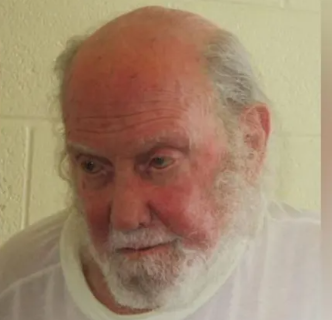
Francis Clifford Smith, who spent more than seven decades behind bars after being convicted of murder and was spared execution eight times, has died at the age of 101.
nSmith, who was believed to be the longest-serving prisoner in the United States, died in June at a care facility in Connecticut, where he had spent the final years of his life under supervised parole.
nHe was 25 when he was convicted in 1950 of the first-degree murder of Grover Hart, a night watchman at a Connecticut yacht club. Smith consistently maintained his innocence throughout his imprisonment.
nAccording to people familiar with his case, serious questions were raised over the evidence used to convict him, including the recantation of witness statements and a later confession by another inmate who claimed responsibility for the killing.
nOne of the police officers who interrogated Smith after his arrest also subsequently testified that he believed Smith was innocent.
n“I’m not even sure he was present at the murder,” Major Leo Carroll reportedly told the Connecticut Board of Pardons.
nThe doubts surrounding the conviction contributed to Smith being spared execution on multiple occasions. He was sentenced to death in 1950 but had his sentence commuted to life imprisonment in 1954.
n‘The Birdman of Osborn’
nSmith became a familiar figure at Osborn Correctional Institution, where he earned the nickname “The Birdman of Osborn” for his habit of feeding birds around the prison.
nAndrius Banevicius, public information officer for Connecticut’s Department of Correction, recalled that Smith would conceal large quantities of bread in his clothes to feed the birds.
n“He would stuff as much bread as he could … in his clothing,” Banevicius told the BBC, adding that prison staff largely tolerated the practice because they knew he was feeding the birds.
nSmith spent more than 70 years in custody, although he had three brief periods outside prison.
nHe escaped from prison in 1967 but was recaptured 12 days later. In 1974, he was allowed to leave temporarily for Christmas Eve and returned the following day.
nHe was granted parole in 1975 and remained free for about 10 months before being arrested for petty larceny and possession of a weapon, in violation of his parole.
nRichard Sparaco, former executive director of Connecticut’s Board of Pardons and Paroles, said Smith subsequently rejected several attempts to return him to parole until 2020, when he was granted supervised parole and transferred to a care facility for elderly people within the justice system.
nAgeing prison population
nSmith’s case has also drawn attention to the growing challenge of an ageing prison population in the United States and other countries.
nDr Stephanie Prost, a University of Louisville researcher specialising in older adults in prison settings, told the BBC that many prison systems now have inmates facing similar age-related challenges.
n“We’re not the only jurisdiction that’s facing that ageing-related crisis, because similar issues are percolating in Australia and England,” she said.
nA 2025 study found that the number of prisoners aged 55 and above in the United States increased by nearly 400 per cent between 1991 and 2021.
nThe US Census Bureau has projected that by 2030, at least one-third of the country’s incarcerated population could be aged over 50.
nProst and other researchers have advocated what they describe as “smart de-carceration”, including compassionate release and elderly or medical parole for ageing inmates whose continued incarceration may no longer serve a practical purpose.
nSuch measures, researchers say, could also address the growing healthcare burden associated with ageing in prison, including falls, incontinence, hearing impairment and other age-related conditions.
n‘He died of old age’
nSmith became one of the early beneficiaries of the MissionCare Health scheme, which provides specialised care to incarcerated and formerly incarcerated elderly people. The programme currently operates three facilities in the northeastern United States.
nSmith spent his final years at 60 West, where he received skilled nursing and long-term care.
nDavid Skoczulek, a spokesman for the facility, said Smith died peacefully in his sleep in June and was later cremated.
n“Essentially, he died of old age,” Skoczulek told the BBC, adding that although Smith had limited family involvement at the time of his death, the facility ensured that his wishes were respected and that his passing was handled with dignity.
nSmith reportedly experienced dementia towards the end of his life, although Banevicius said he could not confirm the diagnosis, noting that Smith was dealing with conditions associated with advanced age.
n“He was 101 and a half,” Banevicius said. “He did pretty well as far as longevity is concerned.”
nSmith’s death closes an extraordinary chapter in the history of the US prison system — a life that began with a murder conviction at 25, passed through eight reprieves from execution and more than 70 years behind bars, and ended peacefully at 101.
nBBC
n nRelated Stories
 General News
CELEBRATING TWO YEARS OF TRANSFORMATIONAL LEADERSHIP IN THE PRESIDENTIAL AMNESTY PROGRAMME
Tomorrow, 14TH March 2026, as we look forward to the second anniversary, we reflect on the remarkable two years since the Administrator of the Preside
 General News
PRESIDENTIAL AMNESTY PROGRAMME PHASE 3: DISREGARD PURPORTED STATEMENT ON DELAYED ITA PAYMENTS — OFFICE OF NATIONAL CHAIRMAN
The Office of the National Chairman of the Presidential Amnesty Programme Phase 3, General Elaye ThankGod Dollar Slaboh, has called on beneficiaries a
 General News
RE: CLARIFICATION ON MY PERSONAL RELATIONSHIPS
PUBLIC NOTICErnrnRE: CLARIFICATION ON MY PERSONAL RELATIONSHIPSrnrnIt has become necessary to make this public clarification following the increasing