
UNREST PERSISTS: 1,095 Days On – Tinubu's Protracted Struggle
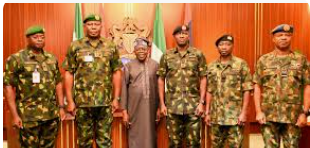
President Bola Ahmed Tinubu inherited a severely strained economy and a complex security crisis when he took office on May 29, 2023, with insurgent attacks, banditry, separatist violence, and oil theft becoming an integral part of daily life for millions of Nigerians.
nNearly three years later, the question of whether the country has become safer under Tinubu's leadership remains, with the answer depending on the perspective from which it is viewed.
nNigeria's security challenges are distinct due to the presence of multiple violent threats, including remnants of Boko Haram and ISWAP in the North-East, heavily armed bandit groups in the North-West, and separatist tensions in the South-East.
nThe Tinubu administration has responded with a promise of a tougher and more coordinated national security strategy, which government officials claim is yielding results.
nThe Nigerian military has achieved several tactical victories since 2023, including the elimination of insurgent commanders, destruction of weapons caches, and rescue of hundreds of kidnapped victims from criminal camps.
nSecurity cooperation with international partners, particularly the United States of America, has also expanded, leading to the elimination of senior ISIS-linked figures in the Lake Chad region and the killing of a top Islamic State commander in 2026.
nBetween 7,000 and 8,500 terrorists and bandits have reportedly been neutralized since Tinubu took office, and on Christmas Day in 2025, the United States bombed parts of Sokoto State, neutralizing many terrorists.
nDespite these gains, many Nigerians still feel that daily life is unsafe, with deadly attacks, mass killings, and recurring kidnappings continuing to occur.
nCritics argue that frequent leadership changes, inadequate intelligence coordination, and poor welfare for troops have weakened the fight against insecurity.
nOthers point to governance gaps, unemployment, and porous borders as drivers of violence, highlighting the need for a more comprehensive approach to addressing the crisis.
nData indicates that over 9,000 Nigerians were killed in the first year of Tinubu's administration, including 278 soldiers and 122 police officers, underscoring the heavy toll on security forces.
nConflict trackers estimate that nearly 30,000 people have died in violent incidents since 2023, while Amnesty International reported over 10,000 deaths in the first two years of the administration.
nNigeria's military, with approximately 230,000 personnel, is overstretched across multiple theatres, including insurgency in the North-East, banditry in the North-West, and separatist tensions in the South-East.
nThe police are also under-capacitated, with a ratio of roughly one officer to 600 citizens, far below global standards, highlighting the need for significant reform and investment.
nTinubu has acknowledged the challenge, declaring a nationwide security emergency in November 2025 and ordering the recruitment of 20,000 police officers and the expansion of forest guards to flush out terrorists.
nSecurity experts insist that beyond military action, Tinubu must deepen intelligence gathering, decentralize policing through state police, improve welfare and equipment for security personnel, and tackle root causes such as poverty and weak local governance.
nThree years into his administration, the verdict is clear: while Tinubu has shown intent through reforms and operations, insecurity remains Nigeria's most stubborn crisis, demanding a sustained and comprehensive approach.
nA cross-section of private security practitioners has spoken out on the current security situation, with recommendations including the creation of state police and the empowerment of security agencies.
nMr. Jude Mekwunye, a retired pioneer officer of the National Intelligence Agency, argues that Nigeria should return to a "true secular state" to address the root cause of insecurity, which he identifies as Islamic terrorism.
nMrs. Victoria Ekhomu, Managing Director of Transworld Security, emphasizes that security is the foundation upon which economic development, foreign investment, education, and national unity are built, and that no nation can prosper where citizens live in fear.
nBarr. Adebayo Akinade, Director-General of the Institute of Security, Nigeria, posits that while the government has made gains in reducing large-scale insurgent control, insecurity remains widespread, and progress is mixed.
nProfessor Emmanus Odikaesieme, Managing Director of Citiserve Security Limited, insists that nothing has changed in terms of insecurity, and that the federal government has not shown the political will to address the crisis.
nChief Innocent Okeanonife, a former Commissioner of Police, argues that the effective sharing of intelligence through a "fusion centre" is crucial to solving the insecurity crisis.
nMr. Matthew Ibadin, Managing Director of Badinson Security, emphasizes the need to empower the police and create a functional security architecture for Nigeria.
nTinubu has vowed to conquer the insecurity crisis, fingered oil subsidy and exchange rate cabals for the dangerous bent it has taken, and expressed determination to rearrange the economy despite opposition from vested interests.
nThe next 365 days offer an opportunity for a more decisive war on insecurity, and it remains to be seen how far the president will go in addressing the crisis.
Related Stories
 General News
CELEBRATING TWO YEARS OF TRANSFORMATIONAL LEADERSHIP IN THE PRESIDENTIAL AMNESTY PROGRAMME
Tomorrow, 14TH March 2026, as we look forward to the second anniversary, we reflect on the remarkable two years since the Administrator of the Preside
 General News
PRESIDENTIAL AMNESTY PROGRAMME PHASE 3: DISREGARD PURPORTED STATEMENT ON DELAYED ITA PAYMENTS — OFFICE OF NATIONAL CHAIRMAN
The Office of the National Chairman of the Presidential Amnesty Programme Phase 3, General Elaye ThankGod Dollar Slaboh, has called on beneficiaries a
 General News
RE: CLARIFICATION ON MY PERSONAL RELATIONSHIPS
PUBLIC NOTICErnrnRE: CLARIFICATION ON MY PERSONAL RELATIONSHIPSrnrnIt has become necessary to make this public clarification following the increasing