
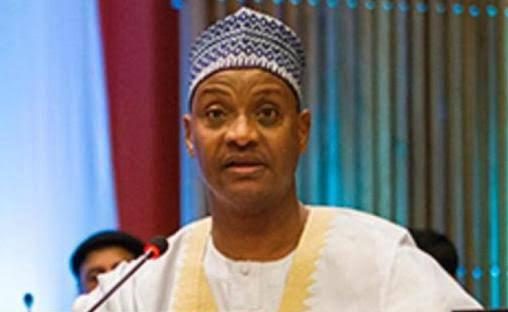
Unpacking the Illusion of Robust US Institutions with Trump in the Spotlight, an Analysis by Usman Sarki
John Adams once noted that the Constitution was designed for a moral and religious people, and is wholly inadequate for the government of any other, a sentiment that still resonates today as a warning about the delicate balance of democratic governance.
nThis observation, made long before the advent of modern democracy, highlights the limitations of constitutions and institutions in sustaining themselves without the moral discipline of those in power, as laws can structure authority but not compel virtue.
nThe success or failure of any constitutional order ultimately depends on the character, restraint, and civic responsibility of those operating it, a fact that has been borne out by the experience of many countries, including the United States.
nFor decades, the United States was seen as a shining example of institutional resilience, with its constitutional architecture crafted by figures such as Thomas Jefferson, John Adams, George Washington, Benjamin Franklin, Alexander Hamilton, and James Madison, embodying a sophisticated system of checks and balances.
nHowever, the political turbulence surrounding the presidencies of Donald Trump has forced a reconsideration of the assumption that strong institutions are the ultimate guarantors of democratic stability, as what unfolded during those years exposed the fragile foundations of this belief.
nThe lesson emerging from this experience is that institutions are not self-executing mechanisms, but rather their strength depends fundamentally on political culture, civic virtue, and the willingness of leaders to exercise restraint within the boundaries of law and tradition.
nThe American constitutional system was deliberately constructed to prevent the concentration of power in one hand, with Madison and his contemporaries believing that ambition would counter ambition, and that federalism would distribute authority between national and state governments, creating multiple layers of accountability.
nFor over two centuries, this framework functioned with remarkable continuity, surviving a civil war, economic depression, and two world wars while preserving the essential structure of constitutional governance, earning the United States a reputation as the ultimate demonstration of institutional durability.
nYet, the stability of the system depended not only on formal rules but also on an elaborate network of unwritten norms, including respect for judicial independence, acceptance of electoral outcomes, and restraint in the use of executive authority, which were assumed to be self-evident obligations of responsible leadership.
nThese norms were often referred to as constitutional conventions by political scientists, and were rarely codified because they were taken for granted as essential to the functioning of the system.
nThe Trump era demonstrated how vulnerable these assumptions can be, with one of the most dramatic episodes occurring on January 6, 2021, when supporters of President Trump stormed the United States Capitol in an attempt to disrupt the congressional certification of the presidential election results.
nThis attack on Congress represented an extraordinary moment in American political history, as the legislative heart of the republic was physically assaulted during a constitutional process central to the peaceful transfer of power.
nOther controversies further strained institutional norms, including attempts to pressure state election officials to reconsider certified results, and federal agencies being drawn into intense political confrontation, with career civil servants and judges sometimes publicly criticized or replaced.
nForeign policy decisions under Trump also revived constitutional debate, particularly the president's unilateral decision to order military strikes against Iran without explicit congressional authorization, which provoked renewed discussion about the balance of war powers between Congress and the executive.
nCritics argued that such actions represented a further shift of power toward the executive branch, with successive administrations gradually expanding presidential authority in this domain.
nDiscussions within parts of the Trump political movement about dramatically restructuring the federal bureaucracy, including proposals to retire large numbers of career civil servants, raised concerns among some observers about the potential politicization of the administrative state.
nDebates about the role of prominent private-sector figures such as Elon Musk in shaping future government reforms also illustrated the growing intersection between political power and private influence.
nDespite these challenges, the judiciary, Congress, and state authorities continued to function, often under intense pressure, with courts issuing rulings affirming legal constraints on executive authority, and state officials defending electoral procedures.
nMany civil servants adhered to established administrative norms despite political turbulence, demonstrating that institutions can indeed possess resilience, but also revealing that institutional survival often depends less on structures than on the individuals who operate them.
nThis insight becomes even clearer when the Trump era is compared with earlier constitutional crises in American history, particularly the Watergate scandal that engulfed the presidency of Richard Nixon in the early 1970s.
nThe Watergate scandal exposed extensive abuses of executive authority, yet the institutional response was decisive, with Congress conducting bipartisan investigations, the judiciary compelling the release of evidence, and senior political leaders ultimately placing constitutional integrity above partisan loyalty.
nNixon resigned in 1974 after it became clear that impeachment and removal were inevitable, highlighting the importance of bipartisan commitment to constitutional principles in responding to crisis.
nThe contrast between Watergate and the crises of the Trump era suggests that institutional strength ultimately depends not only on constitutional design but also on the willingness of political actors to defend democratic norms.
nThe lesson is not unique to the United States, as the experience of the Trump era has implications for democracies around the world, particularly younger democracies that must be vigilant about the moral foundations upon which their institutions rest.
nFor many developing democracies, the phrase "build strong institutions" has become a central mantra of political reform, with international organizations advocating institutional strengthening as the primary pathway toward stability and development.
nWhile there is wisdom in this emphasis, the American experience reminds us that institutional architecture alone cannot guarantee democratic success, and that even the most sophisticated constitutional design cannot substitute for political integrity.
nThis lesson carries particular relevance for Nigeria, where the language of "strong institutions" has become commonplace in both official and public discourses, yet the reality on the ground often reveals a troubling erosion of the principles that institutions are meant to uphold.
nOne manifestation of this erosion is the gradual blurring of constitutional distinctions between the executive and the legislature, with legislative oversight sometimes giving way to accommodation, and institutional independence becoming subordinate to political alliances and executive influence.
nEqually troubling is the transformation of public office into a system of patronage, with positions within government distributed not on the basis of competence and public service but as rewards for loyalty or political convenience.
nWhen offices intended to serve the nation become instruments of personal networks and patronage, institutional authority inevitably weakens, and the language of "strong institutions" risks becoming an illusion.
nInstitutions cannot remain strong when they are rendered ineffectual by patronage, weakened by the erosion of oversight, or subordinated to personal influence, and their strength ultimately lies in the integrity with which they are operated and the seriousness with which their responsibilities are discharged.
nNigeria's democratic future will therefore depend not merely on preserving the formal structures of constitutional governance but on restoring the ethical foundations upon which those structures must stand.
nFor democracies, the greatest danger rarely arrives in the form of sudden collapse, but rather through slow corrosion by way of the quiet transformation of institutions from instruments of national service into extensions of personal power.
nThis decay may remain invisible for years, but once the internal fibers weaken, even the strongest structure can eventually give way, highlighting the importance of vigilance and integrity in maintaining the health of democratic institutions.
nIn the end, the durability of democracy rests not only on laws and offices but on character and morals, a fact that must be remembered by leaders and citizens alike if democratic governance is to thrive.
Related Stories
 General News
CELEBRATING TWO YEARS OF TRANSFORMATIONAL LEADERSHIP IN THE PRESIDENTIAL AMNESTY PROGRAMME
Tomorrow, 14TH March 2026, as we look forward to the second anniversary, we reflect on the remarkable two years since the Administrator of the Preside
 General News
PRESIDENTIAL AMNESTY PROGRAMME PHASE 3: DISREGARD PURPORTED STATEMENT ON DELAYED ITA PAYMENTS — OFFICE OF NATIONAL CHAIRMAN
The Office of the National Chairman of the Presidential Amnesty Programme Phase 3, General Elaye ThankGod Dollar Slaboh, has called on beneficiaries a
 General News
RE: CLARIFICATION ON MY PERSONAL RELATIONSHIPS
PUBLIC NOTICErnrnRE: CLARIFICATION ON MY PERSONAL RELATIONSHIPSrnrnIt has become necessary to make this public clarification following the increasing