
University unions warn federal government against eliminating supposedly useless degree programs
The federal government has announced plans to phase out university courses deemed irrelevant to the country's economic future, sparking concern among stakeholders in the education sector, with several social science programmes potentially on the chopping block, according to the Minister of Education, Tunji Alausa.
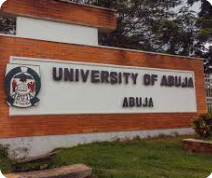
nSpeaking at the 'Renewed Hope Conversation' with students of the University of Abuja, Alausa warned that the era of studying courses with limited real-world value was ending, and the government was intensifying efforts to align university education with market demands and global trends.
nAlausa cautioned students against taking loans from the Nigerian Education Loan Fund, NELFUND, to study social science courses, stating that the government was phasing out such courses and instead focusing on training students in market-relevant disciplines.
nThe minister emphasized that the government's priority was to equip students with practical, employable skills, noting that degrees without clear economic relevance risked leaving graduates underprepared and unemployed, and that the goal was to train students to be entrepreneurs rather than job seekers.
nAlausa revealed that the government was introducing the Entrepreneurship, Innovation and Business Incubation Certification, EPIC, which would become compulsory in all tertiary institutions by 2027, ensuring that every graduate left school with entrepreneurial training alongside academic qualifications.
nThe minister also disclosed that the government had already disbursed nearly N30 billion to students under various support schemes and was providing up to N15 million in equity-free funding for innovative business ideas, as part of efforts to steer young Nigerians toward self-reliance.
nStakeholders, including the Congress of University Academics, CONUA, the Non-Academic Staff Union of Educational and Associated Institutions, NASU, and the National Parent Teacher Association of Nigeria, NAPTAN, have criticized the government's plans, arguing that they would cause more harm than good for the education system.
nCONUA's National President, Dr. Niyi Sunmonu, warned that outright scrapping of courses could do more harm than good and instead advocated for the evolution of courses to match current realities, rather than total scrapping.
nSunmonu emphasized the need for academic programmes to reflect emerging trends such as automation, Artificial Intelligence, and the Internet of Things, and urged policymakers to engage stakeholders in the education sector before implementing sweeping reforms.
nNASU's President, Dr. Makolo Hassan, questioned what determined the relevance or irrelevance of a course, contending that the relevance of a course could not be determined at face value, but rather by its curriculum and content.
nHassan argued that many people who studied supposedly irrelevant courses, such as Hausa, Igbo, Yoruba, and Religious Studies, were doing well in society, and that the government should clearly list the courses it considered no longer relevant and explain why they were deemed irrelevant.
nNAPTAN's National President, Alhaji Haruna Danjuma, cautioned that the issue should be subjected to serious scrutiny by experts and that there was a need to tread softly, as parents did not want to spend huge sums of money on their children's education only to be told that they were surplus to requirements.
nThe Academic Staff Union of Universities, ASUU, has yet to respond to the government's plans, with the Chairman of the union at the University of Lagos, Prof. Idou Keinde, stating that he had not received the details of the courses to be affected and therefore had no position on the matter.
Related Stories
 General News
CELEBRATING TWO YEARS OF TRANSFORMATIONAL LEADERSHIP IN THE PRESIDENTIAL AMNESTY PROGRAMME
Tomorrow, 14TH March 2026, as we look forward to the second anniversary, we reflect on the remarkable two years since the Administrator of the Preside
 General News
PRESIDENTIAL AMNESTY PROGRAMME PHASE 3: DISREGARD PURPORTED STATEMENT ON DELAYED ITA PAYMENTS — OFFICE OF NATIONAL CHAIRMAN
The Office of the National Chairman of the Presidential Amnesty Programme Phase 3, General Elaye ThankGod Dollar Slaboh, has called on beneficiaries a
 General News
RE: CLARIFICATION ON MY PERSONAL RELATIONSHIPS
PUBLIC NOTICErnrnRE: CLARIFICATION ON MY PERSONAL RELATIONSHIPSrnrnIt has become necessary to make this public clarification following the increasing