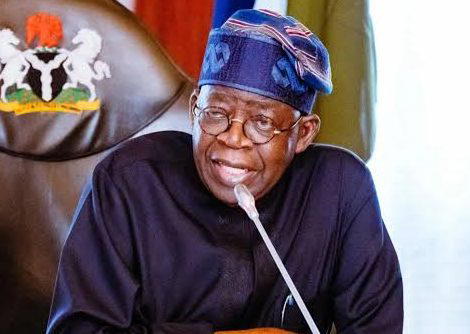
The federal government has sparked controversy with its plan to phase out university courses deemed irrelevant to the country's economic future, with social science programs potentially on the chopping block, according to Minister of Education Tunji Alausa.
Alausa made the declaration while speaking at the 'Renewed Hope Conversation' with students of the University of Abuja, warning that the era of studying courses with limited real-world value is ending, as the government intensifies efforts to align university education with market demands and global trends.
Stakeholders in the university system, including the Congress of University Academics, CONUA, the Non-Academic Staff Union of Educational and Associated Institutions, NASU, and National Parent Teacher Association of Nigeria, NAPTAN, have criticized the government's plans, saying they would cause more harm than good for the system.
Alausa stated that the government is phasing out courses that are "deceiving" students, and warned that social science disciplines are increasingly viewed as disconnected from Nigeria's evolving job market, saying "we are training you in market-relevant courses, and a lot of you, with due respect to you people doing social sciences, there are not going to be jobs for you in the future."
The minister also cautioned students against accessing loans by the Nigerian Education Loan Fund, NELFUND, to study social science courses, saying "don't take a NELFUND loan that you know will not make it, we are phasing out some of these courses."
Alausa emphasized that the government's priority is to equip students with practical, employable skills, noting that degrees without clear economic relevance risk leaving graduates underprepared and unemployed, saying "we are training you not to be job seekers, we are training you to be micro-entrepreneurs, mid-entrepreneurs, and large entrepreneurs."
The government's ongoing curriculum reform includes embedding Artificial Intelligence, AI, data science, and digital skills across all levels of education, from primary school to tertiary institutions, as part of a broader strategy to reposition Nigeria for global competitiveness, according to Alausa.
The introduction of the Entrepreneurship, Innovation and Business Incubation Certification, EPIC, which is set to become compulsory in all tertiary institutions by 2027, will ensure that every graduate leaves school with entrepreneurial training, alongside academic qualifications, Alausa disclosed.
Alausa's remarks have sparked concern among stakeholders, particularly within the social sciences and humanities, over the potential narrowing of academic diversity in favor of strictly technical and vocational disciplines, although he did not list specific courses to be scrapped.
Defending the reforms, Alausa pointed to global trends where skills in areas such as data infrastructure and digital technologies command significantly higher value, arguing that Nigeria cannot afford to lag behind in preparing its workforce for the future economy.
The government has already disbursed nearly N30 billion to students under various support schemes and is providing up to N15 million in equity-free funding for innovative business ideas, as part of efforts to steer young Nigerians toward self-reliance, according to Alausa.
Alausa maintained that the reforms are not intended to undermine education but to strengthen it, insisting that the ultimate goal is to create a system where graduates are equipped to thrive, innovate, and contribute meaningfully to national development.
Reacting to the development, the National President of the Congress of University Academics, CONUA, Dr. Niyi Sunmonu, warned that outright scrapping of courses could do more harm than good, and instead suggested that courses should evolve to match current realities.
Sunmonu emphasized the rapid technological shifts shaping today's world, noting that academic programs must reflect emerging trends such as automation, Artificial Intelligence, and the Internet of Things, saying "our institutions should be integrating these innovations into existing programmes."
Sunmonu refrained from identifying specific courses that might be outdated, describing such an exercise as speculative without comprehensive knowledge of current curricula across universities, and urged policymakers to engage stakeholders in the education sector before implementing sweeping reforms.
The President of the Non-Academic Staff Union of Educational and Associated Institutions, NASU, Dr. Makolo Hassan, questioned what determines the relevance or otherwise of a course in the university, saying "the relevance or irrelevance of a course cannot be determined at face value, but rather by its curriculum and content."
Hassan contended that the government should clearly list the courses it considers no longer relevant and explain why they are deemed irrelevant, asking "is the government suggesting that only Law, Engineering, Medicine, and other professional courses are relevant to contemporary Nigeria?"
National President of the National Parent Teacher Association of Nigeria, NAPTAN, Alhaji Haruna Danjuma, said there is a need to tread softly, saying "we must not be in a haste, also, the issue should be subjected to serious scrutiny by experts."
Efforts to get the national and some zonal leaders of the Academic Staff Union of Universities, ASUU, were futile, but the Chairman of the union at the University of Lagos, UNILAG, Prof. Idou Keinde, said there was no response yet, noting "I don't have a position on the matter now because I have not got the details of the courses to be affected."


Comments
Please login to leave a comment.
No comments yet. Be the first to share your thoughts!