
United States takes steps to revoke Nigerian national's citizenship due to massive $91 million tax evasion scheme
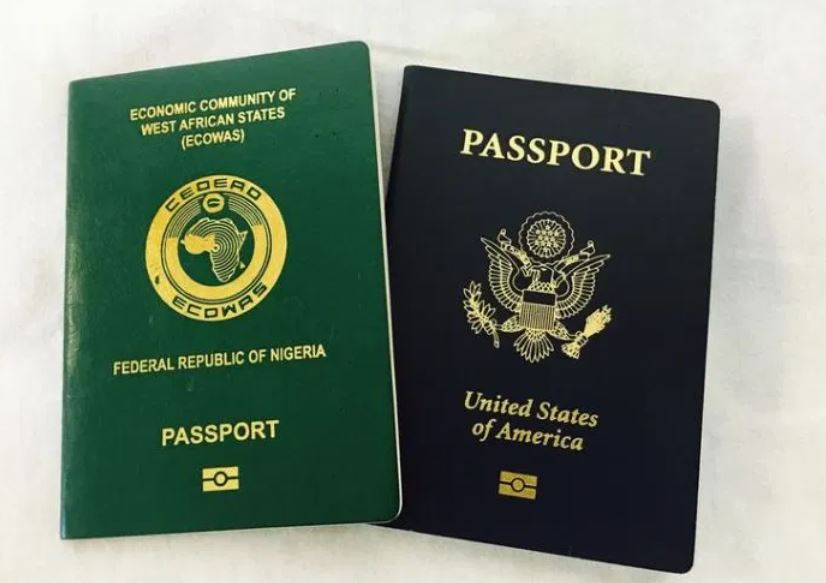
The United States Department of Justice has initiated a civil complaint to revoke the citizenship of Emmanuel Oluwatosin Kazeem, a Nigerian-born individual implicated in a large-scale identity theft and tax fraud scheme.
nThis complaint, submitted to a U.S. District Court in Baltimore, Maryland, asserts that Kazeem secured his naturalisation through concealment of his criminal activities and engagement in immigration fraud, thereby rendering his citizenship illegitimate.
nKazeem was convicted in 2017 on 19 counts of various crimes, including mail and wire fraud, aggravated identity theft, and conspiracy, resulting in a 15-year prison sentence.
nHowever, his sentence was commuted in 2024 by former U.S. President Joe Biden after serving approximately six years of his term.
nAssistant Attorney General Brett A. Shumate announced that the government will pursue the revocation of Kazeem's citizenship, stating that U.S. citizenship is a privilege that cannot be retained if obtained through deceitful means.
nShumate emphasized that the government will continue to seek the revocation of citizenship status obtained through fraudulent activities, as stated in the complaint filed against Kazeem.
nAccording to the complaint, Kazeem's involvement in fraudulent activities spanned several years, both before and after his naturalisation, thus rendering him ineligible for U.S. citizenship.
nAuthorities alleged that Kazeem entered into a sham marriage to secure permanent residency, and subsequently contracted another marriage, further violating U.S. immigration laws.
nCourt documents revealed that Kazeem orchestrated a large-scale identity theft operation, affecting over 259,000 victims, and purchased more than 91,000 stolen identities from a foreign hacker.
nThese stolen identities were then distributed among co-conspirators, who utilised the information to file fraudulent tax returns between 2012 and 2015, resulting in over 10,000 fraudulent tax filings seeking more than $91 million in refunds.
nInvestigators discovered that over $11.6 million was successfully obtained through these fraudulent filings, with the funds being channelled through prepaid debit cards and at least $2.1 million being transferred to Nigeria through numerous wire transactions.
nKazeem allegedly utilised the proceeds from the scheme to finance an extravagant lifestyle, including a nearly $200,000 down payment on a house and the purchase of a $175,000 townhouse in Maryland.
nAdditionally, he attempted to invest in a $6 million hotel project in Lagos and transferred ownership of certain properties to a relative in Nigeria for nominal sums shortly before his arrest in 2015.
nThe case against Kazeem was the result of a collaborative investigation involving the Federal Bureau of Investigation, the IRS Criminal Investigation unit, and other U.S. agencies.
nThe current denaturalisation case is being handled by the Department of Justice's immigration litigation unit, following investigations conducted by Homeland Security authorities.
nIf the case is successful, Kazeem's U.S. citizenship may be revoked on the grounds that it was obtained through fraud and misrepresentation, as alleged in the complaint filed by the Department of Justice.
Related Stories
 General News
CELEBRATING TWO YEARS OF TRANSFORMATIONAL LEADERSHIP IN THE PRESIDENTIAL AMNESTY PROGRAMME
Tomorrow, 14TH March 2026, as we look forward to the second anniversary, we reflect on the remarkable two years since the Administrator of the Preside
 General News
PRESIDENTIAL AMNESTY PROGRAMME PHASE 3: DISREGARD PURPORTED STATEMENT ON DELAYED ITA PAYMENTS — OFFICE OF NATIONAL CHAIRMAN
The Office of the National Chairman of the Presidential Amnesty Programme Phase 3, General Elaye ThankGod Dollar Slaboh, has called on beneficiaries a
 General News
RE: CLARIFICATION ON MY PERSONAL RELATIONSHIPS
PUBLIC NOTICErnrnRE: CLARIFICATION ON MY PERSONAL RELATIONSHIPSrnrnIt has become necessary to make this public clarification following the increasing