
Uncertainty trails Bayelsa oil spill as community counts losses
By Samuel Oyadongha
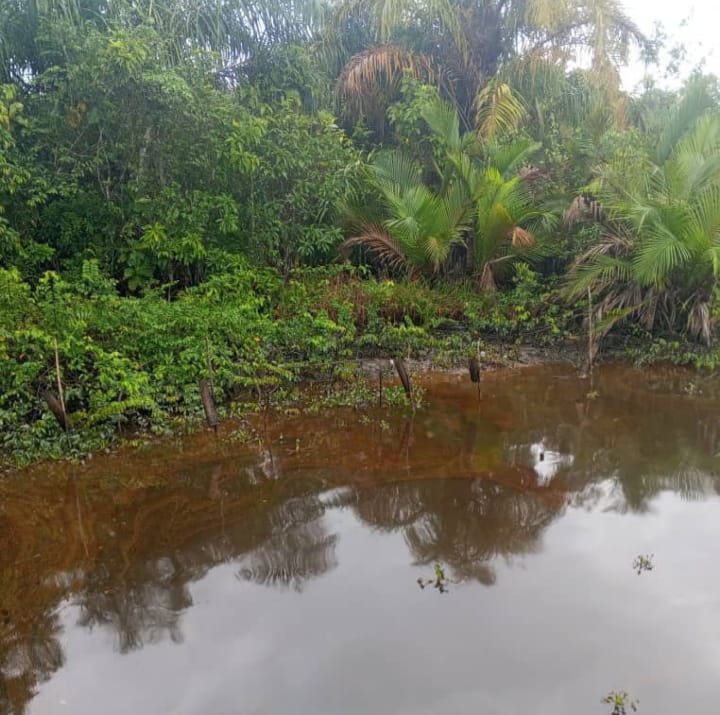
nAZUZUAMA – When the first reports of an oil spill reached this riverside town in the Bassan clan of Southern Ijaw Local Government Area, Bayelsa State on June 25, 2026, it was like a wound being ripped open anew.
nFor a people still mourning the tragic loss of 14 lives in a 2015 pipeline explosion, the sight of black crude gushing from the 6-inch Azuzuama/Tebidaba flow line was more than just an environmental disaster, it was a painful reminder of promises broken and lives cut short.
n“We cannot forget July 9, 2015,” said a native, who simply identified himself as Ebi. “That day, 14 people, some from our community, government officials and oil workers, died during a Joint Investigation Visit and repairs. The scar remains.”
nNow, more than a decade later, the community finds itself locked in a tense standoff with Oando, the company that inherited the aging infrastructure from Nigeria Agip Company Limited (NAOC). At the heart of the dispute is a question that has divided the community, the oil firm, and government regulators: What caused the latest spill?
nThe Induced Corrosion Argument
nAccording to the Environmental Conservation Agriculture and Rural Development, ECARD, the investigation became inconclusive after regulators and community representatives failed to agree on the cause of the spill.
nRepresenting the Bayelsa State Ministry of Environment, the Director of Petroleum Pollution, Engr Reuben Enai, maintained that visual examination showed evidence of “induced corrosion.”
nHe said burn marks on the pipeline coating suggested acid had been deliberately applied to weaken the pipe. “Natural corrosion could not have produced damage at the 12 o’clock position of the pipeline” he said.
nThe community is not buying it
nBut leaders of Azuzuama community rejected the conclusion, insisting the pipeline failed due to corrosion and equipment deterioration rather than sabotage.
nChairman of the Azuzuama Community Development Committee, Mr. Angasei Perediseghebofa, said visible rust on the exposed pipeline indicated long-term corrosion.
nHe also alleged that testing equipment introduced by the company malfunctioned during the investigation, preventing a credible determination of the spill’s cause.
nThe community Vice Chairman Mr. Uyabara Boneghen, questioned the reliability of the testing devices after they reportedly produced identical readings at different locations.
n nRelated Stories
 General News
CELEBRATING TWO YEARS OF TRANSFORMATIONAL LEADERSHIP IN THE PRESIDENTIAL AMNESTY PROGRAMME
Tomorrow, 14TH March 2026, as we look forward to the second anniversary, we reflect on the remarkable two years since the Administrator of the Preside
 General News
PRESIDENTIAL AMNESTY PROGRAMME PHASE 3: DISREGARD PURPORTED STATEMENT ON DELAYED ITA PAYMENTS — OFFICE OF NATIONAL CHAIRMAN
The Office of the National Chairman of the Presidential Amnesty Programme Phase 3, General Elaye ThankGod Dollar Slaboh, has called on beneficiaries a
 General News
RE: CLARIFICATION ON MY PERSONAL RELATIONSHIPS
PUBLIC NOTICErnrnRE: CLARIFICATION ON MY PERSONAL RELATIONSHIPSrnrnIt has become necessary to make this public clarification following the increasing