
Umahi's Rise to Power Leaves Critics in the Shade, According to Emmanuel Aziken
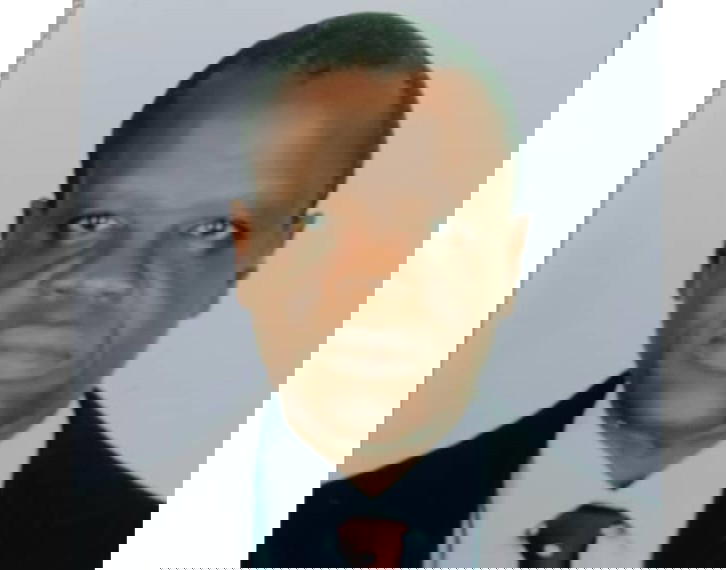
Aziken
nNigeria’s Minister of Works, David Umahi, has always been a curious figure in the country’s political theatre. Long before he emerged on the national stage, his political style often reminded observers of the eccentric manoeuvres of the late Saleh Michika, the Third Republic governor of Adamawa State.
nMichika, who governed under the National Republican Convention (NRC), became famous for his political oddities such as openly fraternising with the rival presidential candidate Chief MKO Abiola while showing little enthusiasm for his own party’s candidate, Bashir Tofa. One popular anecdote even suggested that when Tofa planned to visit Adamawa during the campaign, Michika quietly slipped across the border into Cameroon to avoid hosting him.
nUmahi, in his own way, has displayed a similar streak of political unpredictability.
nDespite rising through the ranks of the Peoples Democratic Party (PDP) — serving as party chairman in Ebonyi State, deputy governor and eventually two-term governor — Umahi never appeared constrained by party orthodoxy. In fact, many of the tensions that later weakened the PDP in the Southeast can partly be traced to the governor’s unconventional political moves.
nAfter winning re-election as governor in 2019, Umahi quickly began agitating for the PDP to zone its presidential ticket to the Southeast. At the time, the demand was framed as a matter of equity within the party. But as the agitation intensified, critics within the PDP began to see the campaign as a form of political brinkmanship.
nThe agitation eventually culminated in a dramatic turn when Umahi defected to the All Progressives Congress (APC) in 2020, becoming the first sitting PDP governor to abandon the party after the 2019 elections.
nTo some analysts, the move symbolised the culmination of a long political dance between loyalty and ambition.
nIronically, the PDP had historically given the Southeast some of the most prominent positions in the federal power structure — including Senate President, Secretary to the Government of the Federation, and Deputy Senate President. Since the APC came to power in 2015, however, the highest federal office zoned by the party to the region has largely been the Deputy Speaker of the House of Representatives.
nYet Umahi today sits comfortably in an APC administration that critics argue has done little to expand the Southeast’s representation at the highest levels of government. Even so, he remains one of the most vocal defenders of the administration’s policies toward the region.
nBut Umahi’s rise to prominence had already been dramatic long before his defection.
nOne of the most remarkable chapters of his political ascent was his transformation from deputy governor to governor of Ebonyi State in 2015, a transition that fundamentally altered the state’s political balance.
nAs chairman of the PDP in Ebonyi, Umahi had been entrusted by Governor Martin Elechi to strengthen the party’s structure. Elechi himself was widely respected as one of the veterans of the agitation for the creation of Ebonyi State, but many observers believed his political style lacked the ruthlessness that often defines Nigerian power politics.
nIn the end, Umahi’s political network and influence within the PDP’s national leadership proved decisive. When Elechi attempted to influence the choice of his successor, Umahi reportedly rallied support within the party’s national organs to secure the governorship ticket for himself.
nThe result was a political reversal rarely seen in Nigeria’s Fourth Republic — a deputy governor effectively eclipsing the political authority of his principal.
nOnce in office, Umahi embarked on an ambitious infrastructure drive that transformed much of Ebonyi State’s landscape. Roads, flyovers, and urban renewal projects became the hallmark of his administration, turning what had long been regarded as a largely rural state into one with increasingly modern infrastructure.
nYet his tenure was not without controversy.
nThere were frequent clashes with political opponents and occasional disputes with the media. One particularly unusual episode occurred when a commissioner for information — a former journalist — was removed from office and then, barely a month later, returned to the same ministry as a permanent secretary.
nEpisodes like these only reinforced Umahi’s reputation as a politician capable of startling political reversals.
nBut the latest chapter of his political drama has unfolded not in Ebonyi but on the national stage.
nIn recent weeks, two individuals publicly accused the minister of owing them money for work allegedly done in the past. The accusations spread quickly across social media, with videos circulating widely online.
nOne of the accusers, Chief Obinna Ude Nkama, a former classmate of Umahi, claimed the minister owed him ¦ 7 million for work he said he had executed years earlier. The allegation gained traction as the video circulated online.
nYet the story soon took an unexpected turn.
nNkama later returned to social media to withdraw the claim and apologise, admitting that the allegation was misleading.
nA similar reversal followed in the case of Mrs Tracy Ohiri, a businesswoman who had earlier accused Umahi of owing her ¦ 200 million from a contract she claimed to have executed before his election as governor in 2015.
nThe dispute escalated dramatically when a video surfaced showing Ohiri confronting the minister at a police facility while repeating the allegations. The incident attracted further attention after activist Omoyele Sowore joined the confrontation, turning the episode into a viral spectacle.
nAt the height of the controversy, additional insinuations emerged suggesting that the dispute involved allegations of sexual harassment — claims Umahi strongly denied.
nBut in another surprising twist, days ago Ohiri issued a video statement calling for peace and distancing the minister from aspects of the dispute.
nThe back-to-back reversals have drawn attention to a curious pattern: accusations against Umahi erupt dramatically, only to collapse shortly afterward.
nFor political observers, the episode highlights the volatile dynamics of Nigeria’s digital political space, where viral allegations can quickly shape public narratives.
nYet the same environment can also expose the fragility of claims once scrutiny begins.
nUmahi himself has consistently challenged accusers to provide documentary evidence rather than rely on social media theatrics.
nWhether by political instinct, legal confidence, or sheer strategic patience, Umahi has once again demonstrated an unusual ability in Nigerian politics: Turning accusations into apologies.
nIn the end, his critics may shout loudly. But more often than not, they end up eating dust.
n nRelated Stories
 General News
CELEBRATING TWO YEARS OF TRANSFORMATIONAL LEADERSHIP IN THE PRESIDENTIAL AMNESTY PROGRAMME
Tomorrow, 14TH March 2026, as we look forward to the second anniversary, we reflect on the remarkable two years since the Administrator of the Preside
 General News
PRESIDENTIAL AMNESTY PROGRAMME PHASE 3: DISREGARD PURPORTED STATEMENT ON DELAYED ITA PAYMENTS — OFFICE OF NATIONAL CHAIRMAN
The Office of the National Chairman of the Presidential Amnesty Programme Phase 3, General Elaye ThankGod Dollar Slaboh, has called on beneficiaries a
 General News
RE: CLARIFICATION ON MY PERSONAL RELATIONSHIPS
PUBLIC NOTICErnrnRE: CLARIFICATION ON MY PERSONAL RELATIONSHIPSrnrnIt has become necessary to make this public clarification following the increasing