
Trump vows to target Iranian infrastructure, including bridges and energy facilities, in retaliation for strikes on Hormuz.
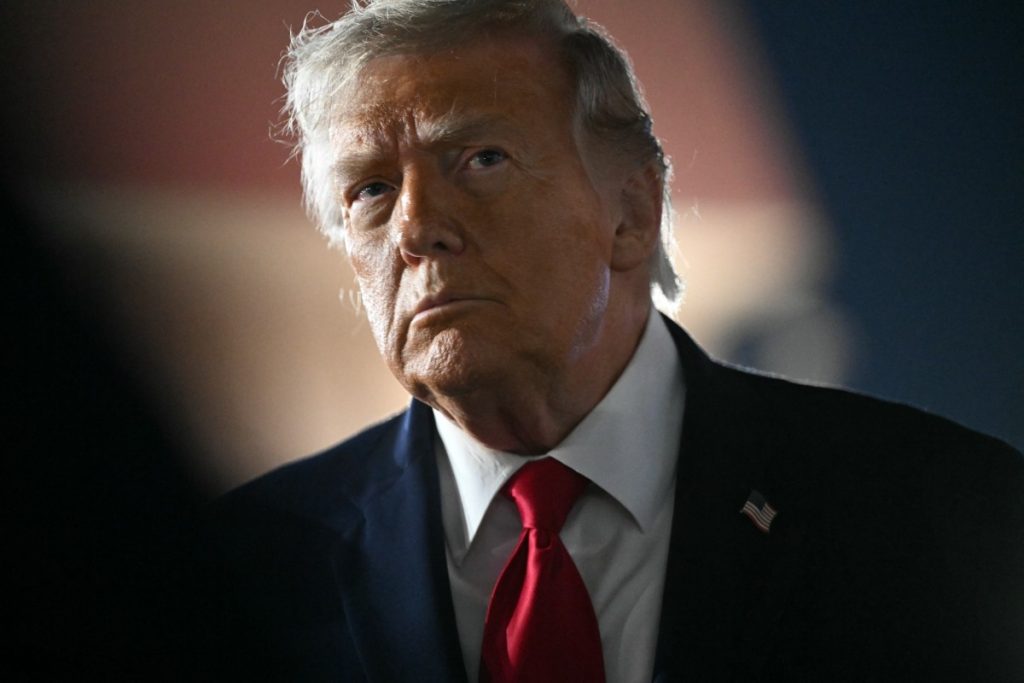
US President Donald Trump threatened Wednesday to knock out one Iranian bridge or power plant in return for each attack on shipping in the Strait of Hormuz, warning he was “not finished” with a war that has already cost Washington $37.5 billion.
nFighting over the strait led to the collapse of a preliminary deal between the United States and Iran, and Tehran has reimposed its blockade on the strategic conduit for oil and gas shipments, firing on vessels that seek to transit.
nThe blockade has rattled markets and sent oil prices climbing, adding to the pressure on Trump to find an off-ramp to a conflict that has hit Americans’ pocketbooks heading into closely-fought midterm elections.
n“Any time the Islamic Republic of Iran shoots at a ship in the Strait of Hormuz, whether it be by Missile, Rocket, Drone, or any other device or weapon, the United States will bomb and destroy ONE BRIDGE OR POWER PLANT,” Trump wrote on social media, reiterating his longstanding threat to go after Iranian infrastructure.
nBut top US diplomat Marco Rubio maintained Washington is still willing to find a negotiated agreement with Tehran.
n“We remain open to working it out in a negotiated way. But right now, they don’t seem to be serious about that,” Rubio said at a Southeast Asia ministers’ meeting in Manila.
nIranian foreign ministry spokesman Esmaeil Baqaei had previously said that diplomatic exchanges with Washington through mediators were continuing.
nOn Wednesday afternoon, a US missile hit Larak island in the strait, Iran’s Tasnim news agency reported, saying the extent of the damage was being investigated.
nTrump has faced intense political pressure to end the conflict, which is unpopular even with segments of his political base as it nears its five-month mark.
nCritics have pointed to the cost, which Pentagon chief Pete Hegseth said on Tuesday had soared to $37.5 billion, defending a request for tens of billions in additional funding for the military.
nBut Trump himself has so far bucked the pressure, saying on Tuesday: “We’re not finished at all… we’re not leaving right now.”
n– Pickaxe Mountain –
nThe US military said it had launched an eleventh consecutive night of strikes against Iran, saying it targeted military sites to “further degrade Iran’s ability to threaten commercial shipping in the Strait of Hormuz”.
nTrump had said earlier that the next US target could be an underground complex known as Pickaxe Mountain, or Kolang in Persian, a site near Natanz where Western intelligence agencies suspect Iran is building an undeclared nuclear enrichment facility.
nIran threatened reprisals, with the Khatam Al-Anbiya military command saying it would “consider it as an expansion of war” if such an attack were carried out, threatening strikes on “all the interests of America, the allies and supporters”, the state broadcaster reported.
nForeign ministry spokesman Baqaei, meanwhile, insisted that “Washington’s obsessive focus on Kolang Kouh where no nuclear activity is taking place is nothing more than a fabricated pretext for aggression, destruction, and sabotage”.
nThe head of the UN nuclear watchdog, Rafael Grossi, told the BBC that inspectors “should be there already” in reference to Iran, saying it was important that the IAEA check on Iran’s stockpile of highly enriched uranium.
n– Missiles intercepted –
nThe threats came as Tehran pressed its assault on targets in US-allied Gulf states.
nKuwait’s army said its air defences were engaging drones from Iran, while Jordan said it had shot down four Iranian missiles and four drones.
nAir alert sirens also sounded in Bahrain, with an AFP correspondent in Manama hearing an explosion.
nThe Iranian military said it targeted US assets in Kuwait and Bahrain, including air defence systems, radar installations and administrative buildings.
nIran’s Revolutionary Guards also said they had targeted US bases in Jordan.
nAfter Tehran’s Houthi allies in Yemen threatened to blockade Saudi ports, Trump said he would “take care of” the rebels if they followed through.
nIt remains unclear how the Houthis would enforce such a blockade, but it would only compound the effects of the Hormuz closure.
nBrent Crude, the global benchmark, briefly topped $95 a barrel for the first time in six weeks on Wednesday, but shed some of the gains.
nThe Houthis are yet to resume their attacks on shipping, but maritime intelligence provider Vanguard Tech said a Singapore-flagged tanker and a Liberia-flagged tanker both “reversed course” in the Red Sea after loading crude at the Saudi port of Yanbu.
nIf the Houthis make good on the threat, they could endanger Riyadh’s ability to bypass the Strait of Hormuz for some oil exports, with major repercussions for the global economy.
nDuring the Gaza war that began in October 2023, the Yemeni rebels attacked shipping in the Red Sea and Gulf of Aden, forcing vessels to make a long detour around Africa and prompting a US bombing campaign.
n nRelated Stories
 General News
CELEBRATING TWO YEARS OF TRANSFORMATIONAL LEADERSHIP IN THE PRESIDENTIAL AMNESTY PROGRAMME
Tomorrow, 14TH March 2026, as we look forward to the second anniversary, we reflect on the remarkable two years since the Administrator of the Preside
 General News
PRESIDENTIAL AMNESTY PROGRAMME PHASE 3: DISREGARD PURPORTED STATEMENT ON DELAYED ITA PAYMENTS — OFFICE OF NATIONAL CHAIRMAN
The Office of the National Chairman of the Presidential Amnesty Programme Phase 3, General Elaye ThankGod Dollar Slaboh, has called on beneficiaries a
 General News
RE: CLARIFICATION ON MY PERSONAL RELATIONSHIPS
PUBLIC NOTICErnrnRE: CLARIFICATION ON MY PERSONAL RELATIONSHIPSrnrnIt has become necessary to make this public clarification following the increasing