
Trump cautions that a potential Iranian embargo may persist for several months amid skyrocketing crude costs.
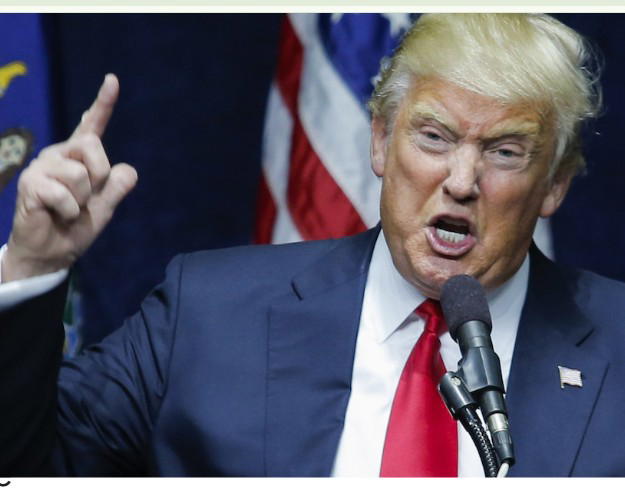
President Donald Trump has stated that a US naval blockade against Iran could persist for months, prompting oil prices to surge to their highest level in over four years on Wednesday.
nThis significant spike in oil prices occurred amidst stalled diplomatic efforts between Iran and the United States, following a series of false starts.
nTrump engaged in a phone conversation with Russian President Vladimir Putin, who cautioned him about the potential "damaging consequences" of the United States and Israel resuming their conflict with Iran.
nIn a meeting with oil executives, Trump argued that the blockade of Iranian ports, which Tehran has insisted must be lifted before any agreement can be reached, is more effective than resorting to bombing.
nDuring this meeting, which took place on Tuesday, Trump discussed his efforts to "alleviate global oil markets and steps we could take to continue the current blockade for months if needed and minimize impact on American consumers," according to a White House official who spoke on condition of anonymity.
nTrump also stated, in an interview with Axios, that the naval action against Iran is having a profound impact, saying "They are choking like a stuffed pig. And it is going to be worse for them."
nBrent oil futures experienced a significant increase of 7.6 percent, reaching $119.69, the highest price since the early days of the Ukraine war in 2022.
nIran has attempted to exert control over the Strait of Hormuz, a vital waterway through which one-fifth of global oil typically passes, in an effort to exact a price for being attacked.
nPresident Trump is facing intense political pressure to bring an end to the war, which has gained little popularity even among his base and has resulted in increased costs for American consumers at the pump.
nThe Pentagon confirmed to lawmakers on Wednesday that the war has already incurred a cost of $25 billion to US taxpayers.
nTop US officials, including Vice President JD Vance, aborted trips to Pakistan twice last week in an attempt to negotiate with Iran, which has expressed doubts about Trump's sincerity in pursuing diplomacy.
nTrump again threatened war, posting a mocked-up picture on social media of himself holding a rifle in front of explosions destroying a desert fortress, accompanied by the message "Iran can’t get their act together…They better get smart soon," and "No more Mr. Nice Guy!"
nUS officials claim that they are uncertain about who is representing Iran in negotiations, whether it is the hardline and increasingly empowered Revolutionary Guards or diplomats, following Israeli strikes that killed several top leaders.
nThe UN Development Programme has warned that the war, which has also led to a surge in fertilizer prices, could push more than 30 million people into poverty in 160 countries, describing it as "development in reverse," according to UNDP chief Alexander De Croo.
nDespite the defiant stance of the cleric-run state, the Iranian rial has fallen to historic lows against the dollar, and Tehran residents speaking to AFP journalists in Paris expressed a sense of despair.
nA 52-year-old architect, speaking on condition of anonymity, stated that "Every time in recent years that negotiations have taken place, the economic situation of the people has only gotten worse. Sanctions have either started or intensified," and that "They go to negotiate and come back with even more sanctions, and the issue is always nuclear. There’s no talk about people, the economy or freedom."
nAn Iranian army spokesman stated on Tuesday that "we do not consider the war to be over," citing a lack of trust in America and claiming that Tehran has "many cards that we have not yet used," according to Amir Akraminia.
nIran has proposed easing its grip on the Strait of Hormuz in exchange for the lifting of the US blockade and broader negotiations, a proposal that the Trump administration has viewed with skepticism.
nIran's speaker of parliament, Mohammad Bagher Ghalibaf, who has emerged as a key figure since the start of the war, stated on Wednesday that the US naval blockade aims to create division and "make us collapse from within," and called for unity in response.
nViolence has continued on the Lebanese front of the war, despite a recently extended ceasefire between Israel and Hezbollah, the Iran-backed armed group that drew Lebanon into the conflict by firing rockets at Israel.
nIsrael responded with strikes and a ground invasion, and for the first time since the ceasefire began, the Lebanese army reported that an Israeli strike had targeted its troops, wounding two soldiers in the south.
nAnother strike on Wednesday resulted in the death of a Lebanese soldier, according to the Lebanese army.
nLebanese President Joseph Aoun stated that "Israel must finally realise that the only path to security is through negotiations, but it must first fully implement the ceasefire in order to move on to negotiations," and that "Israeli attacks cannot continue as they are."
nAoun also expressed his expectation that the United States would set a date to begin direct negotiations, stating "We are now waiting for the United States to set a date to begin direct negotiations."
nA UN-backed report released on Wednesday warned that more than 1.2 million people in Lebanon are expected to face acute hunger due to the latest war.
Related Stories
 General News
CELEBRATING TWO YEARS OF TRANSFORMATIONAL LEADERSHIP IN THE PRESIDENTIAL AMNESTY PROGRAMME
Tomorrow, 14TH March 2026, as we look forward to the second anniversary, we reflect on the remarkable two years since the Administrator of the Preside
 General News
PRESIDENTIAL AMNESTY PROGRAMME PHASE 3: DISREGARD PURPORTED STATEMENT ON DELAYED ITA PAYMENTS — OFFICE OF NATIONAL CHAIRMAN
The Office of the National Chairman of the Presidential Amnesty Programme Phase 3, General Elaye ThankGod Dollar Slaboh, has called on beneficiaries a
 General News
RE: CLARIFICATION ON MY PERSONAL RELATIONSHIPS
PUBLIC NOTICErnrnRE: CLARIFICATION ON MY PERSONAL RELATIONSHIPSrnrnIt has become necessary to make this public clarification following the increasing