
Tinubu’s UK visit yielding results, not optics — Olayinka counters Chatham House report
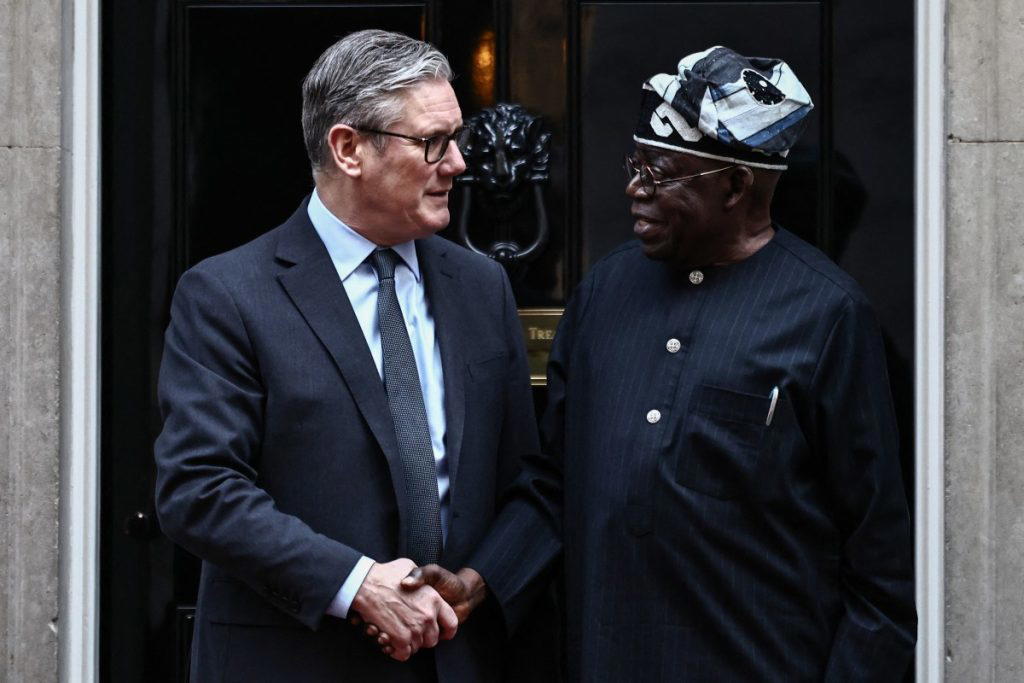
Britain’s Prime Minister Keir Starmer (L) greets Nigeria’s President Bola Tinubu on the steps of 10 Downing Street in central London on March 19, 2026, ahead of their meeting on the second day of a two-day state visit to the United Kingdom by Nigeria’s president. (Photo by Henry NICHOLLS / AFP)
nA policy analyst, Tosin Olayinka, has defended President Bola Ahmed Tinubu’s foreign engagements, insisting that the March 2026 UK state visit has produced tangible economic benefits contrary to claims by Chatham House.
nIn a statement reposted by presidential spokesman Bayo Onanuga on his X platform, Olayinka criticised a commentary by Leena Koni Hoffmann, describing it as selective and lacking depth.
nHe argued that the claim that Tinubu’s high-profile diplomacy has yielded little for ordinary Nigerians was “inaccurate and incomplete,” noting that it overlooked improvements in macroeconomic stability, investor confidence, and Nigeria’s external financial position.
nAccording to him, recent assessments by institutions such as the International Monetary Fund and the World Bank point to significant progress in Nigeria’s reform programme, including enhanced resilience and stabilisation of key economic indicators.
nOlayinka maintained that the Tinubu administration has pursued domestic reforms alongside strategic foreign policy engagements aimed at attracting investment, strengthening trade ties, and improving security cooperation.
nHighlighting specific gains, he cited Nigeria’s return to the Eurobond market, improved foreign exchange liquidity, rising external reserves, and positive sovereign rating outlooks from global agencies as evidence of policy credibility.
nHe also pointed to concrete outcomes from the UK visit, including a £746 million export finance agreement between Nigeria and the United Kingdom to upgrade the Lagos Port Complex and Tin Can Island Port Complex. He said the deal would boost trade efficiency and reduce logistics bottlenecks.
n“Ports are not ceremonial ornaments. They are critical infrastructure that drive competitiveness and economic growth,” he stated.
nWhile acknowledging that economic hardship persists for many Nigerians, Olayinka stressed that reforms such as fuel subsidy removal and foreign exchange adjustments were necessary to correct structural distortions.
nHe noted that international financial institutions have similarly acknowledged both the progress made and the need to cushion social impacts through inclusive policies.
nThe analyst further cited improvements in oil production levels and renewed investor interest in the sector as additional indicators of recovery momentum.
nHe concluded that although challenges remain, Nigeria is undergoing a gradual economic reset, with reforms beginning to yield measurable results.
nAccording to him, the key task ahead is to translate macroeconomic gains into tangible improvements in living standards, job creation, and national security.
n nRelated Stories
 General News
CELEBRATING TWO YEARS OF TRANSFORMATIONAL LEADERSHIP IN THE PRESIDENTIAL AMNESTY PROGRAMME
Tomorrow, 14TH March 2026, as we look forward to the second anniversary, we reflect on the remarkable two years since the Administrator of the Preside
 General News
PRESIDENTIAL AMNESTY PROGRAMME PHASE 3: DISREGARD PURPORTED STATEMENT ON DELAYED ITA PAYMENTS — OFFICE OF NATIONAL CHAIRMAN
The Office of the National Chairman of the Presidential Amnesty Programme Phase 3, General Elaye ThankGod Dollar Slaboh, has called on beneficiaries a
 General News
RE: CLARIFICATION ON MY PERSONAL RELATIONSHIPS
PUBLIC NOTICErnrnRE: CLARIFICATION ON MY PERSONAL RELATIONSHIPSrnrnIt has become necessary to make this public clarification following the increasing