
Tinubu's Regal Diplomacy Sparks Nigeria's Resurgence in International Affairs
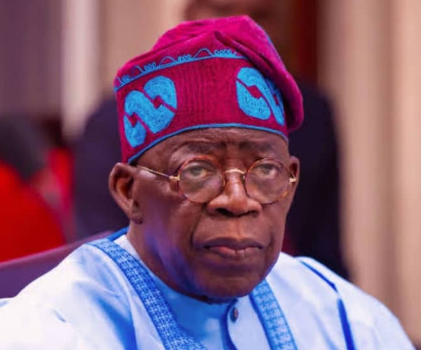
Diplomacy often conveys significant messages through symbolic actions, and President Bola Ahmed Tinubu's upcoming state visit to the United Kingdom, at the invitation of King Charles III and Queen Camilla, is a potent example, scheduled to take place on March 17.
nThis visit is noteworthy as it will be the first time in nearly four decades that a Nigerian Head of State will be accorded such royal honours, underscoring the significance of this diplomatic engagement.
nIn the realm of international relations, this invitation extends beyond mere ceremony, serving as a form of recognition that highlights Nigeria's renewed relevance in the global conversation, particularly for a country whose global reputation has fluctuated between promise and scepticism over the years.
nOnly a select few Nigerian leaders have been granted this level of diplomatic recognition from the British Crown, and state visits are the highest form of diplomatic engagement within the United Kingdom's foreign relations framework, reserved for nations and leaders considered strategic partners.
nNigeria's return to this exclusive diplomatic circle reflects both the country's evolving international posture and the leadership currently guiding its affairs, as President Tinubu has pursued a deliberate and multidirectional foreign policy since assuming office.
nThis approach has involved engaging major global power centres without compromising Nigeria's strategic autonomy, allowing the country to reposition itself as a pragmatic partner across geopolitical blocs, working simultaneously with the United States, China, the European Union, Turkiye, Brazil, and the Gulf states.
nThe results of this diplomatic balancing act have been tangible, with the Tinubu administration securing major investment commitments in China, including the $3.3 billion Brass Industrial Park and Methanol Complex, aimed at industrialisation and job creation.
nIn Brazil, Nigeria has secured another strategic partnership through the $1.1 billion Green Imperative Project, a large-scale agricultural mechanisation initiative designed to modernise farming and improve food security, complemented by a renewed aviation pact expected to open direct Lagos-São Paulo flights.
nThe resolution of the diplomatic impasse with the United Arab Emirates has also been significant, with the Tinubu administration restoring normal relations and reopening travel channels through sustained engagement, underscoring Nigeria's renewed diplomatic confidence.
nBeyond economic diplomacy, the administration has strengthened Nigeria's security partnerships, particularly with Turkiye, in areas such as drone technology, intelligence sharing, and specialised military training, bolstering the country's counter-terrorism capabilities.
nCooperation with the United States on security cooperation has also expanded, facilitated by structured dialogue coordinated through the Office of the National Security Adviser, illustrating a broader shift in Nigeria's diplomatic posture that favours engagement, negotiation, and pragmatic partnerships.
nHowever, diplomacy does not thrive abroad without credibility at home, and Nigeria's growing international recognition has been shaped by the administration's willingness to pursue difficult economic reforms, including the removal of fuel subsidies and the liberalisation of the foreign exchange market.
nThese reforms, although initially generating domestic debate, have begun to attract global validation, with the World Bank and the International Monetary Fund endorsing Nigeria's macroeconomic indicators, which have shown gradual stabilisation, and foreign reserves climbing above $43 billion.
nNigeria's removal from the Financial Action Task Force grey list reflects progress in financial transparency and anti-money laundering compliance, significantly enhancing the country's credibility in global financial markets.
nThese achievements are crucial as international perceptions shape investment flows, diplomatic partnerships, and economic opportunities, and the royal visit must be understood within this broader context, reflecting Nigeria's enduring importance within the Commonwealth and its strategic role as the leading African economy.
nFor Nigeria, the visit provides an opportunity to deepen bilateral cooperation in areas ranging from trade and security to climate policy, technology, and education, as well as a platform to celebrate the remarkable contributions of the Nigerian diaspora in Britain.
nThe visit's symbolism is also significant, as international politics often precede transformation, and a country seen as stable, reform-oriented, and strategically relevant attracts partnerships that reinforce those qualities, with Nigeria's current diplomatic momentum suggesting that the world is beginning to reassess the country through a more optimistic lens.
nWhile diplomacy alone cannot solve Nigeria's domestic challenges, global recognition, when earned through credible policy direction, creates opportunities that can accelerate national progress, and the royal visit to Windsor Castle is therefore more than a ceremonial exchange of handshakes and state banquets.
nIt serves as a reminder that Nigeria, despite its complexities, remains a nation of immense strategic importance, capable of reclaiming its voice and influence on the global stage, and this state visit may well mark a turning point in the country's history.
Related Stories
 General News
CELEBRATING TWO YEARS OF TRANSFORMATIONAL LEADERSHIP IN THE PRESIDENTIAL AMNESTY PROGRAMME
Tomorrow, 14TH March 2026, as we look forward to the second anniversary, we reflect on the remarkable two years since the Administrator of the Preside
 General News
PRESIDENTIAL AMNESTY PROGRAMME PHASE 3: DISREGARD PURPORTED STATEMENT ON DELAYED ITA PAYMENTS — OFFICE OF NATIONAL CHAIRMAN
The Office of the National Chairman of the Presidential Amnesty Programme Phase 3, General Elaye ThankGod Dollar Slaboh, has called on beneficiaries a
 General News
RE: CLARIFICATION ON MY PERSONAL RELATIONSHIPS
PUBLIC NOTICErnrnRE: CLARIFICATION ON MY PERSONAL RELATIONSHIPSrnrnIt has become necessary to make this public clarification following the increasing