
Tinubu’s re-election bid: Why Kaduna is more crucial than Lagos, Kano, Katsina, Rivers
By John Alechenu
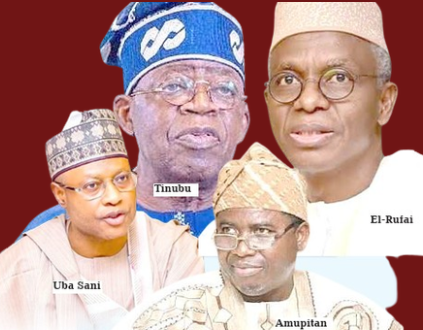
nWHEN strategists, who have started working over time, especially inside Aso Rock, spread the big electoral map of Nigeria on the table to plot President Bola Tinubu’s path to a second term in 2027, Kaduna State will enjoy a pride of place.
nIt is not Kano with the highest number of voters. It is not Lagos, the president’s political base. It is not even Katsina, home of the late President Muhammadu Buhari.
nPundits argue that Kaduna is small enough to ignore at a casual glance, but big enough to ruin your entire calculation.
nThe reason is simple.
nKaduna is what some describe as mini-Nigeria because of its diversity.
nYou have a largely Muslim Kaduna North and a predominantly Christian Kaduna South.
nYou have Hausa-Fulani co-existing with Bajju, Atyap, Ham, Gwong and over 60 other groups.
nYou have big urban problems and rural banditry in the same breath.
nIt was capital of the old Northern Region and still carries what the late Second Republic politician, Dr Junaid Mohammed, described as “that old arrogance of power.”
nWhat happens in Kaduna reverberates across the North.
nFor Tinubu, Kaduna matters for practical reasons.
nFirst, the votes.
nKaduna sits in the North-West, the biggest voting bloc in the country.
nIn 2023, over 93 million eligible voters were registered by the Independent National Electoral Commission, INEC, across the country.
nHowever, roughly 25 million voted.
nThe zone had over 22.4 million registered voters and accounted for over 6.5 million votes.
nKaduna alone had 4.3 million registered voters, the third largest in the zone after Kano and Katsina.
nBut unlike Katsina where the All Progressives Congress, APC, can almost go to sleep and win, it has a real battle on its hands in Kaduna. Figures released by INEC after the 2023 presidential election showed Atiku Abubakar polled 554,360 votes, Tinubu came second with 399,293, while Peter Obi polled 294,494. The APC, however, won the governorship race.
nBack then, Atiku’s Peoples Democratic Party, PDP, held Southern Kaduna firmly and snatched parts of Kaduna Central. The Labour Party shocked many in Chikun, Kaduna North and parts of Igabi, riding on the anger of young and urban voters squeezed by the economy.
nShared ownership
nThat is Kaduna. No party can claim 100 percent ownership. You win it polling unit-by-polling unit, ward-by-ward.
nIf you manage a convincing win there, you go into the general election with momentum.
nIf you lose it, the headline alone demoralises your supporters in the rest of the North-West.
nA lot has changed since 2023.
nOnly Tinubu has remained in his party, the APC.
nAtiku, Obi and others have since changed platforms and formed new alliances.
nFrom Zaria to Kafanchan, the conversation is different.
nIn a tea joint, popularly called Mai Shayi, in Tudun Wada, the talk is about dollar rate. In a church in Sabon Tasha, it is about the cost of fertiliser.
nIn Ahmadu Bello University, Zaria, lecturers debate tax reform.
nDahiru Umar, a regular patron at the Mai Shayi joint, told Sunday Vanguard, “For those interested in business, the relative stability in the naira to dollar exchange rate will count for something. For most voters, the cost of everyday living remains a talking point.”
nKaduna parades perhaps the most politically aware electorate in the North: Retired generals in Malali, former permanent secretaries, traders in Sheikh Abubakar Gumi market, farmers in Soba and Giwa. When the North is uneasy about a policy, you will probably hear it first in Kaduna.
nOpinion shaping institutions
nThe state hosts institutions that shape opinion beyond its borders – the Jama’atu Nasril Islam, Council of Imams and Ulamas, CAN leadership, Emir of Zazzau, Agwatyap and other traditional rulers.
nTheir statement in Kaduna travels to Sokoto, Maiduguri and Ilorin.
nFor a president seeking re-election, controlling that conversation is gold. If Kaduna says things are improving, the North-West listens.
nA Zaria-based Islamic cleric, Sheikh Auwal Shariff, has been vocal about the economic impact of Tinubu’s fuel subsidy removal.
nHe was invited and quizzed by security officials over his constant criticisms.
nIn one of his sermons aired on social media, Shariff said, “Tinubu and Buhari are like Pharaoh and Haman. “There is no difference between them. If not for Tinubu’s lack of regard for Nigerians, how can you announce the removal of subsidy in your inaugural speech?”
nAPC’s grip since 2025
nSince the PDP lost power in 2015, Kaduna has remained in APC’s grip, but never as a monolithic APC state. Within the party, you still have the legacy CPC bloc that followed Buhari, the old ACN crowd, PDP defectors with their own structures, and the new youth base that joined during Tinubu’s campaign.
nEl-Rufai, who governed the state on APC’s platform until 2023, championed the Muslim-Muslim ticket campaign, first in Kaduna before doing the same at the national level.
nSome of his actions and inactions while in office alienated him from sections of the state, especially the South.
nAlthough he championed and later co-opted other APC governors, especially from the predominantly Muslim northern states, he has since fallen out with the government he helped install.
nHis successor, Governor Uba Sani has tried to break away from what many, particularly in the southern part, see as El-Rufai’s divisive politics.
nSani has appointed Christians and ethnic minorities into his cabinet, visited communities that were once no-go areas, and toned down the ‘us-versus-them’ rhetoric.
nIt has not solved all problems, but tension is lower than in 2023.
nFor the Villa, Uba Sani is considered a strategic asset.
nIf he stabilises Kaduna, Tinubu can point to the state as a laboratory for national unity under his Renewed Hope Agenda.
nIf Kaduna slides back into killings in Kajuru, Kauru and Zangon Kataf, the opposition will use it as evidence that nothing has changed.
nWhatever anyone feels about him, El-Rufai was central to Tinubu’s victory in the North-West in 2023.
nHe was vocal, mobilised, and convinced many sceptics in the core North that a southern candidate was the best bet. His fallout with the Presidency after the ministerial screening left a wound that may take a while to heal.
nHe still commands loyalty among a section of the APC in Kaduna North, Kaduna South, parts of Igabi and among young urban voters who liked his blunt, reformist style. The Presidency knows writing off that bloc completely will affect turnout in city centres.
nManaging El-Rufai’s influence
nThat is why there have been quiet moves to manage the situation – emissaries, private meetings, softening of public attacks.
nIt is not really about El-Rufai the person. It is about thousands of canvassers and influencers who believe in him.
nFor almost five years, Kaduna was synonymous with bad news. Kidnappings on the Kaduna-Abuja highway, bandits emptying villages in Birnin Gwari, communal clashes in Kajuru, train attack, farmers abandoning farms, transporters doubling fares.
nIn the last one year, there has been relative improvement.
nThe Kaduna-Abuja road is safer than it was, though people still travel with fear. Farming has resumed in some local governments.
nThe Abuja-Kaduna train service is back and fully booked most days. Soldiers have remained in Birnin Gwari forests, and the state government is combining force with dialogue.
nIf that improvement holds till 2027, Tinubu will have something concrete to campaign with in Kaduna.
nHe can go to Rigachikun and say, “your road is open”. He can go to Birnin Gwari and say, “you are back to your farms”.
nReal question after security
nBut security alone will not be enough. In Kakuri, Sabon Gari Zaria and Kafanchan market, the question is simple: How much is rice, fuel, school fees?
nSince subsidy removal, life has been hard. Federal allocations have gone up, but prices have also gone up. What people feel in their pockets will determine how they vote.
nUnfinished business of Muslim-Muslim ticket
nThere is also the unfinished business of the Muslim-Muslim ticket.
nIt cost APC votes in Southern Kaduna in 2023.
nThe wound is largely healed. However, appointments, projects and the governor’s peace moves in Jema’a, Kaura, Zangon Kataf and Sanga are being watched in the Villa. If APC can raise its figures in Southern Kaduna in 2027, even by 15 percent, it becomes a powerful story of inclusion.
nAt the end of the day, politics is about numbers and narratives.
nKano will give numbers.
nRivers will give drama and resources.
nKatsina will give Buhari’s legacy.
nBut Kaduna gives legitimacy.
nA convincing win in Kaduna allows Tinubu to claim he has united a complex state and, by extension, a complex Nigeria.
nThat is why every local government election in Kaduna, every ministerial visit, every kilometre of the Abuja-Kaduna-Kano road, every posting to the Defence Industries Corporation or the refinery matters.
nA Southern Kaduna indigene, Mr Luka Binniyat, said the importance of the state cannot be over-emphasised.
nHe said, “Kaduna is important. Mr President and those around him know this and they are taking steps to ensure he wins come 2027.
n“For the first time in a very long time, a large percentage of the people of this state feel seen.
n“Appointments and distribution of projects have taken into account our diversity.”
nAnother resident, Umar Farouk, however, said the president may be “living in a fool’s paradise” to assume all was well in terms of his chances in 2027.
nHe said, “I don’t see President Tinubu having problems in Kaduna South. He will however struggle in the predominantly Muslim North because of the general feeling that their expectations for voting for a Muslim-Muslim ticket have not been met.”
nDr Joseph Anuga, senior lecturer at the Department of Political Science, University of Jos, told Sunday Vanguard on telephone that a lot will be on the table in 2027.
nHe said, “Not only Kaduna, the whole country should be of interest to every serious contender. Every vote can make or mar a candidate. In this clime, people vote for varied reasons.
n“Like we experienced in 2023, some will vote to prove which ethnicity or religion is dominant, others will vote for the system to remain, while others will vote for change based on what they consider today’s economic realities.
n“What should be of interest to all is a transparent process where voters will, to a large degree, believe that their votes count and that the outcome reflects the views of the majority.”
nMinister of Works, Mr David Umahi who is the Deputy Director General of the APC 2027 Presidential Campaign has told all who care to listen that Tinubu’s works – especially road projects – will speak at the polls.
nSpeaking during one of several visits to the Kaduna section of the project, Umahi said: “The Abuja-Kaduna-Kano Road project is very dear to Mr. President.
n“The people of Kaduna State are happy and will definitely show their appreciation with their votes.”
nThe road to 2027 does not bypass Kaduna. It runs right through its middle – from Rigachikun to Rigasa, from Zaria to Kwoi, from Giwa to Kafanchan.
n nRelated Stories
 General News
CELEBRATING TWO YEARS OF TRANSFORMATIONAL LEADERSHIP IN THE PRESIDENTIAL AMNESTY PROGRAMME
Tomorrow, 14TH March 2026, as we look forward to the second anniversary, we reflect on the remarkable two years since the Administrator of the Preside
 General News
PRESIDENTIAL AMNESTY PROGRAMME PHASE 3: DISREGARD PURPORTED STATEMENT ON DELAYED ITA PAYMENTS — OFFICE OF NATIONAL CHAIRMAN
The Office of the National Chairman of the Presidential Amnesty Programme Phase 3, General Elaye ThankGod Dollar Slaboh, has called on beneficiaries a
 General News
RE: CLARIFICATION ON MY PERSONAL RELATIONSHIPS
PUBLIC NOTICErnrnRE: CLARIFICATION ON MY PERSONAL RELATIONSHIPSrnrnIt has become necessary to make this public clarification following the increasing