
Tinubu's Overhaul of Economy and Finances: Successes, Setbacks, and Unmet Objectives
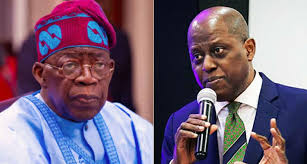
Prior to his inauguration on May 29, 2023, President Bola Tinubu outlined two primary monetary policy objectives, emphasizing the need for monetary policy to focus on exchange rates, interest rates, and price levels to achieve shared prosperity.
nAccording to his campaign policy document, Tinubu stated that protecting the exchange rate, guarding against inflation, and preserving foreign currency reserves could be achieved by limiting exposure to large debt obligations denominated in foreign currency.
nThe Central Bank of Nigeria, led by Mr. Olayemi Cardoso, adopted an orthodox monetary policy framework during the administration's three-year tenure, utilizing tools such as the Monetary Policy Rate, Cash Reserve Ratio, Liquidity Ratio, and Open Market Operations to influence money supply, interest rates, and exchange rates.
nThe CBN pursued a tight monetary policy, raising the Monetary Policy Rate to address rising inflation, and implemented wide-ranging foreign exchange reforms, including the elimination of multiple exchange rates to curb arbitrage, enhance transparency, and boost investors' confidence.
nThe most notable policy of the CBN under President Tinubu was the unification of exchange rates and the introduction of a willing buyer-willing seller framework for determining exchange rates in the official market, resulting in a sharp depreciation of the Naira.
nAs of May 19, 2026, the Naira had depreciated by 198 per cent to N1,373.65 per dollar in the official forex market, and by 80 per cent to N1,385 per dollar in the parallel market, compared to the beginning of the administration.
nTo restore confidence in the forex market, the CBN cleared foreign exchange obligations of about $7 billion, which, combined with other reforms, enhanced foreign exchange inflow into the country and introduced an FX market code of conduct.
nThe Naira has enjoyed relative stability since 2025, with the exchange rate stabilizing under N1,400 per dollar, despite global economic headwinds, and the gap between the official and parallel market exchange rates narrowed to N11.35 on May 19, 2026.
nNigeria's foreign capital importation rose for two consecutive years to $23.21 billion in 2025, and the nation's external reserve rose steadily, hitting $50.027 billion on March 11, 2026, the highest level in 13 years.
nHowever, the sharp depreciation of the Naira triggered widespread increases in prices of goods and services, and persistent rises in the inflation rate, with the annual inflation rate rising steadily to 34.8 per cent in December 2024.
nThe Cardoso-led CBN raised the Monetary Policy Rate six times in 2024 to 27.5 per cent, and also raised the Cash Reserve Ratio of commercial banks two times, to 50 per cent from 32.5 per cent, to address the rising inflation trend.
nThe CRR for Merchant Banks was adjusted from 10% to 14% in early 2024, and subsequently moved to 16% in September 2024, where it remained through 2025, contributing to a decline in the inflation rate for 12 consecutive months to 15.06 per cent in February 2026.
nThe hike in MPR triggered a high-interest regime, with average lending rates of banks rising by 8.55 percentage points to 35.17 per cent in March 2026, severely impacting businesses across the country.
nThe combined finance cost of 12 leading companies increased by 81 per cent to N1.15 trillion in 2024, despite a 6.4% decline in their bank borrowing, with companies including Nestle Nigeria, Cadbury Nigeria, and Unilever Nigeria being affected.
nUnder President Tinubu, the total debt stock rose by 219 per cent to N159.27 trillion at the end of 2025, primarily due to the depreciation of the Naira and the acquisition of new foreign loans, contrary to the President's campaign promise.
nThe total foreign loan rose by 21.5 per cent to $51.85 billion at the end of 2025, while the debt-to-GDP ratio fell to 36.9 per cent, and the Debt Service-Revenue ratio dropped to 65 per cent, indicating improvement in debt sustainability indicators.
nNigeria recorded a major forward leap in its macroeconomic numbers, with the Gross Domestic Product growing for two consecutive years to 3.38 per cent in 2024 and 3.87 per cent in 2025, following the implementation of economic reforms.
nHowever, the cost of living in Nigeria has risen sharply, with informed estimates putting the monthly cost of living at about ₦505,780 for a single person and ₦1,818,926 for a family of four, excluding rent, resulting in a significant decrease in the standard of living for most Nigerians.
nThe quality and standard of life in Nigeria are highly fragmented, characterized by a stark divide between a small, affluent elite and a majority struggling with severe economic pressures, including high inflation, currency devaluation, and fuel subsidy removals.
nThe national minimum wage of ₦70,000 per month is significantly lower than the required monthly expenses of over ₦505,000 for a single urban resident, and the average Nigerian household spends roughly 60% to 70% of its total income on feeding, limiting disposable income for savings, leisure, or emergencies.
nHigh inflation has pushed millions of former middle-class citizens into lower economic brackets, driving a massive wave of professional migration out of the country, with the middle-class shrinkage being a significant consequence of the economic reforms.
Related Stories
 General News
CELEBRATING TWO YEARS OF TRANSFORMATIONAL LEADERSHIP IN THE PRESIDENTIAL AMNESTY PROGRAMME
Tomorrow, 14TH March 2026, as we look forward to the second anniversary, we reflect on the remarkable two years since the Administrator of the Preside
 General News
PRESIDENTIAL AMNESTY PROGRAMME PHASE 3: DISREGARD PURPORTED STATEMENT ON DELAYED ITA PAYMENTS — OFFICE OF NATIONAL CHAIRMAN
The Office of the National Chairman of the Presidential Amnesty Programme Phase 3, General Elaye ThankGod Dollar Slaboh, has called on beneficiaries a
 General News
RE: CLARIFICATION ON MY PERSONAL RELATIONSHIPS
PUBLIC NOTICErnrnRE: CLARIFICATION ON MY PERSONAL RELATIONSHIPSrnrnIt has become necessary to make this public clarification following the increasing