
Three decades on: Is Nigeria capable of replicating the June 12 poll?
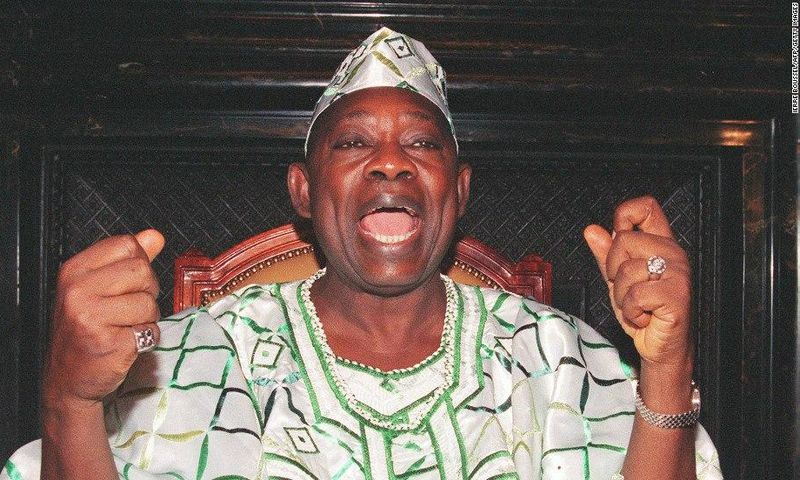
The 1993 presidential election, won by late Chief MKO Abiola, was conducted using a unique process called Option A4, where voters queued behind their preferred candidate, and the results were transparent and easy to verify.
nThis election, which took place on June 12, 1993, was arguably the freest and fairest in Nigeria's history, with over 14 million voters participating, and Abiola securing over eight million votes, while his challenger, Bashir Othman Tofa, garnered about six million votes.
nThe election was conducted by the National Electoral Commission, led by late Professor Humphrey Nwosu, and the results were clear and undisputed, with no incidents of ballot box-snatching or falsification of election results.
nHowever, the military regime of General Ibrahim Badamasi Babangida annulled the election, plunging the nation into a bloody political crisis that took six years to partially resolve, with the election of Chief Olusegun Obasanjo as president in 1999.
nSince then, Nigeria has not had another election comparable to the June 12, 1993, poll in terms of conduct and credibility, with many subsequent elections marred by controversy and disputes.
nIn recent years, some parties have attempted to replicate the June 12 model, but with limited success, and the use of technology, such as electronic voting, is still not widespread.
nToday marks the 33rd anniversary of the June 12, 1993, presidential poll, and the eighth anniversary of the Federal Government's recognition of June 12 as Democracy Day, which was first marked by President Muhammadu Buhari in 2018.
nPresident Buhari also apologized to the family of Chief MKO Abiola and conferred a posthumous award on him as the Grand Commander of the Federal Republic of Nigeria, and in 2019, he signed a bill into law, officially recognizing June 12 as the nation's Democracy Day.
nAs the nation marks this anniversary, it is faced with a cloud of insecurity and unity-threatening challenges, including forthcoming polls, such as the June 20 governorship election in Ekiti and the January 2027 general polls.
nLate Chief MKO Abiola's campaign was centered on the welfare of the people, with the theme "Farewell to Poverty," but 33 years later, the question remains whether Nigeria has made progress in reducing poverty.
nAccording to the Nigeria Bureau of Statistics, in 1992, 39.2 million Nigerians lived below the poverty line, and by 1993, this number had jumped to 67.1 million, representing 65.6 percent of the population.
nIn 2018, a report by the Brookings Institution stated that Nigeria had about 87 million people living in extreme poverty, and today, no fewer than 131 million Nigerians are multi-dimensionally poor.
nThe 1993 election was notable for its transparency and credibility, with the results known to all parties without dispute, and no incidents of ballot box-snatching or falsification of election results.
nHowever, subsequent elections have been marred by controversy, with the outcome of many polls nullified by the courts, and the transmission of election results remains an issue, with diaspora and electronic voting still not implemented.
nFuture polls, including the 2027 general elections, are being threatened by insecurity and voter apathy, with many youths shunning the ongoing continuous voter registration, citing lack of faith in the process.
nAfter the 1999 general elections, the outcomes of most polls were decided by the courts, with many presidential elections being subjects of litigation, including those in 2003, 2007, and 2011.
nIn 2019, 77 election tribunals were constituted to address 786 petitions, the second-highest number since the return to democratic rule in 1999, and the highest was in 2007, with 1,291 petitions.
nThe winner of the 2007 presidential election, late Dr. Umaru Musa Yar'Adua, admitted that the election was flawed and set up the Justice Mohammed Uwais Election Reform Committee to find solutions.
nThe Uwais committee made far-reaching recommendations, but many of these have been implemented in breach or piecemeal, and the country is still grappling with controversial elections.
nFollowing the Uwais committee's work, notable improvements were witnessed in the 2011 general elections, with the number of petitions decreasing to 732, and further improvements were recorded in 2015, with 611 petitions.
nHowever, the gains of 2015 appeared to have been eroded in 2019, with the number of petitions rising to 786, and in the 2023 elections, 1,196 petitions were filed.
nAccording to data released by the Independent National Election Commission, between 2015 and 2017, 167 elections were conducted, with 80 of them being nullified by the courts, and 44 being inconclusive.
nThe data also showed that of the 167 elections, 123 were concluded at the first ballot, and 44 required supplementary elections, with Rivers State accounting for 37 of the 80 annulled polls.
Related Stories
 General News
CELEBRATING TWO YEARS OF TRANSFORMATIONAL LEADERSHIP IN THE PRESIDENTIAL AMNESTY PROGRAMME
Tomorrow, 14TH March 2026, as we look forward to the second anniversary, we reflect on the remarkable two years since the Administrator of the Preside
 General News
PRESIDENTIAL AMNESTY PROGRAMME PHASE 3: DISREGARD PURPORTED STATEMENT ON DELAYED ITA PAYMENTS — OFFICE OF NATIONAL CHAIRMAN
The Office of the National Chairman of the Presidential Amnesty Programme Phase 3, General Elaye ThankGod Dollar Slaboh, has called on beneficiaries a
 General News
RE: CLARIFICATION ON MY PERSONAL RELATIONSHIPS
PUBLIC NOTICErnrnRE: CLARIFICATION ON MY PERSONAL RELATIONSHIPSrnrnIt has become necessary to make this public clarification following the increasing