
‘They chased us away like dogs’: Foreigners flee mob attacks in South Africa
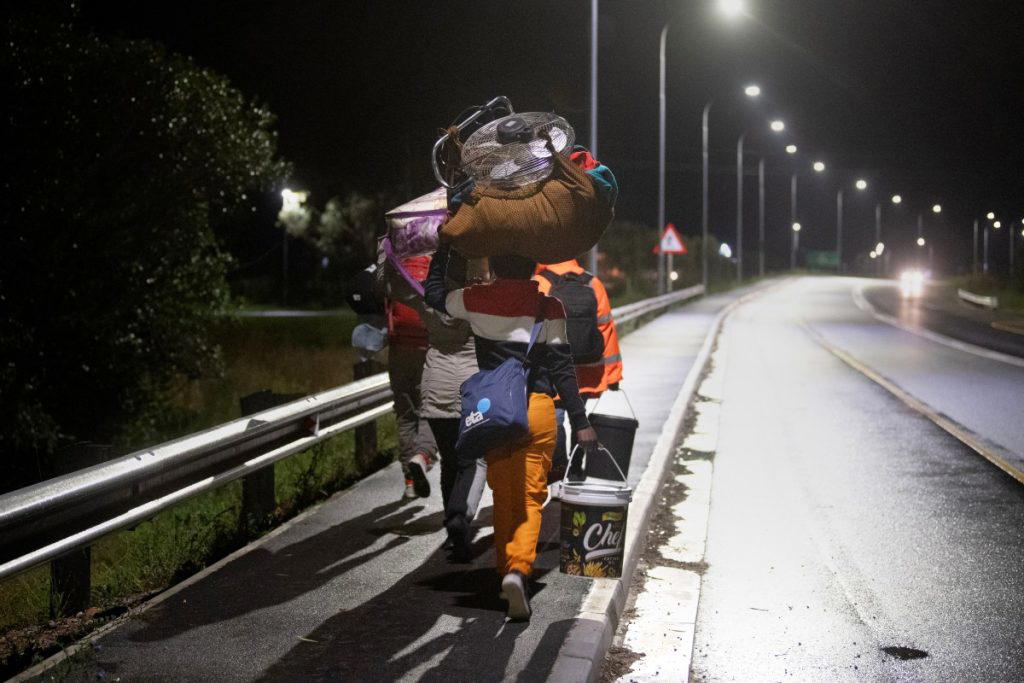
Hundreds of foreigners fearing for their lives have taken shelter in community halls on South Africa’s south coast, saying mobs of locals were going door-to-door telling them to leave the country.
nMostly nationals of Malawi and Mozambique, many told AFP they had fled their homes at the weekend and spent nights in the mountains and bush, before making their way to the small-town community centres.
n“They said ‘you are a foreigner, you don’t belong in South Africa, so you must go’,” Mozambican Thomas Vincent Baloyi told AFP in Gansbaai, around 110 kilometres (70 miles) southeast of Cape Town.
n“I said, ‘no, I got documents to be here in South Africa’. They didn’t want to know,” said Baloyi, who has been in the country for nearly 16 years working in construction and gardening.
n“They just chased us away like dogs… that is unfair because, actually, I’m a human being,” the 32-year-old said. “We just stayed in the bush until six in the morning.”
nWeeks of mostly small protests across South Africa against illegal foreign nationals exploded into violence at the weekend in the town of Mossel Bay, 250 kilometres up the coast, where 55 shacks were torched.
nThe South African police said two people from Mozambique were killed “during activities associated with antiforeigner demonstrations”.
nThey rejected a statement by the Mozambique government that five of its citizens were killed as a “direct consequence of the xenophobic attacks”.
nMozambique also said around 300 of its citizens fled back across the border on Saturday and hundreds more would follow.
nThe deaths are the first linked to a new wave of anti-migrant protests by fringe groups that accuse undocumented foreign nationals of crime and taking scarce jobs and resources away from locals.
nAfter one anti-illegal migrant group set a June 30 deadline for undocumented migrants to go home, small bands of people brandishing whips, sticks, wooden clubs and sometimes axes are reported to have taken to the streets in various places to reinforce the ultimatum.
nGhana has already flown home 300 of its citizens, with hundreds more due to leave this weekend, and Nigeria has also announced emergency repatriation flights.
n– ‘Dragged out’ –
n“They were dragging people out of their houses… whether you are legal or illegal, they say they don’t want any foreign nationals in the township,” local councillor Msa Nomatiti told AFP.
nLocals turned on foreigners in an informal settlement in Gansbaai on Monday, he said, alleging some of the groups going door-to-door to search for foreign nationals were accompanied by the police.
nMore than 500 people had fled their homes Monday, he said.
nBy late Tuesday, small groups could still be seen walking out of informal settlements in the area, hauling their belongings in the dark night and soft rain as they made their way to places of safety.
n“Some of them lost their passports because of the beatings and being dragged out of their houses,” Nomatiti said. Government officials were sent to help with documentation and voluntary repatriations.
nAround 50 people huddled over large buckets of food at the tiny Gansbaai mosque, which was crammed with people and belongings, sharing one toilet and a single tap.
n– ‘Better to go home alive’ –
nIn the small coastal town of Kleinmond, 40 kilometres closer to Cape Town, nearly 100 foreigners, most of them Malawian, sought shelter at a local community hall.
nLarge bags of clothing and blankets lined the walls and chairs were the only furniture. Volunteers served warm meals and donations from local residents trickled in.
nLandlords told non-South Africans on Saturday to leave immediately as locals were going door-to-door in search of foreign nationals, Malawian Michael Markson told AFP.
n“So we came out in the night hours, we went to the bush. There’s a mountain up there, we slept there,” said the 31-year-old, his eyes bloodshot.
n“They’re taking pangas… dangerous tools. They can hunt someone,” he said.
nIn the town of Standford less than 20 kilometres inland, another Malawian national, Talibo Mbewe, said he had been sheltering at the community hall for two days.
n“The thieves, they have already taken all our stuff at home, so we don’t have anything. But it’s better to go home without anything than to lose our lives,” he said.
n nRelated Stories
 General News
CELEBRATING TWO YEARS OF TRANSFORMATIONAL LEADERSHIP IN THE PRESIDENTIAL AMNESTY PROGRAMME
Tomorrow, 14TH March 2026, as we look forward to the second anniversary, we reflect on the remarkable two years since the Administrator of the Preside
 General News
PRESIDENTIAL AMNESTY PROGRAMME PHASE 3: DISREGARD PURPORTED STATEMENT ON DELAYED ITA PAYMENTS — OFFICE OF NATIONAL CHAIRMAN
The Office of the National Chairman of the Presidential Amnesty Programme Phase 3, General Elaye ThankGod Dollar Slaboh, has called on beneficiaries a
 General News
RE: CLARIFICATION ON MY PERSONAL RELATIONSHIPS
PUBLIC NOTICErnrnRE: CLARIFICATION ON MY PERSONAL RELATIONSHIPSrnrnIt has become necessary to make this public clarification following the increasing