
The US imposes fresh travel restrictions on individuals from Nigeria and several other nations, including those with ties to online scams and their relatives.
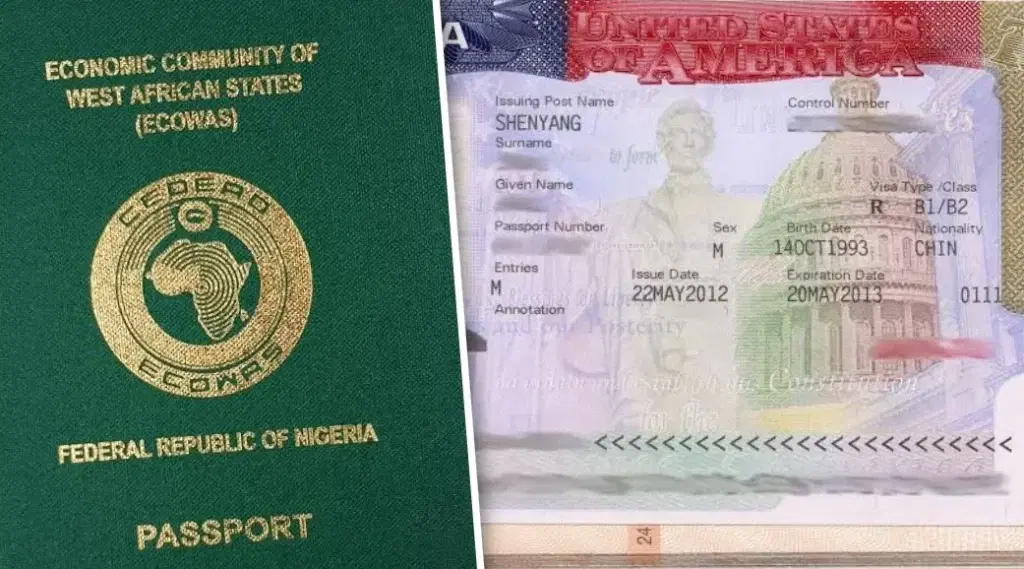
The United States has unveiled a novel visa restriction policy aimed at individuals implicated in cybercrime, cyberscams, and sextortion, with the added provision that immediate family members of offenders may also face visa restrictions under these new measures.
nThis policy, announced by U.S. Secretary of State Marco Rubio on Thursday, is part of the Trump administration's broader efforts to combat online fraud, cyber-enabled crime, and transnational criminal networks that target Americans.
nAccording to the U.S. government, the restrictions will be applied to individuals who are either responsible for or complicit in cyber-enabled crimes, including online investment scams and sextortion, regardless of their country of origin.
nSecretary Rubio announced that the policy aligns with President Donald Trump's Executive Order 14390, which focuses on combating cybercrime, fraud, and predatory schemes targeting Americans.
nRubio noted that online investment scams pose a growing threat, often being orchestrated by Chinese transnational criminal organizations, and that these scams have defrauded U.S. citizens of at least $10 billion in 2024 alone, while also fueling corruption, money laundering, and human trafficking.
nThe Secretary also highlighted the increasing threat of online sextortion, particularly against minors, stating that American children have been specifically targeted by offenders operating overseas for sextortion scams, which can devastate families and futures.
nRubio explained that the new visa policy targets individuals responsible for, or complicit in, cybercrime and cyber-enabled crime, such as those involved in cyberscams and sextortion, and that immediate family members of individuals engaged in such illicit activities may also be subjected to visa restrictions.
nHe stated that the visa restrictions are part of a broader strategy by the Trump administration to dismantle criminal networks operating across borders, utilizing every tool at their disposal, including sanctions, prosecutions, asset seizures, extradition requests, and international law enforcement cooperation.
nRubio emphasized that restricting visas sends a clear message to perpetrators of cyber-enabled crimes targeting Americans, stating that by restricting visa issuance to those who are responsible for or complicit in these criminal enterprises, the United States is sending a clear message: the country will go after those who prey on its citizens.
nThe new policy is being implemented under Section 212(a)(3)(C) of the U.S. Immigration and Nationality Act, which allows the U.S. government to restrict visas for foreign nationals whose entry could have adverse foreign policy consequences.
nAlthough the State Department did not identify specific countries or individuals that would be immediately affected, it clarified that the restrictions apply globally to people involved in cybercrime and cyber-enabled criminal activities, including cyberscams and sextortion.
nThe latest measure comes as the Trump administration continues to tighten U.S. immigration and border policies through a series of executive actions and regulatory changes, including a proposed immigration rule unveiled earlier this month.
nThis proposed rule would limit the stay of most international students and exchange visitors in the United States to four years, replacing the decades-old policy that allowed them to remain for the duration of their academic programmes.
nUnder the proposal, holders of F and J visas would be required to obtain federal approval to extend their stay beyond the four-year period, even if they have not completed their studies, plan to pursue postgraduate education, or are eligible for work experience linked to their academic programmes.
nIf implemented, the proposal would represent one of the most significant overhauls of the U.S. student visa system in decades and is expected to affect about 1.5 million international students and exchange visitors currently residing in the country.
Related Stories
 General News
CELEBRATING TWO YEARS OF TRANSFORMATIONAL LEADERSHIP IN THE PRESIDENTIAL AMNESTY PROGRAMME
Tomorrow, 14TH March 2026, as we look forward to the second anniversary, we reflect on the remarkable two years since the Administrator of the Preside
 General News
PRESIDENTIAL AMNESTY PROGRAMME PHASE 3: DISREGARD PURPORTED STATEMENT ON DELAYED ITA PAYMENTS — OFFICE OF NATIONAL CHAIRMAN
The Office of the National Chairman of the Presidential Amnesty Programme Phase 3, General Elaye ThankGod Dollar Slaboh, has called on beneficiaries a
 General News
RE: CLARIFICATION ON MY PERSONAL RELATIONSHIPS
PUBLIC NOTICErnrnRE: CLARIFICATION ON MY PERSONAL RELATIONSHIPSrnrnIt has become necessary to make this public clarification following the increasing