
The Unheard Tale of Onigbinde: A Life of Triumph Marked by Persistent Disappointment Until His Passing
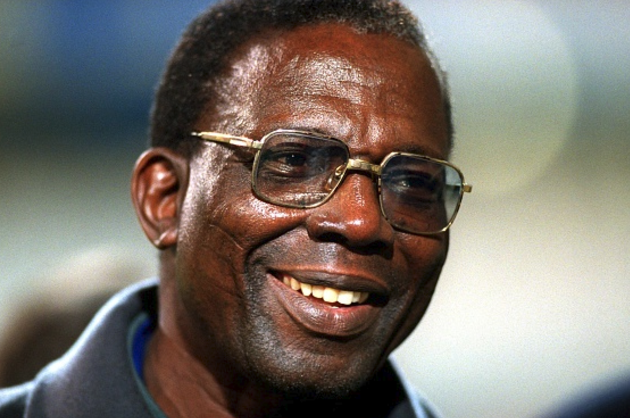
A two-storey building stands on a quiet street in the Felele area of Ibadan, Oyo State, bearing the weight of silence, a home where the late Adegboye Onigbinde lived with his family until his relocation to Osun State last December.
nThe home now speaks volume, not in echoes of celebration, but in the quiet language of loss, as the entire street seemed deserted on the day of the visit, with no crowds of sympathisers thronging the entrance, no sea of vehicles, and none of the fanfare that often accompanies the passing of a public figure.
nThe only information offered was that a former footballer, Felix Owolabi, had visited a day before, and the stillness was profound, a fitting, if somber, tribute to a man whose life was defined by quiet dignity.
nStanding before the Onigbinde home, you’re struck by how modest, even neglected, the property appeared, with faded walls bearing the weight of years without proper maintenance, and the gate sagging slightly on its hinges.
nThe courtyard, though tidy, seemed subdued and quiet, far from the grandeur often associated with national heroes, and inside, the rooms were simple and functional, adorned only with modest family photographs and a few mementos.
nThe furniture, though well-kept, was plain, and the air carried a sense of calm austerity rather than pomp, reflecting the man himself: a man whom many described as one who valued substance over show, integrity over display, and service over self-aggrandisement.
nYet the stark contrast between his illustrious past and humble present is a sobering reminder that even the most celebrated individuals can fade into quiet anonymity, as tributes pour in, and Nigerians are left to ponder the fleeting nature of fame and the importance of honouring those who have made a lasting impact.
nIn the history of Nigerian football, few figures carried themselves with the quiet dignity and restraint that defined the late Adegboye Onigbinde, who was the disciplined tactician who once guided the Super Eagles during one of the most delicate moments in the nation’s football history.
nThroughout his long career, Onigbinde remained known for his uncompromising professionalism, valuing discipline, fairness, and knowledge above personal connections or political manoeuvring, qualities that earned him respect internationally but sometimes placed him at odds with the realities of Nigerian sports administration.
nEven in retirement, he remained deeply concerned about the direction of Nigerian football, believing passionately that the country possessed the talent to compete with the world’s best, but he also understood that talent alone could not overcome structural weaknesses.
nFriends say he carried those concerns with him for years, hoping the reforms he advocated would one day take root, and yet the story of his life was not only one of professional dedication, but also a story of human warmth, as a mentor to young people, a calm counsellor to friends, and a father figure to many who sought his advice.
nIronically, his connection to the city became so strong that many residents believed he was an indigene of Oyo State, even though his origins lay in neighbouring Osun State, and his home in Ibadan was a place of warmth and wisdom, where young people gathered to seek his advice and learn from his experiences.
nFor his family, the more intimate truth is that of a principled man who carried the quiet burden of disappointments, having given his best to a system that seldom rewarded integrity, and to those who knew him best, his calmness was perhaps his most enduring quality.
nIn moments of tension, whether on the football pitch or within the walls of his home, he rarely raised his voice, instead listening, weighing his words carefully before offering guidance, a composure that accompanied him in his final days.
nKunle Onigbinde, the last son of the late football icon, opened up about the father the world rarely saw, describing him as a great man who always gave his best, respected not only in Nigeria but also internationally, having worked with both the Confederation of African Football (CAF) and FIFA.
nWhen asked if his father’s public persona matched the private reality, Kunle nodded without hesitation, saying his father took good care of his children and extended family, showing love to everyone around him, and was someone who genuinely cared about people.
nKunle reflected on what the family would miss most, pausing to capture an essence, saying his father’s experience, intelligence, kindness, and calmness were special qualities that made him a composed person who handled issues with patience and maturity.
nHe expressed a quiet hope that the nation might finally honour his father’s contributions in a tangible way, such as naming a stadium or sports facility after him, similar to how other national sports icons have been honoured.
nKunle painted a vivid picture of his father working against the clock but armed with decades of experience during the 2002 FIFA World Cup, approaching the job with confidence, having gained exposure from working with FIFA and CAF, and travelling widely to study coaching methods.
nHe brought all that experience to the Nigerian national team, stabilising the squad and managing the situation effectively, despite having only about three months to prepare the team before the World Cup.
nKunle discussed the contract, saying his father was not the kind of person who would flatter people or engage in unnecessary praise just to gain favour, instead believing in doing his work with integrity, which sometimes created misunderstandings in Nigeria, where some people prefer to manipulate situations.
nHis father had a big dream for Nigerian football, wanting Nigeria to compete at the same level as the top football nations in the world, believing the country had the talent and potential to reach that level, but unfortunately, many of the structural changes he wanted were not fully implemented.
nOne of those dreams was a firm belief in home-grown talents, a philosophy that yielded one of Nigeria’s greatest goalkeepers, as shortly after he was appointed Super Eagles coach ahead of the 2002 World Cup, he discovered Vincent Enyeama during a match between Enyimba and Julius Berger in Abeokuta.
nEnyeama later became one of Nigeria’s greatest goalkeepers, serving the national team for nearly a decade, and Kunle’s father believed strongly in developing local talents, supporting the development of home-based players and organising coaching courses in collaboration with CAF.
nAs the interview turned to the subject of his father’s passing, Kunle’s voice grew heavier, and he recounted the final hours, saying his father was struggling with the reality of leaving his loved ones behind, wanting to speak but unable to, with emotions visible in his eyes.
nKunle provided details of those final days, saying his father was 88 years old, celebrated his birthday on March 5, and the family extended the celebration to March 7, but he passed away shortly after, having been relatively stable except for some knee issues common with age, but his condition suddenly changed on that Friday.
Related Stories
 General News
CELEBRATING TWO YEARS OF TRANSFORMATIONAL LEADERSHIP IN THE PRESIDENTIAL AMNESTY PROGRAMME
Tomorrow, 14TH March 2026, as we look forward to the second anniversary, we reflect on the remarkable two years since the Administrator of the Preside
 General News
PRESIDENTIAL AMNESTY PROGRAMME PHASE 3: DISREGARD PURPORTED STATEMENT ON DELAYED ITA PAYMENTS — OFFICE OF NATIONAL CHAIRMAN
The Office of the National Chairman of the Presidential Amnesty Programme Phase 3, General Elaye ThankGod Dollar Slaboh, has called on beneficiaries a
 General News
RE: CLARIFICATION ON MY PERSONAL RELATIONSHIPS
PUBLIC NOTICErnrnRE: CLARIFICATION ON MY PERSONAL RELATIONSHIPSrnrnIt has become necessary to make this public clarification following the increasing