
The Super Falcons warrant more respect
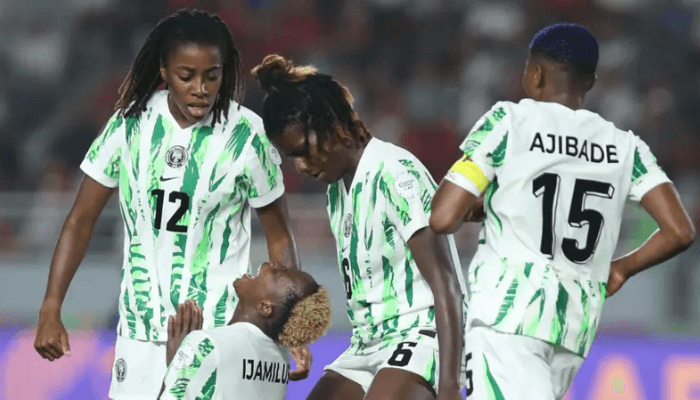
The Super Falcons of Nigeria, with their unparalleled 10 Women’s Africa Cup of Nations titles, have long been the gold standard in African women’s football, and their unbroken streak of qualifying for every FIFA Women’s World Cup since 1991 is a testament to their enduring legacy.
nThis impressive record, however, now demands more than just reverence – it necessitates thorough preparation, which appears to be lacking, with the team’s friendly match schedule raising concerns just three months ahead of the upcoming WAFCON tournament in April 2026.
nElite performance is inextricably linked to elite preparation, and friendlies serve as crucial tactical laboratories where coaches can test various formations, integrate new talent, and gauge their squad’s performance against diverse playing styles.
nAs of now, the Falcons’ 2026 calendar features a mere double-header against Cameroon in February and March, a paltry schedule that threatens to leave the team underprepared and rusty, rather than ready for the challenges ahead.
nSuper Falcons captain Rasheedat Ajibade has taken to social media to express her concerns over the Nigerian Football Federation’s handling of friendlies, succinctly stating that “The Super Falcons deserve better” – a sentiment that echoes the need for improved preparation.
nWith WAFCON also serving as a qualification tournament for the 2027 Women’s World Cup in Brazil, the team’s preparations appear to be following the familiar, yet flawed, pattern of last-minute scrambling, rather than adopting a more strategic approach.
nThe concern is heightened by the fact that the rest of Africa is rapidly closing the gap, with Nigeria no longer able to coast to victory by default, as women’s football on the continent has undergone a significant transformation over the past five years.
nMorocco, in particular, has emerged as a force to be reckoned with, having hosted WAFCON in 2022 and reached the final, where they defeated Nigeria 5-4 on penalties, before going on to make the World Cup Round of 16 in 2023 – a testament to their well-planned and funded approach.
nNigeria’s comeback victory over Morocco in the WAFCON 2024 final, where they came from 2-0 down to win 3-2, was a remarkable achievement, but one that cannot be relied upon to repeat itself without adequate preparation.
nZambia, another team on the rise, has been actively testing itself in high-level competitions, including the FIFA Series in Brazil, where they faced Canada, Brazil, and South Korea in a span of just eight days, demonstrating a commitment to preparation that Nigeria would do well to emulate.
nThe Copper Queens’ progress is further evident in the fact that players like Barbra Banda and Racheal Kundananji are now starring in the U.S. National Women’s Soccer League, highlighting the country’s growing presence on the international stage.
nSouth Africa’s Banyana Banyana, the African champions in 2022, have maintained their position at the top of the women’s game on the continent, thanks to consistent training camps and high-quality opposition, including recent matches against Algeria and upcoming friendlies against Japan.
nEven smaller nations like Senegal, Cameroon, Ghana, and Botswana have been actively improving their game, with Senegal pushing Zambia to the limit in Olympic qualifying and Botswana qualifying for their first WAFCON in 2022, before stretching Nigeria in their last meeting.
nMalawi’s qualification for WAFCON 2026 marks another milestone in the growing competitiveness of African women’s football, where coaching has improved, diaspora recruitment is stronger, and more players are competing in European leagues, effectively closing the gap that Nigeria once enjoyed.
nThe significance of friendlies cannot be overstated, as they provide a platform for teams to test themselves against varied opponents, feel the tempo of World Cup-level competition, and identify areas for improvement – all essential components of preparation that Nigeria is currently lacking.
nA comparison of the Falcons’ 2026 schedule with those of other top teams reveals a glaring disparity, with South Africa booking matches against Algeria and Japan, and Zambia facing Canada, Brazil, and South Korea, while Nigeria’s schedule remains woefully inadequate.
nThe lack of proper friendlies not only hinders squad integration but also hurts the team’s tactical development, as coach Justine Madugu needs to see his players in action against quality opponents to gauge their performance, test formations, and identify leaders – all of which cannot be replicated in training sessions.
nThe NFF’s financial constraints are a reality, but planning and scheduling are choices that can be made to secure better matches, as evidenced by Zambia’s participation in the FIFA Series in Brazil and South Africa’s upcoming friendlies in Japan.
nOther African federations, such as CECAFA and UNAF, are organizing women’s mini-tournaments to guarantee games, an initiative that Nigeria should be leading, rather than lagging behind.
nThe concentration of resources on the senior men’s team, which has not won a trophy since 2013 and has not qualified for back-to-back World Cups, is a stark contrast to the Super Falcons, who have won 10 titles and are still seeking the support they deserve.
nThe Super Eagles’ upcoming friendlies against Poland and Portugal in June serve as a reminder of the disparity in treatment between the men’s and women’s teams, with the Super Falcons players themselves speaking out about the lack of support and preparation.
nMorale matters, and the Super Falcons, who have carried African women’s football on their shoulders for decades, are now asking for the tools to continue their success, rather than being left to struggle with inadequate preparation.
nAfrica’s championship is no longer a coronation for Nigeria, but a gauntlet, with Morocco, Zambia, South Africa, and other teams posing significant challenges that the Super Falcons must be prepared to face if they are to defend their crown and remain competitive on the world stage.
nThe least that can be done to support the Super Falcons is to provide them with proper friendlies, as anything less would not only upset their preparation but also insult their legacy, which has been built over decades of hard work and dedication.
nNigeria’s Super Falcons deserve better, not just because of their impressive record, but because they have been the standard-bearers for African women’s football, and it is time to give them the support they need to continue thriving in an increasingly competitive landscape.
Related Stories
 General News
CELEBRATING TWO YEARS OF TRANSFORMATIONAL LEADERSHIP IN THE PRESIDENTIAL AMNESTY PROGRAMME
Tomorrow, 14TH March 2026, as we look forward to the second anniversary, we reflect on the remarkable two years since the Administrator of the Preside
 General News
PRESIDENTIAL AMNESTY PROGRAMME PHASE 3: DISREGARD PURPORTED STATEMENT ON DELAYED ITA PAYMENTS — OFFICE OF NATIONAL CHAIRMAN
The Office of the National Chairman of the Presidential Amnesty Programme Phase 3, General Elaye ThankGod Dollar Slaboh, has called on beneficiaries a
 General News
RE: CLARIFICATION ON MY PERSONAL RELATIONSHIPS
PUBLIC NOTICErnrnRE: CLARIFICATION ON MY PERSONAL RELATIONSHIPSrnrnIt has become necessary to make this public clarification following the increasing