
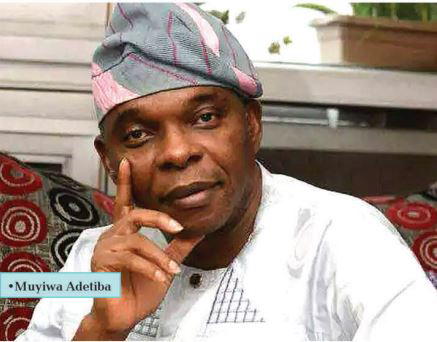
The struggle of taking a step back, explored by Muyiwa Adetiba
In the pre-digital era, print media reigned supreme as the most effective means of shaping public opinion, making its practitioners and editors highly influential figures.
nThis concentration of power often led to an inflated sense of self-importance, particularly for those who rose to editor positions at a relatively young age, such as their twenties, in an era when truly national newspapers were scarce.
nI was fortunate to have experienced this firsthand, but was also quickly humbled by individuals who had my best interests at heart and shared valuable life lessons with me, which have stayed with me to this day.
nOne such lesson came from a former head of the PR department of a powerful parastatal, who later became a Minister in Babangida's government, and cautioned me against confusing admiration for my position with personal admiration, sharing his own experience of receiving numerous gifts, including rams and turkeys, during festive seasons while in office.
nHe warned that relying on such superficial displays of admiration could lead to embarrassment and advised me to stay grounded, saying "if you rely on these people, they will not only embarrass you, they will compound your embarrassment".
nAnother influential figure, a renowned columnist and one of the earliest Editors of Daily Times, Nigeria's flagship newspaper at the time, also offered me sage advice, telling me that people in positions like mine were fortunate to have role models to learn from and cautioning me against letting my new office go to my head.
nHe reminded me that my assignment would eventually come to an end and that there would always be life after it, advice that helped me maintain a professional and empathetic approach to my work without becoming too attached to my position.
nThis allowed me to walk away from my role without feeling like I would miss out on important connections or privileges, a luxury not everyone can afford, as many people struggle to detach themselves from the perks and prestige associated with their positions.
nI recall a friend who had a meteoric rise in his career, but found himself torn between his values and the expectations of his wife, who had grown accustomed to the luxuries that came with his role, highlighting the difficulty of walking away from positions of power when personal interests are deeply entrenched.
nSome individuals are reluctant to relinquish the privileges they have become accustomed to, and may even compromise their values in order to maintain their standard of living, a phenomenon often driven by societal pressure to accumulate wealth, particularly for those in the public eye.
nThis mentality can lead to unbecoming compromises and even blackmail, as the pursuit of personal gain can become an all-consuming force, ultimately revealing a character flaw that undermines one's integrity and principles.
nFurthermore, the tendency to cling to power and relevance can also be attributed to the fact that many public office holders have not added value to their positions, but rather abused them, prompting them to constantly reinvent themselves by switching political allegiances and parties.
nThis has contributed to the rampant corruption and avarice that plagues Nigeria's political landscape, with numerous cases of public office holders accumulating vast wealth and properties, both at home and abroad, such as the former Governor of the Central Bank, the former Minister of Justice, and a recent former Governor of a State, among others.
nThese scandals are not limited to a single party, but rather are a widespread problem that transcends party lines, with even opposition members being implicated in corruption, thereby losing their moral authority to speak out against it.
nThose who argue that opposition members are being targeted by the EFCC and ICPC inadvertently acknowledge the prevalence of corruption across the board, while also providing a rationale for the wave of defections from opposition parties to the ruling party.
nHowever, they miss the point that these individuals have a case to answer, and that corruption is the Achilles heel of politicians across party lines, rendering them unable to credibly criticize the ruling party on issues of integrity and democratic principles.
nMy message to prospective opposition members is to maintain their integrity while in public office, a piece of advice that was imparted to me many years ago when I first became an Editor, and which I have strived to uphold, even if my editorial judgments may have been flawed at times.
nI have never compromised my independence and values, and can therefore claim to "say it as it is", a privilege that few politicians or public office holders can afford, and one that is essential for maintaining credibility and integrity in the public sphere.
Related Stories
 General News
CELEBRATING TWO YEARS OF TRANSFORMATIONAL LEADERSHIP IN THE PRESIDENTIAL AMNESTY PROGRAMME
Tomorrow, 14TH March 2026, as we look forward to the second anniversary, we reflect on the remarkable two years since the Administrator of the Preside
 General News
PRESIDENTIAL AMNESTY PROGRAMME PHASE 3: DISREGARD PURPORTED STATEMENT ON DELAYED ITA PAYMENTS — OFFICE OF NATIONAL CHAIRMAN
The Office of the National Chairman of the Presidential Amnesty Programme Phase 3, General Elaye ThankGod Dollar Slaboh, has called on beneficiaries a
 General News
RE: CLARIFICATION ON MY PERSONAL RELATIONSHIPS
PUBLIC NOTICErnrnRE: CLARIFICATION ON MY PERSONAL RELATIONSHIPSrnrnIt has become necessary to make this public clarification following the increasing