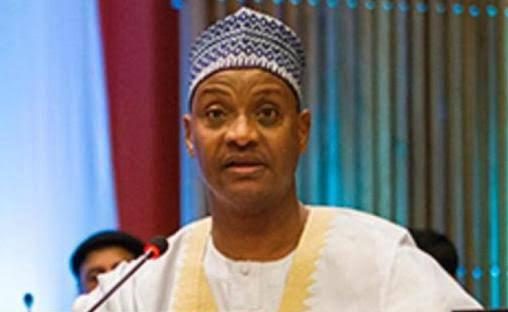
“A great man is one who leaves others at a loss after he is gone”— Paul Valéry
To do justice to the life and times of so illustrious a personality as the late Alhaji Ado Bayero, CFR, Emir of Kano, would require the pen and erudition of historians of the calibre of Ibn Khaldun, Edward Gibbon or Thomas Carlyle. Even so, I venture to write about him, mindful that I may be faulted for errors of detail or for the timing of this reflection. I do so in full awareness of Dr Ado Bayero’s deep ties to Borno, and of his special and enduring relationship with my late Shehu, Alhaji Mustapha Umar El-Kanemi.
There are lives that are lived within history, and there are those that come to embody history itself. In the case of Dr Ado Bayero, one encounters not merely a man, but an institution, one whose life became deeply interwoven with the historical evolution of Northern Nigeria and the Nigerian state. Born on July 25, 1930 into the revered Sullubawa dynasty, Ado Bayero entered the world as an inheritor of a long and distinguished tradition of governance, spirituality and cultural stewardship.
The Kano Emirate, one of the most enduring political formations in Africa and the Islamic world, had for centuries served as a centre of commerce, agriculture, crafts, Islamic scholarship and political authority. From the era of the Habe kingdoms through the transformative jihad of the Sokoto Caliphate, and later under British colonial rule and independence, Kano had maintained a remarkable continuity of institutional life.
Ado Bayero was at once prince and monarch, living as the one and ruling as the other. He stood astride a long and unbroken tradition of authority stretching back over a thousand years, linking the ancient Habe dynasties with the Fulani order that succeeded and transformed them. To be born into such a lineage was to be inducted into a system that fused authority with responsibility and tradition with change.
The young Ado Bayero’s early formation reflected this dual inheritance. His grounding in Islamic education provided him with a deep appreciation of religious scholarship and moral discipline, while his subsequent exposure to Western-style education equipped him with the administrative and intellectual tools necessary for leadership in a modernising society.
This synthesis of tradition and modernity would later become the defining feature of his reign, and indeed one of the principal sources of his enduring relevance. For Ado Bayero belonged to that rare category of leaders who understood that continuity did not imply rigidity, and that adaptation needed not to entail the abandonment of identity.
His formative years coincided with a period of profound transformation in Northern Nigeria. The late colonial era witnessed the gradual emergence of new political structures, the expansion of formal education, and the early stirrings of nationalist consciousness. It was in this milieu that Ado Bayero began his career in public service within the Kano Native Authority system.
His roles in the Native Authority Police and in administrative capacities gave him a practical understanding of governance at the grassroots level. Unlike many who inherited authority without prior exposure to its burdens, Ado Bayero’s early career grounded him in the realities of banking, administration, law enforcement and public service. These experiences would later prove invaluable when he assumed the burdens of the throne.
His brief foray into politics under the Northern People’s Congress, NPC, which saw him elected to the Northern House of Assembly in Kaduna, further broadened his political perspective. It brought him into contact with the emerging political elite of Northern Nigeria, men who were grappling with the challenges of self-government and independence.
This exposure deepened his appreciation of the delicate balance between traditional authority and modern political structures, a balance he would later manage with remarkable skill. Alhaji Ado Bayero was the 55th in the long succession of rulers of Kano since the beginning of its recorded history, and the 13th of the Fulani dynasty. His reign, spanning 51 years, stands as the longest in Kano’s long and illustrious history.
He began his working life with the Bank of British West Africa, where he served until 1949, before transferring to the Kano Native Authority, where he rose to the position of Council Secretary. In 1954, he was elected to represent Kano in the Northern House of Assembly in Kaduna, and subsequently served as Chief of Police in Kano from 1957 to 1962. In the same year, he was appointed Nigeria’s Ambassador to Senegal, a role that further deepened his administrative and diplomatic experience on the eve of his accession to the throne.
Thus, when he ascended the throne of Kano in 1963, following the death of Emir Muhammadu Sanusi I, he did so not as a figure confined to tradition, but as a leader already seasoned by administrative, political and diplomatic experience. He brought to the throne not only the authority of lineage, but the wisdom and exposure of the diplomat disciplined by public service.
His accession came at a moment of great uncertainty. Nigeria, barely three years into her independence, was already showing signs of strain. Political tensions were rising, regional rivalries were intensifying, and the foundations of the First Republic were beginning to crack. It was in this context that Ado Bayero assumed one of the most important traditional thrones in Africa and the Islamic world.
From the outset, his approach to leadership was marked by caution, wisdom and an acute awareness of the limits of traditional authority in a rapidly changing political environment. He understood, perhaps more clearly than many of his contemporaries, that the survival of the emirate institution depended not on confrontation with the modern state, but on adaptation to it. This insight would become the cornerstone of his long and distinguished reign.
The Nigerian Civil War fought from1967 to 1970 following the coup d’état of January 1966, was one of the earliest and most severe tests of his leadership. Although Kano was geographically distant from the principal theatres of conflict, the war had profound implications for national unity and stability. In this period of uncertainty, Ado Bayero’s role as a symbol of continuity and stability in Northern Nigeria assumed great significance.
His calm, dignified, measured and reassuring presence helped to sustain social cohesion at a time when the nation itself was under immense strain. The post-war years brought new and complex challenges. The military interventions that followed the collapse of the First Republic altered the structure of governance in Nigeria, significantly reducing the formal powers of traditional rulers. For many, this represented a diminution of relevance. For Ado Bayero, it was an invitation to redefine the role of traditional authority itself.
Rather than resist these changes, he adapted with quiet intelligence. He repositioned the emirate as a moral and cultural authority, rather than a political one, thereby preserving its dignity while ensuring its continued relevance within the evolving Nigerian state.
Equally noteworthy was his role as a religious leader. As Emir of Kano, he occupied a central and influential position within the Islamic establishment in Northern Nigeria and across the wider West African region.
?Yet, his approach to religion was characterised not by rigidity, but by moderation, tolerance and inclusivity. At a time when religious tensions occasionally threatened social harmony, he consistently advocated peaceful coexistence and mutual respect among communities. His leadership within the Tijjaniyya order further reinforced his influence, extending it beyond Nigeria into the wider West African Islamic community. However, his religiosity was never exclusionary. On the contrary, he commanded respect across religious and cultural divides, a testament to his commitment to unity and social harmony.
?By the end of the first decade of his reign, it had become evident that Ado Bayero possessed a rare combination of qualities notably a profound respect for tradition, a pragmatic understanding of modern governance, and a personal disposition marked by humility, restraint and quiet confidence. These attributes would sustain him through the many trials and transformations that lay ahead.
?For his reign would extend far beyond the immediate post-independence period, encompassing decades of political upheaval, economic change and social transformation. In navigating these challenges, he would not only preserve the Kano Emirate but elevate it into one of the most respected traditional institutions in Nigeria and West Africa. It is to this long and eventful reign, and to the enduring legacy it produced, that we shall turn in the next instalment.



Comments
Please login to leave a comment.
No comments yet. Be the first to share your thoughts!