
The narrow waterway that wields enormous power over the global economy, by Stephanie Shaakaa
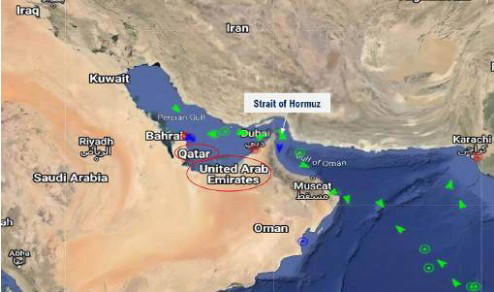
The world's daily oil supply could be severely disrupted if twenty million barrels, nearly a fifth of the global total, fail to reach refineries, power plants, and trucks due to a war in Iran that has turned the Strait of Hormuz into a critical choke point.
nThis narrow waterway, barely wide enough to appear dramatic on a world map, has the power to shake markets, rattle governments, and push millions of people toward higher prices and economic anxiety, as it is the main artery of the modern energy system.
nEvery single day, roughly twenty million barrels of oil pass through this narrow corridor between Iran and Oman, with tankers loaded with crude from Saudi Arabia, Kuwait, Iraq, the United Arab Emirates, and Iran relying on this single maritime bottleneck to power industries, move vehicles, and keep electricity grids alive.
nEnergy analysts are warning that the disruption surrounding the Strait of Hormuz could evolve into the largest oil supply shock the modern world has ever experienced, with the global market potentially losing close to twenty percent of its daily oil flow if tanker traffic collapses or is severely restricted.
nTo put this into perspective, the 1973 oil crisis triggered by an Arab oil embargo removed roughly four million barrels of oil per day from the global market and sent Western economies into recession, while the turmoil following the Iranian Revolution disrupted about five million barrels a day and pushed oil prices to levels that shook financial systems across continents.
nThe first warning signs of a potential disruption are already appearing, with shipping companies becoming cautious, insurance premiums for tankers entering the Gulf climbing rapidly, and traders scrambling to price risk into a market that had grown used to assuming stability.
nOil markets have always been sensitive to fear because energy is the invisible thread connecting every modern economy, and when oil becomes expensive, transportation costs rise, leading to higher food prices, increased fertiliser costs, and higher airline ticket prices.
nIn Europe and the United States, there are currently no immediate shortages of oil or gas, with supply lines remaining intact and markets continuing to function, but in Nigeria, fuel prices are already rising despite the fact that global supply has not yet been physically disrupted.
nThe global economy has always tried to convince itself that it has outgrown its vulnerabilities, with supply chains becoming more complex and energy markets supposedly more diversified, but the uncomfortable truth is that global prosperity still depends on a handful of physical chokepoints, including the Strait of Hormuz.
nFor oil-producing countries like Nigeria, the situation carries a bitter irony, as rising global oil prices should translate into higher national revenues, yet citizens often feel the pain before they see the benefits, with petrol becoming more expensive, transport fares rising, and food prices climbing.
nThe unfolding situation around Iran is more than a regional military story, as it is a test of how stable the architecture of the global economy truly is, with the oil crises of the 1970s having reshaped geopolitics, altered alliances, and forced nations to rethink energy security.
nHistory has proven that the world's wealth, comfort, and stability can hinge on a strip of water barely fifty kilometers wide, and the Strait of Hormuz reminds us that civilization is fragile, with the difference between order and chaos being as narrow as the waves beneath a single tanker.
nEmpires have risen and fallen over control of trade routes, rivers, canals, and straits, and despite the temptation to believe that geography has lost its power in the age of satellites and digital markets, the Strait of Hormuz tells a different story, highlighting the ongoing vulnerability of the modern world to the oldest force in history.
Related Stories
 General News
CELEBRATING TWO YEARS OF TRANSFORMATIONAL LEADERSHIP IN THE PRESIDENTIAL AMNESTY PROGRAMME
Tomorrow, 14TH March 2026, as we look forward to the second anniversary, we reflect on the remarkable two years since the Administrator of the Preside
 General News
PRESIDENTIAL AMNESTY PROGRAMME PHASE 3: DISREGARD PURPORTED STATEMENT ON DELAYED ITA PAYMENTS — OFFICE OF NATIONAL CHAIRMAN
The Office of the National Chairman of the Presidential Amnesty Programme Phase 3, General Elaye ThankGod Dollar Slaboh, has called on beneficiaries a
 General News
RE: CLARIFICATION ON MY PERSONAL RELATIONSHIPS
PUBLIC NOTICErnrnRE: CLARIFICATION ON MY PERSONAL RELATIONSHIPSrnrnIt has become necessary to make this public clarification following the increasing