
Telecom Industry: Obasanjo Guaranteed Prosperity, Says Okoh Aihe
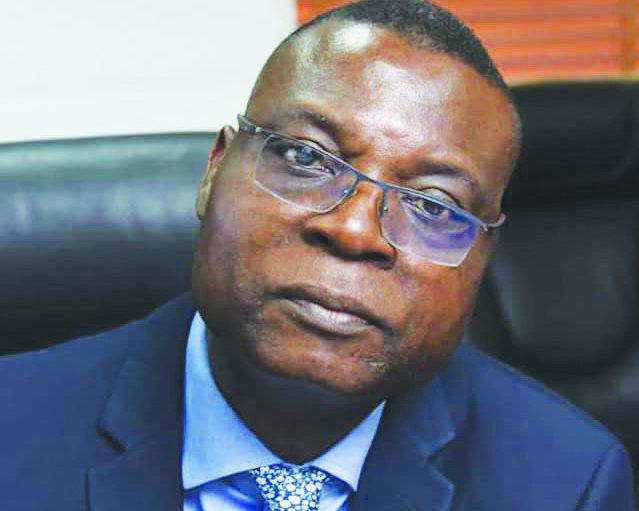
Okoh Aihe
nIt was not a moment of reminiscences or retrospection. Not even a recall. Just a normal telephone call. Two women were chatting away, with the one sitting not far away from me not really mindful whether anybody heard or not. It was her business; not another man’s business.
nBut you know, people can really make calls, shouting into the phone as if they are addressing a community. It is our way, speak at the top of our voices and put up a rodomontade performance as a deflection of the pain and weakness we feel inside or some kind of mask against the exhausting circumstances circumscribing our lives.
nThis very day, this woman seems to be on a cruise discussing life with her friend. Not about the war in Iran or the price of petrol or the concomitant spiral of the price of stable food, but just about life. Are you hearing from the children, the other voice seems to be asking?
nThen, the answer. Ah, Obasanjo. He will never see lack in his life. He has made life easy for us and we can communicate with anybody anywhere in the world.
nMy curiosity flared. Olusegun Obasanjo was President of Nigeria from May 29, 1999 to May 29, 2007. Eight straight years without interregnum. He was military head of state from February 13, 1976 to October 1, 1979. How could that kind of person be associated with any lack? Does he need any prayers to avert that?
nMy understanding returned home. As civilian President, Obasanjo met a country in trouble in all ramifications. He went in search of the low-hanging fruits in order to reflate an economy that was in paralysis. He initiated some policies to deliver some sectors of the economy from the strong men and principalities that held them hostage.
nThe telecommunications sector was a beneficiary. The new policy thrust freed the sector from the satanic hold of NITEL, the government monopoly which, for decades, held the sector hostage. A new Nigerian Communications Commission, NCC, was born and it built up enough gravitas to take audacious and even clinical decisions in the industry. The Commission did a GSM auction without fear and latent patronage and got results that reverberated across the globe.
nFor the first time in the troubled history of our nation, phone ownership was democratised, making it possible for everybody to have a phone irrespective of status and placement in the society, to the consternation and shame of those who had preached the message that only the rich could use a phone. Obasanjo, by his actions and unwavering commitment to purpose, virtually put phones in the hands of everybody. Even for those who hate him with passion, they cannot deny him of that achievement or the prayers accruable.
nLike that woman, I could just imagine how many people pray for OBJ, the lovely acronym that defines his defiance and stubbornness when taking critical decisions. He offers no apologies to those hurt as long as results are achieved. He wasn’t emotional about the fate of NITEL and that freed the entire industry, opened it up for a tipping point.
nOBJ is long gone out of the scene, prompting the question: what is happening in the telecommunications industry now? What has happened ever since?
nThe answers are buried in the reality of our experience which speaks very little positive about the industry. Here is a proof of that reality. The 5G technology was designed as a major break in the sector, something to evoke the kind of memories that were associated with the coming of GSM technology. But that expectation has hardly happened. The three licensees, MTN, MAFAB and Airtel have scarcely cracked the demand with their service offering, thus leaving potential subscribers and even the operators in frustration.
nRecent data from the regulator disclosed a troubling disconnect between 5G expectations and the reality on ground. For instance, while more people are acquiring 5G-capable devices in Abuja and Lagos, data analysis revealed some yawning coverage gaps in the two cities: 70.9 percent in Lagos and 65.6 percent in Abuja. The reality is that as 5G gains ascendancy in other parts of the world, becoming the technology of preferred data connection, the story is totally different here, where the operators are even unable to expand services in major cities.
nNCC data reveals that older technologies like 2G and 4G remain dominant, while 5G maintains the ignoble rear. While by January this year, 2G controls 36.97 percent of the GSM network, 4G contributes a whopping 53.41 percent while 3G and 5G contribute 5.67 and 3.94 percent respectively. At this rate, it will take a couple of decades for 5G technology to reach the nooks and crannies of the country, if it ever will. And this can’t be the desired outcome projected at the beginning.
n‘’About 50 percent of Nigerians with 5G devices don’t have access to 5G services,’’ said Edoyemi Ogoh, who is Director of Technical Standards and Network Integrity at the NCC. ‘’This means there is no 5G service in the areas where they want to basically utilize it. So, there is still a gap in the 5G coverage,’’ he added.
nThere are more troubling signs from the NCC dashboard. While mobile subscription stands at 182,225,258 by January, a breakdown reveals that MTN and Airtel enjoy a lion share; 94,246,220 for MTN, while Airtel has 62,041,872. Globacom and T2, formerly 9mobile, contribute the remaining figures of 22,459,539 and 3,256,084, respectively.
nThe above picture tells me that competition is not as intense in the industry as it should be and that except something was done urgently more operators might just disappear from NCC dashboard just as NTEL seems to have done irredeemably. T2 is barely surviving and there has to be a way to prevent them from atrophying to death and putting a blight on a market that was once the envy and the toast of the global community.
nBut there is an externality which damns every humble effort by the operators to manage their networks. The power situation has been a nightmare. I am not talking about the complete breakdown of the power grid, which has been regular, I mean the near absence of power supply to the last mile service providers (are they the Discos?) who have put nearly the entire population in the dark.
nThen the war came! Two powerful nations are bombing Iran out, and Iran has taken its anger to the rest of the world. A litre of petrol is over N1,300 while diesel is N1,506.25. What will the operators do now to manage diesel supply to thousands of generators at base stations across the nation? Will they be allowed to declare force majeure, and simply move on? What will the NCC do about the falling quality of service traceable to such intrusive external pressure?
nI have no answer to the above questions. But what I do know is that the NCC has been doing a lot of documentations to mend what seems to be the broken-down walls of the industry, like trying to raise the Titanic. Going into a relationship with Ookla which, according to EVC Aminu Maida, enables the NCC ‘’to provide independent insights into real-world network performance and the lived experience of Nigerians across cities, rural communities, highways, and emerging 5G zones.”
nThe regulator is therefore able to track progress, identify gaps, and guide targeted regulatory interventions – ranging from spectrum optimisation and infrastructure upgrades to quality-of-service enforcement and the expansion of rural connectivity. Just like taking soft measures to deal with intractable issues.
nBut there is something about the Nigerian market that remains stubbornly attractive. Apart from MTN nearly achieving monopoly status in Nigeria by subscriber figures, the operator in its last annual report hailed the country, Ghana and Uganda for helping it achieve strong financial results in 2025.
nThe Nigerian market contributed a princely $1.8bn which equated to 103.4 percent rise from the previous year.
nUnfortunately, there are too many challenges facing the industry, from internal issues by the Commission which is struggling to stabilise the workforce and build up operational funds, to other external issues impacting the operators.
nHowever, I look forward to one positive move, quite ground-shaking that will one day elicit some prayers from that grateful subscriber who will say a prayer for the leaders of today.
n nRelated Stories
 General News
CELEBRATING TWO YEARS OF TRANSFORMATIONAL LEADERSHIP IN THE PRESIDENTIAL AMNESTY PROGRAMME
Tomorrow, 14TH March 2026, as we look forward to the second anniversary, we reflect on the remarkable two years since the Administrator of the Preside
 General News
PRESIDENTIAL AMNESTY PROGRAMME PHASE 3: DISREGARD PURPORTED STATEMENT ON DELAYED ITA PAYMENTS — OFFICE OF NATIONAL CHAIRMAN
The Office of the National Chairman of the Presidential Amnesty Programme Phase 3, General Elaye ThankGod Dollar Slaboh, has called on beneficiaries a
 General News
RE: CLARIFICATION ON MY PERSONAL RELATIONSHIPS
PUBLIC NOTICErnrnRE: CLARIFICATION ON MY PERSONAL RELATIONSHIPSrnrnIt has become necessary to make this public clarification following the increasing