
Taraba State’s alleged PVC impunity
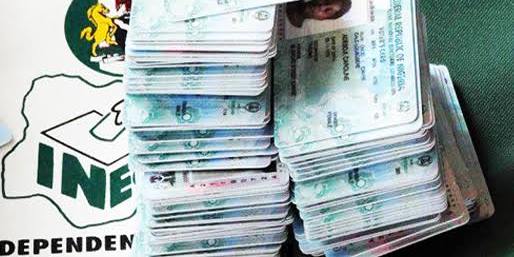
FILE IMAGE
nThe allegation that teachers and other workers in Taraba State were directed to present photocopies of their Permanent Voter Cards (PVCs) before receiving their salaries has rightly provoked outrage across the country. The Taraba State Universal Basic Education Board (TSUBEB) has denied making salary payment contingent on PVC submission, insisting that its chairperson, Christiana Binga, merely encouraged teachers to obtain their voter cards.
nWe draw the public’s attention to this controversy to remind politicians and top government officials of the limits of their powers as we move toward the campaigns for the 2027 general elections.
nThe allegation, made by the opposition led by Senator Emmanuel Bwacha of the People’s Democratic Party (PDP), is that workers were ordered to submit photocopies of their PVCs before their salaries would be processed. If that was indeed the intention behind the directive, then Governor Agbu Kefas’s administration, through TSUBEB and its leadership, would have crossed a dangerous constitutional line.
nPoliticians across Nigeria often go beyond merely encouraging citizens to register as voters and collect their PVCs. They sometimes adopt impunity to compel vulnerable groups, such as workers, to take political actions against their will. Civic participation is desirable, and voter registration should be promoted. However, no government or its agency has the right to link workers’ salaries to the presentation of PVCs. That is a dangerous departure from democratic norms.
nThe 1999 Constitution is unambiguous on the rights of every Nigerian citizen. Section 39 guarantees freedom of expression, while Section 40 protects freedom of association. More fundamentally, Section 42 prohibits discrimination against any citizen on grounds unrelated to lawful employment obligations. The right to vote necessarily includes the freedom not to vote. Government cannot compel citizens, directly or indirectly, to participate in an electoral process as a precondition for enjoying earned wages or other lawful entitlements.
nSalary is not a political favour. It is payment for work already done. It cannot lawfully be subjected to partisan considerations or electoral compliance. The moment government begins to attach political conditions to salary payments, it becomes an instrument of coercion.
nThe implications are frightening. If workers can be compelled to produce their PVCs before collecting their salaries today, what assurance do they have that tomorrow they will not be pressured to vote for a particular political party or candidate? The line between civic mobilisation and political intimidation becomes dangerously blurred. Democracy cannot thrive where livelihoods are used as leverage for political advantage.
nThe Taraba State government must, therefore, move swiftly to remove every ambiguity surrounding this issue and those behind it cautioned. Democracy flourishes through persuasion, not intimidation. Governments are elected to protect citizens’ rights, not to bargain with them. Workers must never have to trade their political independence for their pay and entitlements.
n nRelated Stories
 General News
CELEBRATING TWO YEARS OF TRANSFORMATIONAL LEADERSHIP IN THE PRESIDENTIAL AMNESTY PROGRAMME
Tomorrow, 14TH March 2026, as we look forward to the second anniversary, we reflect on the remarkable two years since the Administrator of the Preside
 General News
PRESIDENTIAL AMNESTY PROGRAMME PHASE 3: DISREGARD PURPORTED STATEMENT ON DELAYED ITA PAYMENTS — OFFICE OF NATIONAL CHAIRMAN
The Office of the National Chairman of the Presidential Amnesty Programme Phase 3, General Elaye ThankGod Dollar Slaboh, has called on beneficiaries a
 General News
RE: CLARIFICATION ON MY PERSONAL RELATIONSHIPS
PUBLIC NOTICErnrnRE: CLARIFICATION ON MY PERSONAL RELATIONSHIPSrnrnIt has become necessary to make this public clarification following the increasing