
Surging Worth of Amukpe-Escravos Pipeline Points to Fresh Challenges for Nigeria's Energy Industry
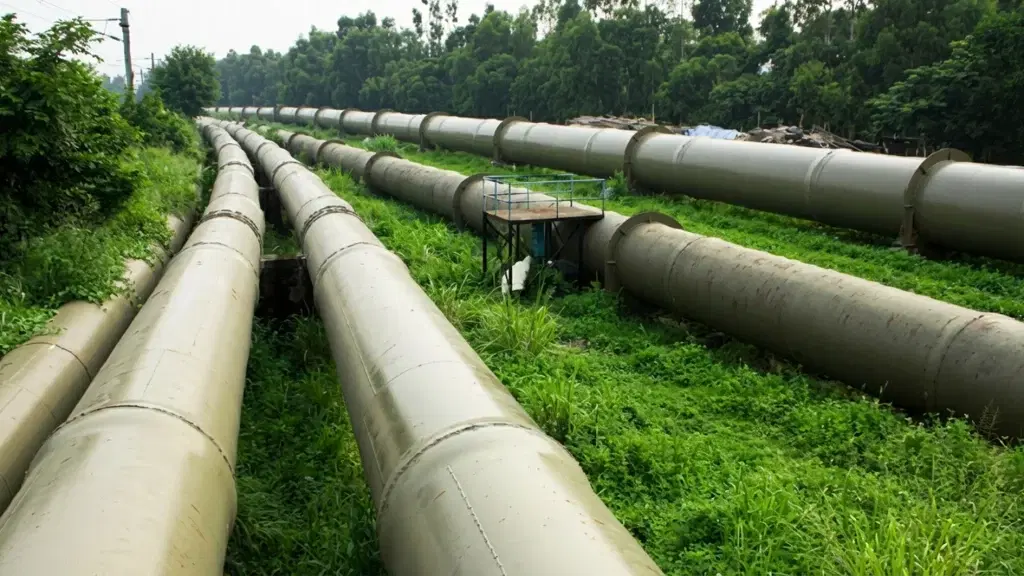
The Amukpe–Escravos Pipeline, a vital crude evacuation asset in Nigeria’s western Niger Delta, has come under fresh scrutiny due to a significant reassessment of its value, now estimated at close to $700 million or more, and an ongoing transaction dispute.
nThis new valuation represents a substantial increase from the previous estimate of between $200 million and $243 million, and is attributed to a combination of macroeconomic shifts, operational realities, and strategic considerations that have elevated the pipeline’s importance.
nAccording to an industry source, factors such as inflationary pressures, rising replacement costs, tariff adjustments, and the growing premium on secure evacuation routes have all contributed to the new valuation of the 67-kilometre-long pipeline, which has a capacity of roughly 160,000 barrels per day.
nThe pipeline provides a critical alternative to the Trans-Forcados Pipeline, an older route that is frequently affected by operational challenges and sabotage, and its value is closely tied to production stability and export reliability in the sector.
nThe implications of this valuation surge are far-reaching, challenging earlier assumptions that may have guided past transaction efforts and rendering previous offers materially undervalued by current standards.
nThis raises important questions about whether strategic national assets should be transferred based on outdated pricing frameworks, and highlights the need for a more dynamic and responsive approach to asset valuation in a volatile environment.
nThe recalibration of the Amukpe–Escravos Pipeline’s value underscores the importance of efficiently managing infrastructure assets and ensuring they are properly priced to reflect their strategic contribution to national output.
nReliable evacuation routes, such as the Amukpe–Escravos Pipeline, reduce downtime, minimise losses from production shut-ins, and enhance export efficiency, making them high-value infrastructure with direct implications for revenue optimisation.
nThe pipeline stands as a stabilising force within Nigeria’s oil production architecture, and its revised valuation presents both opportunity and caution for investors and lenders.
nOn one hand, it strengthens the case for infrastructure investments in Nigeria’s energy sector, especially where assets demonstrate operational stability and strategic relevance, but on the other hand, it raises expectations around governance, transparency, and value protection.
nInvestors are likely to demand stronger assurances that transactions are conducted at fair market value and through credible, transparent processes, and the AEP case highlights the need to carefully balance debt recovery with long-term value preservation.
nA more structured and competitive approach to transactions, one that maximises returns while safeguarding public interest, becomes imperative, and governance standards must evolve accordingly, with stronger valuation frameworks, clearer regulatory alignment, and greater institutional discipline.
nUltimately, the surge in the value of the Amukpe–Escravos Pipeline reflects deeper shifts within Nigeria’s oil and gas ecosystem, underscoring the growing premium placed on resilience, efficiency, and strategic positioning, and how this value is recognised, protected, and leveraged will shape investor confidence and capital flows into the sector.
Related Stories
 General News
CELEBRATING TWO YEARS OF TRANSFORMATIONAL LEADERSHIP IN THE PRESIDENTIAL AMNESTY PROGRAMME
Tomorrow, 14TH March 2026, as we look forward to the second anniversary, we reflect on the remarkable two years since the Administrator of the Preside
 General News
PRESIDENTIAL AMNESTY PROGRAMME PHASE 3: DISREGARD PURPORTED STATEMENT ON DELAYED ITA PAYMENTS — OFFICE OF NATIONAL CHAIRMAN
The Office of the National Chairman of the Presidential Amnesty Programme Phase 3, General Elaye ThankGod Dollar Slaboh, has called on beneficiaries a
 General News
RE: CLARIFICATION ON MY PERSONAL RELATIONSHIPS
PUBLIC NOTICErnrnRE: CLARIFICATION ON MY PERSONAL RELATIONSHIPSrnrnIt has become necessary to make this public clarification following the increasing