
Sterling Bank maps out a path to progress for Nigeria's transportation and logistics industry
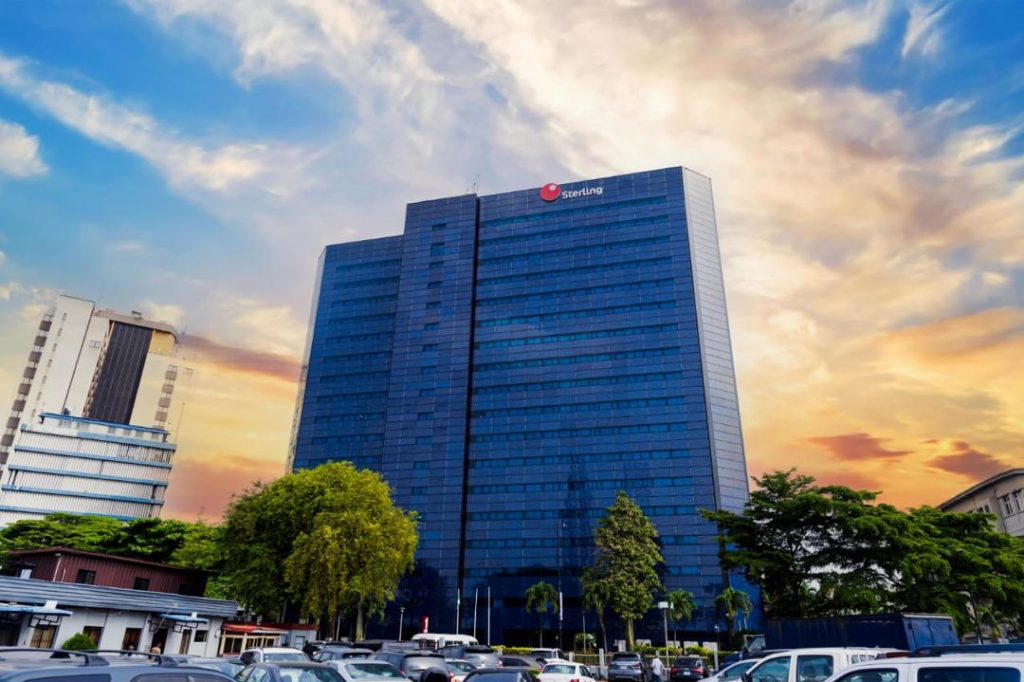
Nigeria's transport and logistics sector has been identified as a crucial driver of productivity, regional integration, and economic growth, with industry leaders, policymakers, financiers, and innovators convening to chart a forward path for improvement at the inaugural Nigeria Transport & Logistics Summit (NTLS) 2026, hosted by Sterling Bank at Eko Hotel & Suites.
nThe summit, held under the theme "Funding the Engine of Growth", brought together stakeholders to propose actionable strategies for building a faster, more connected Nigeria through transport, mobility, and logistics, recognizing the sector's potential as a critical but underleveraged driver of economic growth.
nTransport, mobility, and logistics collectively form the backbone of the Nigerian economy, yet chronic underinvestment, infrastructure deficits, and limited access to financing have long constrained its potential, with the sector's challenges ranging from port congestion to inefficient corridors and high operating costs.
nThe logistics subsector alone contributes approximately N1 trillion to national Gross Domestic Product, GDP, while experts estimate that the broader transport and logistics market exceeds N15 trillion in potential value, highlighting the sector's significant economic impact.
nPersistent infrastructure gaps, inefficiencies, financing constraints, and policy fragmentation continue to limit the sector's full impact, despite its potential to drive economic growth and regional integration.
nSterling Bank's Managing Director and CEO, Mr. Abubakar Suleiman, represented by Sterling One Foundation CEO, Mrs. Olapeju Ibekwe, called for urgent, coordinated action to fix the systems that move Nigeria's economy forward, emphasizing the need for effective execution to address the sector's challenges.
nMr. Suleiman noted that while Nigeria's transport and logistics challenges are well documented, the real opportunity lies in building integrated, modern logistics systems that can power productivity at scale, requiring bold, coordinated execution across public and private sectors.
n"We must move beyond diagnosing the problem to building integrated, modern logistics systems that can power productivity at scale," Mr. Suleiman stated, highlighting the need to fix ports, strengthen logistics corridors, improve road and rail connectivity, and embed efficiency across the value chain.
nNigeria's competitiveness, both regionally and globally, will increasingly depend on how effectively the country moves goods, people, and services, according to Mr. Suleiman, who emphasized that the time for incremental change has passed.
nThe Divisional Head, Renewable Energy, Mobility and Tourism at Sterling Bank, Mr. Darlington Nwankwo, described logistics as the backbone of trade, industry, and national competitiveness, noting that the sector contributes just under four percent to Nigeria's GDP, estimated at approximately N15 trillion.
nMr. Nwankwo emphasized that the sector's true economic impact is significantly larger when viewed as an enabler of productivity across agriculture, manufacturing, and trade, highlighting the need to be deliberate about fixing the logistics backbone of the economy to unlock growth.
nNigeria's trade competitiveness is directly linked to the efficiency of its logistics corridors, from ports to inland distribution networks, according to Mr. Nwankwo, who stressed the importance of addressing the sector's challenges to drive economic growth.
Related Stories
 General News
CELEBRATING TWO YEARS OF TRANSFORMATIONAL LEADERSHIP IN THE PRESIDENTIAL AMNESTY PROGRAMME
Tomorrow, 14TH March 2026, as we look forward to the second anniversary, we reflect on the remarkable two years since the Administrator of the Preside
 General News
PRESIDENTIAL AMNESTY PROGRAMME PHASE 3: DISREGARD PURPORTED STATEMENT ON DELAYED ITA PAYMENTS — OFFICE OF NATIONAL CHAIRMAN
The Office of the National Chairman of the Presidential Amnesty Programme Phase 3, General Elaye ThankGod Dollar Slaboh, has called on beneficiaries a
 General News
RE: CLARIFICATION ON MY PERSONAL RELATIONSHIPS
PUBLIC NOTICErnrnRE: CLARIFICATION ON MY PERSONAL RELATIONSHIPSrnrnIt has become necessary to make this public clarification following the increasing