
Stay-at-home orders have triggered a self-created crisis in the South-East region, according to Soludo
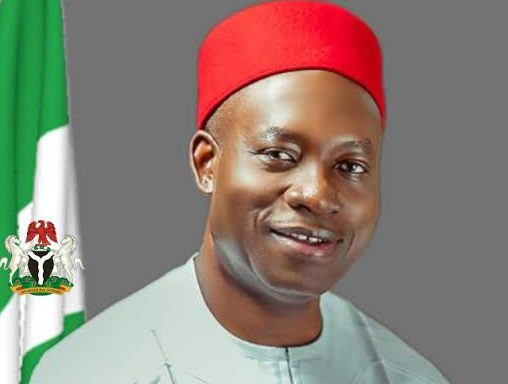
Governor Chukwuma Soludo of Anambra State declared on Tuesday that the sit-at-home directive in the South-East has sparked a self-inflicted internal crisis, causing widespread disruption and loss of life in the region.
nThe governor made this statement while speaking at the 6th Biennial Adada Lecture Series, organised by the Association of Nsukka Professors at the University of Nigeria, Nsukka, where he highlighted the devastating human and economic consequences of the sit-at-home directive.
nSoludo noted that the prolonged sit-at-home has led to significant capital flight, with numerous businesses relocating to other parts of the country due to the prevailing insecurity and uncertainty.
nIn his lecture, titled “Our Future in Our Past: Intellectualism and the Making of African Renaissance,” the governor expressed concern over the declining relevance of academic work in addressing real-world challenges, urging scholars to engage more actively in shaping public policy and societal development.
nSoludo posed a critical question, asking why hundreds of professors have not been able to make their communities comparable to more developed societies, emphasizing the need for scholars to move beyond theoretical research and the university walls.
nHe stressed that producing journal articles is not enough, and that intellectualism without action is ineffective, highlighting the need for "productive intellectualism" that combines ideas with practical implementation.
nSoludo maintained that sustainable progress depends on applying knowledge to real-life challenges, and that the long-term interests of the South-East are best served within a united and functional Nigeria.
nThe governor reflected on his administration's efforts to translate ideas into governance through volunteer-driven initiatives aimed at positioning Anambra as a competitive economic hub.
nHe cited notable figures such as Isaac Newton, Nnamdi Azikiwe, Obafemi Awolowo, Kwame Nkrumah, and Ahmadu Bello as examples of individuals whose ideas have shaped societies, stressing that nations are shaped not only by natural resources but also by transformative ideas.
nChairman of the Association of Nsukka Professors, Paulinus Ugwuoke, remarked that the theme of the 2026 lecture, “Intellectualism and the Development of a People: Mainstreaming the Igbo Extraction Within the Context of Nigeria’s Federal Governance System,” was timely given the resilience of the Igbo people within Nigeria.
nUgwuoke described the South-East as a hub of commerce, industry, science, and innovation, driven by the entrepreneurial spirit of its people, highlighting the region's potential for growth and development.
nChuka Utazi, who represented Enugu North Senatorial District, urged residents of Nsukka to leverage their voting strength to attract development, while encouraging academics to promote vocational education and entrepreneurship as tools for poverty reduction.
nChris Agbedo, Secretary of the planning committee, noted that the lecture series serves as an intellectual platform to examine how ideas shape societal progress, emphasizing that sustainable development depends on effectively harnessing intellectual capital.
Related Stories
 General News
CELEBRATING TWO YEARS OF TRANSFORMATIONAL LEADERSHIP IN THE PRESIDENTIAL AMNESTY PROGRAMME
Tomorrow, 14TH March 2026, as we look forward to the second anniversary, we reflect on the remarkable two years since the Administrator of the Preside
 General News
PRESIDENTIAL AMNESTY PROGRAMME PHASE 3: DISREGARD PURPORTED STATEMENT ON DELAYED ITA PAYMENTS — OFFICE OF NATIONAL CHAIRMAN
The Office of the National Chairman of the Presidential Amnesty Programme Phase 3, General Elaye ThankGod Dollar Slaboh, has called on beneficiaries a
 General News
RE: CLARIFICATION ON MY PERSONAL RELATIONSHIPS
PUBLIC NOTICErnrnRE: CLARIFICATION ON MY PERSONAL RELATIONSHIPSrnrnIt has become necessary to make this public clarification following the increasing