
Statistics tell the truth, Oshimili holds the key to Delta North's political landscape – Okwuche
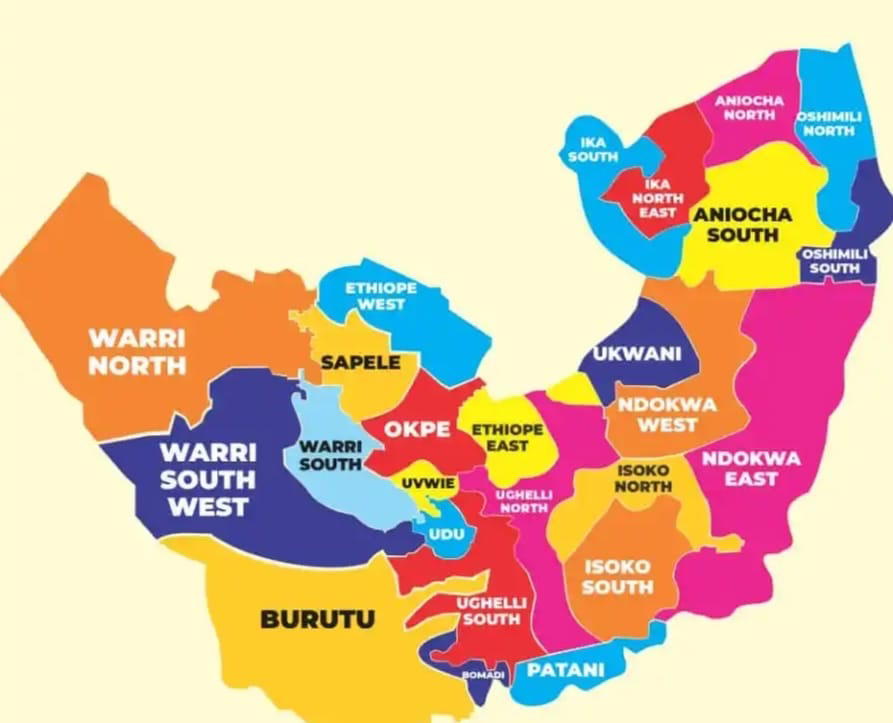
In Delta State, the upcoming 2027 general elections are already sparking intense political maneuvering, with a fresh analysis highlighting the significant electoral clout of Oshimili North and Oshimili South Local Government Areas in the Aniocha/Oshimili Federal Constituency.
nPhilip Okwuche, a political analyst, has conducted an in-depth review of voter data and recent election trends, concluding that the combined voting strength of these two Oshimili councils could be the deciding factor in the House of Representatives race, as well as influence the broader contests within the Delta North Senatorial District.
nAccording to Okwuche's analysis, Oshimili North and Oshimili South collectively hold a numerical advantage over their Aniocha counterparts in terms of registered voters, with the two Oshimili LGAs accounting for roughly 60 percent of registered voters in the constituency.
nThe remaining 40 percent of registered voters are from Aniocha North and Aniocha South, based on the 2023 Independent National Electoral Commission (INEC) statistics.
nOkwuche noted that this numerical edge has already been reflected in past electoral outcomes, citing the 2023 general elections as an example, where a candidate from Oshimili secured approximately 55 percent of the total votes.
nThis surpassed the combined tally of candidates from the Aniocha axis, who garnered about 45 percent, demonstrating the significant influence of the Oshimili bloc.
nOkwuche stated, “The Oshimili bloc has consistently shown that it is the dominant variable in electoral outcomes within the constituency, with numbers that are clear and have been tested.”
nThe analysis suggested that a unified voting pattern from Oshimili North and South could decisively tilt the balance in any contest, particularly if voter mobilisation remains high, assuming all other factors remain equal.
nPhilip Okwuche also raised concerns over growing sentiments of marginalisation among Oshimili voters, warning that such perceptions could shape political behaviour in the lead-up to 2027.
nHe cautioned that if the cry for equity by Oshimili voters is ignored, and their preferred candidates are denied party tickets, there is a strong possibility of protest voting, which could significantly alter expected outcomes.
nOkwuche stressed that internal party decisions, especially during primaries, could trigger wider electoral consequences if not handled with sensitivity to local power balance and equity considerations.
nAccording to him, parties seeking victory in the Aniocha/Oshimili Federal Constituency must pay close attention to established electoral realities, including voter distribution and historical voting patterns.
nHe added, “Any political party that overlooks the demand for fairness and balance does so at its own risk, as the Oshimili voting bloc has both the numbers and the capacity to influence outcomes if mobilised.”
Related Stories
 General News
CELEBRATING TWO YEARS OF TRANSFORMATIONAL LEADERSHIP IN THE PRESIDENTIAL AMNESTY PROGRAMME
Tomorrow, 14TH March 2026, as we look forward to the second anniversary, we reflect on the remarkable two years since the Administrator of the Preside
 General News
PRESIDENTIAL AMNESTY PROGRAMME PHASE 3: DISREGARD PURPORTED STATEMENT ON DELAYED ITA PAYMENTS — OFFICE OF NATIONAL CHAIRMAN
The Office of the National Chairman of the Presidential Amnesty Programme Phase 3, General Elaye ThankGod Dollar Slaboh, has called on beneficiaries a
 General News
RE: CLARIFICATION ON MY PERSONAL RELATIONSHIPS
PUBLIC NOTICErnrnRE: CLARIFICATION ON MY PERSONAL RELATIONSHIPSrnrnIt has become necessary to make this public clarification following the increasing