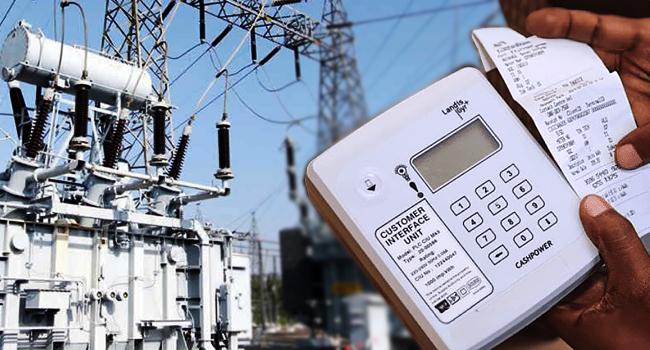
The Federal Government's recent decision to share the cost of electricity subsidies with States and Local Government Areas marks a significant shift in the country's power sector landscape, driven by the need to adapt to current realities.
This move is part of a broader effort to reduce the reliance of sub-national governments on the central government, as emphasized by the Director-General of the Budget Office of the Federation, Tanimu Yakubu, at a training event for Federal Government Ministries, Departments, and Agencies.
According to Tanimu Yakubu, achieving a stable power sector requires paying for the choices made, and when tariffs are below cost, a gap is created, which translates to a subsidy, and ultimately, a bill that needs to be paid.
As of this year, the Federal Government will start sharing the subsidy bill with other tiers of government to address the chronic indebtedness to energy providers, which currently stands at N4 trillion.
Nigeria's journey towards de-monopolizing the power sector began in March 2022, when the late President Muhammadu Buhari signed the Constitution Amendment Bill, removing the power sector from the Exclusive List.
The National Assembly followed suit in June that year, enacting the Electricity Act of July 2022, which was later signed into law by President Bola Tinubu in June 2024.
This devolution of the power sector has opened up opportunities for states, local governments, private investors, and foreign investors to contribute to the sector's rapid development.
For decades, progressive-minded Nigerians have advocated for the devolution of critical governance elements to drive growth, and with this new reality, it is no longer reasonable to expect the Federal Government to bear the power sector subsidy burden alone.
Consequential adjustments must be made whenever devolutions occur from the Exclusive List, and the power sector has become an investment opportunity for lower tiers of government and the private sector to boost local economies.
The involvement of state and local governments in subsidy payments will help promote cottage industries and produce more affordable goods, ultimately benefiting the people.
This new arrangement presents an opportunity for state and local governments to assert their relevance in the lives of their people by providing essential amenities like subsidized power, water, roads, hospitals, and schools.
By doing so, population retention at the grassroots level will reduce the "ungoverned spaces" phenomenon, which attracts undesirable elements such as terrorists, kidnappers, and rogue armed herdsmen.
The three tiers of government should engage in discussions to determine the modalities for the harmonious implementation of this new arrangement.



Comments
Please login to leave a comment.
No comments yet. Be the first to share your thoughts!