
Speculation builds as Shettima, Kwankwaso, Amaechi, and Lamido surface as possible running mates.
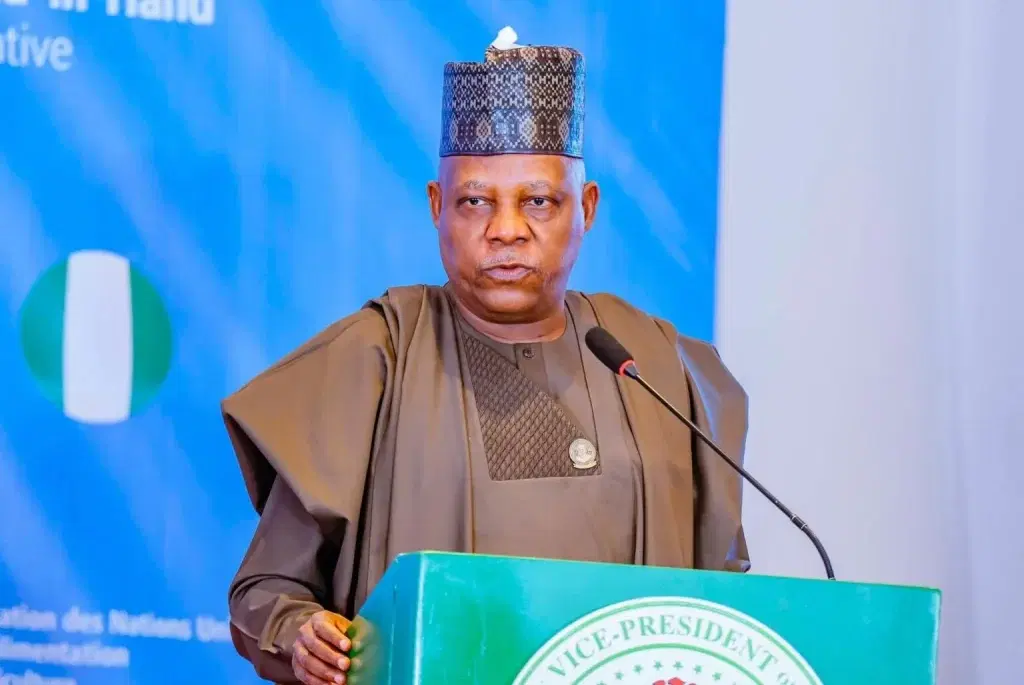
Nigeria's presidential election, slated for January 16, 2027, is poised to challenge the country's traditional political landscape, with zoning, ethnicity, and religious balancing under increasing pressure, as presidential hopefuls seek competence over influential power brokers.
nFor months, opposition politicians have espoused the language of coalition, unity, and rescue, gathering in Ibadan to issue declarations and warning against the emergence of a dominant-party system, yet a different reality is unfolding as the election draws near.
nInstead of unity, the opposition is fragmenting, with multiple contenders vying for the same office, and several parties preparing separate presidential campaigns, highlighting a significant shift in the country's political dynamics.
nAt the heart of this shift lies a challenge to the long-standing formula of Nigerian presidential politics, which has revolved around zoning, ethnicity, religion, and regional balancing, with winning tickets carefully assembled to satisfy geographical and demographic expectations.
nHowever, worsening economic hardship, rising insecurity, youth frustration, and growing disillusionment with the political elite are now questioning these assumptions, as strategists in various political camps ponder whether the old formula still works.
nThe question is no longer simply about which region should produce a running mate, but whether competence may now matter more than geography, a debate that could define the battle for Aso Rock in 2027.
nThe old formula is failing, as evident in the 'Ibadan Declaration' last month, where opposition leaders gathered to express concerns about the APC's expanding dominance and the risk of an emerging 'one-party state', with former Vice President Atiku Abubakar warning that Nigeria may slide into dangerous political dominance if opposition forces fail to resist APC expansion.
nHowever, beneath the public displays of unity, familiar tensions were brewing, with Peter Obi retaining his independent national appeal, Rabiu Musa Kwankwaso controlling a fiercely loyal northern political structure, and Rotimi Amaechi remaining ambitious, while Atiku was unwilling to abandon his long-standing presidential quest.
nAn opposition insider revealed that everybody agreed the APC is vulnerable due to hardship, but the problem is that each individual believes they should be the one to benefit from the APC's weakness, a contradiction that soon exploded into the open, causing coalition talks to fray.
nThe opposition's central dilemma became painfully obvious: unity was emotionally attractive, but ambition remained politically stronger, with the ghost of 2015, where disparate opposition forces defeated an incumbent president, still haunting the political landscape.
nHowever, many analysts believe the atmosphere is fundamentally different now, with multiple ambitious centers of power and no single dominant opposition vehicle, making fragmentation the opposition's biggest weakness, as APC continues to benefit from scattered anti-incumbent votes.
nA new formula is emerging, one that prioritizes competence, governance, economic management, and policy capacity, as sections of the political class begin to ask uncomfortable questions about the old assumptions of zoning, ethnicity, and regional balancing.
nThe country's worsening economic realities, including unbearable food prices, high unemployment, and insecurity, are driving this shift, with survival economics overtaking identity politics, as evident in Peter Obi's repeated framing of leadership as a competence issue rather than an ethnic calculation.
nEven former President Olusegun Obasanjo has emphasized the importance of leadership quality, arguing that appointments should be based on competence, knowledge, and experience, a sentiment echoed in Atiku's camp, where vice-presidential discussions are reportedly influenced by the need for a governing team rather than a political deal.
nThe calculation that the South may no longer guarantee votes is also reshaping the 2027 race, as assumptions about regional vote delivery are being scrutinized, with parts of the South-East consolidated around Peter Obi's movement and the South-South becoming more fragmented.
nA strategist involved in opposition calculations revealed that the question of whether a running mate from a particular region adds significant electoral value is increasingly shaping internal discussions, with some camps discussing competence, governance experience, and economic credibility.
nThe implication is profound: if regions are becoming harder to deliver through elite bargains, then the old political marketplace built around geographical compensation may be losing value, a possibility that is uncomfortable for many veteran politicians.
nThe calculation inside the opposition is changing, with vice-presidential conversations focusing on economic management, reforms, and governance experience, rather than solely on electoral geography, as the recognition grows that whoever wins in 2027 will inherit a difficult country.
nNigeria stands awkwardly between two competing political realities: one governed by old assumptions of zoning, religion, ethnicity, and elite bargaining, and another shaped by hardship, youth frustration, and growing demands for competent governance, with neither side having fully won.
nThe old formula remains powerful, but its supremacy is being openly questioned, and the deeper irony is that politicians are discussing competence because the old certainties no longer appear certain, leaving the question of whether they will truly abandon ethnic and regional arithmetic or merely speak the language of competence until the real battle for power begins.
Related Stories
 General News
CELEBRATING TWO YEARS OF TRANSFORMATIONAL LEADERSHIP IN THE PRESIDENTIAL AMNESTY PROGRAMME
Tomorrow, 14TH March 2026, as we look forward to the second anniversary, we reflect on the remarkable two years since the Administrator of the Preside
 General News
PRESIDENTIAL AMNESTY PROGRAMME PHASE 3: DISREGARD PURPORTED STATEMENT ON DELAYED ITA PAYMENTS — OFFICE OF NATIONAL CHAIRMAN
The Office of the National Chairman of the Presidential Amnesty Programme Phase 3, General Elaye ThankGod Dollar Slaboh, has called on beneficiaries a
 General News
RE: CLARIFICATION ON MY PERSONAL RELATIONSHIPS
PUBLIC NOTICErnrnRE: CLARIFICATION ON MY PERSONAL RELATIONSHIPSrnrnIt has become necessary to make this public clarification following the increasing