
South-East Speakers seek uniform legislative standards
By Vincent Ujumadu
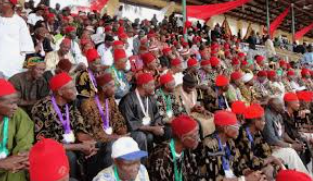
nAWKA — Speakers of the South-East Houses of Assembly have agreed to strengthen collaboration among the five legislatures to promote standardised procedures and uniform legislative best practices across the zone.
nThe speakers made the commitment at a meeting in Awka, where they also stressed the need to redefine inter-state legislative cooperation to address common challenges confronting the South-East.
nThey identified effective policing, good governance, economic opportunities, justice and strong institutions as critical components of sustainable security and development in the region.
nThe host Speaker and Vice Chairman of the South-East Conference of Speakers, Dr Somtochukwu Udeze of the Anambra State House of Assembly, said the region had demonstrated considerable individual capacity but needed to translate such capacity into durable institutions and coordinated regional action.
nUdeze urged his colleagues to move beyond resolutions and identify specific areas of legislation for comparative review.
n“Let us select areas for possible model legislation. Let us establish a mechanism for continuous engagement among the five Houses. Let us assign responsibility and timelines,” he said.
nHe said the objective should be to develop a practical roadmap for legislative cooperation, stressing that laws enacted by the Houses must withstand constitutional scrutiny, administrative realities and the test of time.
n“If the five Houses can raise the standard of their legislative work, learn systematically from one another and build a working relationship around the common interests of our people, we will have done something that extends beyond the life of any individual Assembly. That, ultimately, is the value of institutional reform,” Udeze said.
nHe maintained that political differences should not prevent institutional cooperation among the states.
n“We should be able to disagree politically and still cooperate institutionally. We should be able to maintain the autonomy of our five Houses while developing common standards. We should be able to compete for investment while removing unnecessary regulatory barriers between our states,” he said.
nUdeze said the quality of legislation had a significant impact on the quality of administration, noting that unclear laws could create uncertainty and weak procedures could undermine effective governance.
nHe said the proposed standardisation should go beyond the Standing Orders and procedures governing plenary sessions.
n“This is why I believe the conversation about standardising legislative procedures in the South-East should go beyond Standing Orders and the mechanics of how we conduct plenary,” he said.
nUdeze proposed the establishment of a platform through which the five Houses could continuously compare legislation, exchange legislative research, examine emerging regional issues and develop model legislative provisions where necessary.
nHe also advocated a shift from periodic political consultations among the states to structured institutional cooperation.
n“The Governors have their own forum and constitutional responsibilities. We, as legislators, can have ours,” he said.
nAccording to him, the proposed mechanism should be professional and capable of surviving changes in government and political parties.
nHe suggested that it could maintain a comparative database of major laws passed by the five Houses, identify obsolete, conflicting or duplicative provisions, develop model Bills where regional consistency was desirable, organise continuing training for legislators and legislative staff, and facilitate joint committee-level consideration of issues with cross-state implications.
nIn a communique issued after the meeting, the speakers in attendance commended the five South-East governors for what they described as developmental strides in their respective states.
nThey also pledged continued legislative partnership in support of good governance and regional development.
nThe four Speakers who attended the meeting were Udeze of Anambra State, Emmanuel Emeruwa of Abia State, Moses Ije Odunwa of Ebonyi State and Uche Ugwu of Enugu State.
n nRelated Stories
 General News
CELEBRATING TWO YEARS OF TRANSFORMATIONAL LEADERSHIP IN THE PRESIDENTIAL AMNESTY PROGRAMME
Tomorrow, 14TH March 2026, as we look forward to the second anniversary, we reflect on the remarkable two years since the Administrator of the Preside
 General News
PRESIDENTIAL AMNESTY PROGRAMME PHASE 3: DISREGARD PURPORTED STATEMENT ON DELAYED ITA PAYMENTS — OFFICE OF NATIONAL CHAIRMAN
The Office of the National Chairman of the Presidential Amnesty Programme Phase 3, General Elaye ThankGod Dollar Slaboh, has called on beneficiaries a
 General News
RE: CLARIFICATION ON MY PERSONAL RELATIONSHIPS
PUBLIC NOTICErnrnRE: CLARIFICATION ON MY PERSONAL RELATIONSHIPSrnrnIt has become necessary to make this public clarification following the increasing