
South Africa's Dark Side: Residents Share Grisly Accounts of Violent Assaults, Including a Victim Who Lost an Eye
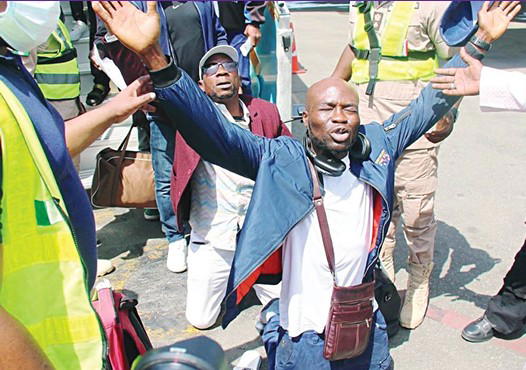
For the 258 Nigerians who returned home aboard an Air Peace flight under the Federal Government’s evacuation programme on Thursday, it was a moment of relief after years of enduring xenophobic attacks and discrimination in South Africa.
nTheir faces beamed with victorious smiles as they stepped onto Nigerian soil, exhausted from the nearly six hours journey, with some kneeling, others raising their hands in the air, and a few walking with swagger, as if a yoke had been broken.
nMany of the returnees, including Ogun State indigene, Rafiu Wasiu, 53 years old Enitan Amao, physically bruised Abdullahi Muniru, and Joy, a mother of two, expressed their joy and gratitude, filled with ecstasy, as they looked forward to putting their painful experiences in South Africa behind them and rebuilding their lives at home.
nWasiu, who lived in South Africa for about 11 years, said life as a Nigerian migrant was fraught with discrimination and insecurity, adding that in South Africa, nationality often determined how one was treated, and he would just have to delete the memory of South Africa.
nAccording to Wasiu, the reason for this was that if anything happens, once they hear that you are from Nigeria, you are wrong, even when you are right, they will prove you wrong, and the Nigerian government, which usually promised to sort them out, did nothing to change the situation.
nIn South Africa, Wasiu explained, if you are just passing on the street, they can call you and say: ‘Come here, can I have your phone?’ and if you try to argue with them, they can just take out a knife and stab you to death, while the police do nothing, treating them like animals.
nWasiu recalled that two weeks ago, he was just sitting with his friend when he saw the police coming, and having sighted them, he moved away, but they arrested his friend, who stayed behind, and they had to pay 2,500 rand to secure his release for doing nothing.
nAsked why he migrated to South Africa, Wasiu said Nigerians who travel abroad do not go there for fun, but to earn a certain amount in foreign currency monthly and send it home, which can be used to do something tangible, like building a house.
nWasiu, who is a mechanic, said he fixes cars, but they do not even give them the freedom to do anything, and he is surprised when they say Nigerians are taking their jobs, as you will not see Nigerians working in their shops, but only foreigners working on the streets.
nSouth Africans, Wasiu added, have the opportunity to do these things, but they do not want to work, and they do not even like to work, as some use motorbikes to do food deliveries.
nAsked about his next steps, Wasiu said he has a lot of hope because he is not a lazy man, he can work, and he believes that as long as he is in his country, he is protected, and nothing bad will happen to him.
nWasiu expressed his desire to relax his mind, stay with his family, talk to them, and just feel at home first, and then ask himself what he can do and take steps to achieve it.
nWasiu is not alone in his experiences, as Adediran Ayodeji, an Oyo State indigene, also lamented the xenophobic attacks, saying they made life hellish for black foreigners.
nAyodeji, who spoke to Saturday Vanguard in a measured tone and with a tired expression, said he felt good to be back in Nigeria after leaving for South Africa 13 years ago to further his education.
nAyodeji, who said he was back in the country to join the military and fight terrorists, also expressed his desire to further his education in Nigeria, as he could not continue in South Africa.
nAyodeji, who was a chef and also did digital marketing in South Africa, said he is happy to be back home and now wants to further his education and serve Nigeria.
nMeanwhile, Amao described South Africans as very jealous, saying they do not like to see foreigners, and he told Saturday Vanguard that he has been in South Africa for 13 years, working as a security guard.
nAmao, who held a cigarette and wore a YMCMB baseball cap, said South Africans planned to attack foreigners, whether legal or illegal immigrants, on June 30, and they go into people’s houses and beat them.
nAmao recalled that where he stayed in Johannesburg, there were more than 100,000 people who came with sticks, guns, and all sorts of weapons to attack foreigners, and the police do not talk because they are citizens.
nA friend of Amao’s lost one of his eyes, and it was the white man he worked for as a security guard who gave him some money and took him to the hospital so that a glass eye could be fitted before bringing him back home.
nAmao, who has not worked for the past two years because his leg is broken, said he was returning from work when he was almost attacked and jumped a fence, leading to the injury, and the cost of the operation is expensive, so he has been managing the leg.
nAmao expressed his joy to return to Nigeria, and now that he is back in the country, he has to start from scratch and join the struggle to make Nigeria great.
nJoy, who appeared exhausted, was carrying her 10 months old baby on her back, while her two years old child stood beside her, and she told Saturday Vanguard that coming back home feels great, saying the hatred for Nigerians is too much.
nAccording to Joy, you cannot find proper work in South Africa because they believe that all their jobs are for them, and if you manage to create one for yourself, they will come there to disturb you or loot your stuff.
nJoy said that rather than coming back, many Nigerians have chosen to stay in South Africa because they think that they will come back home and have to start afresh, and some of them do not have the money to return and start something.
nAsked about her husband, Joy said he stays in South Africa, and where is the money for all of them to come back and immediately reintegrate, and nobody plans for these things to happen, and the properties there need to be sold to raise money to start something in Nigeria.
nJoy added that if her husband can save up something in South Africa to start something in Nigeria, he will come back and join them, but she is not comfortable, and she has no choice, and she has to come back because of the safety of her children.
nMeanwhile, the Federal Government said it was considering taking the issue of recurring xenophobic attacks on Nigerians in South Africa to the African Union, AU, to seek a permanent solution.
nMinister of State for Foreign Affairs, Sola Enikanolaiye, said Africa, as a continent, must recognise the need to do more to protect the lives and property of residents in South Africa, and when you have thug leaders literally encouraging violence against other nationalities, that is totally unacceptable.
nEnikanolaiye said the government will be reminding them of their responsibility in this regard, and they will be doing this at all levels of government, at their own level, at the level of officials, and even at the level of Mr President, to ensure that Nigerians are not subjected to this kind of harassment going forward.
nEnikanolaiye added that they have also indicated that, going forward, to prevent this, they may have to escalate it to the African Union and get a more continental response to this, which is becoming an African challenge.
Related Stories
 General News
CELEBRATING TWO YEARS OF TRANSFORMATIONAL LEADERSHIP IN THE PRESIDENTIAL AMNESTY PROGRAMME
Tomorrow, 14TH March 2026, as we look forward to the second anniversary, we reflect on the remarkable two years since the Administrator of the Preside
 General News
PRESIDENTIAL AMNESTY PROGRAMME PHASE 3: DISREGARD PURPORTED STATEMENT ON DELAYED ITA PAYMENTS — OFFICE OF NATIONAL CHAIRMAN
The Office of the National Chairman of the Presidential Amnesty Programme Phase 3, General Elaye ThankGod Dollar Slaboh, has called on beneficiaries a
 General News
RE: CLARIFICATION ON MY PERSONAL RELATIONSHIPS
PUBLIC NOTICErnrnRE: CLARIFICATION ON MY PERSONAL RELATIONSHIPSrnrnIt has become necessary to make this public clarification following the increasing